Varalakshmi Vrat Puja Vidhi
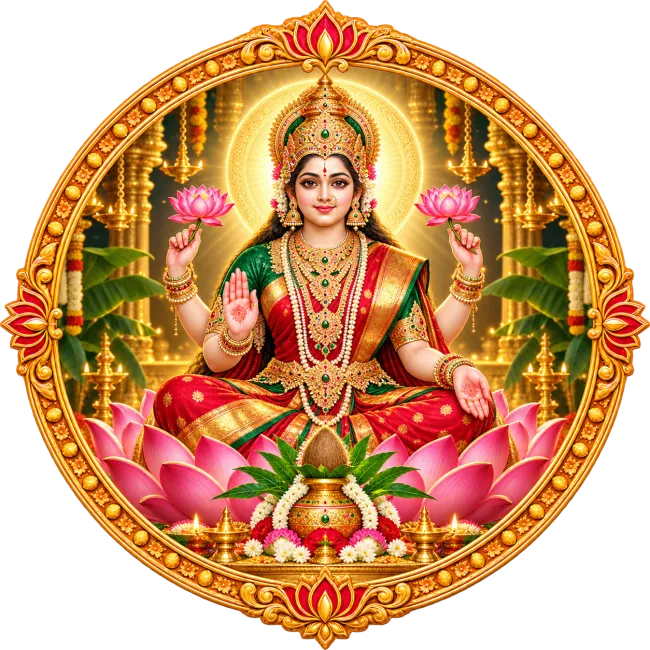
Varalakshmi Vrat Puja Vidhi explains the worship of Maa Varalakshmi, the boon-giving form of Goddess Lakshmi. This vrat is especially observed in South Indian households on a Friday associated with the period before Shravana Purnima. Devotees prepare a clean worship space and decorate a kalash with leaves, a coconut, cloth, flowers, and sometimes a face representing the goddess. They pray for the well-being, harmony, and prosperity of their family.
The puja generally begins with a sankalp and a prayer to Lord Ganesha. Maa Varalakshmi is then invoked in the decorated kalash and worshipped with turmeric, kumkum, flowers, a lamp, and food offerings. Devotees read or listen to the vrat katha, perform aarti, and in many families tie a sacred thread on the wrist. Prasad and tamboolam may then be shared with invited women. The precise sequence and offerings vary by region and family tradition.
Varalakshmi Vrat is a festival of devotion to Maa Lakshmi in her Varalakshmi form. It is particularly important in the traditions of Andhra Pradesh, Telangana, Karnataka, and Tamil Nadu. The worship centres on welcoming the goddess into the home through a carefully prepared kalash. The Friday chosen for the vrat is determined according to the family’s regional calendar and local panchang.
Before the puja, devotees clean the home and worship area, bathe, and gather the required items. A metal kalash is filled with water or rice according to household practice. Leaves are arranged at its mouth, and a coconut is placed on top. Many families dress the kalash with a cloth, flowers, ornaments, or a Lakshmi face so that it represents the goddess seated in the home.
After making a sankalp, devotees commonly offer a prayer to Lord Ganesha and invoke Maa Varalakshmi in the kalash. They offer turmeric, kumkum, flowers, and light a lamp. Fruits and homemade dishes such as payasam or other sweets may be presented as naivedyam. The Varalakshmi Vrat Katha is read or heard, followed by prayers and aarti.
A sacred thread, often called toram or nombu charadu in regional traditions, is worshipped and tied on the wrist in many households. After the puja, prasad is shared, and some families give tamboolam, which may include betel leaves, fruit, and small gifts, to invited women. This guide covers the main stages of the observance while allowing for the different ways families prepare the kalash, offer food, and complete the vrat.