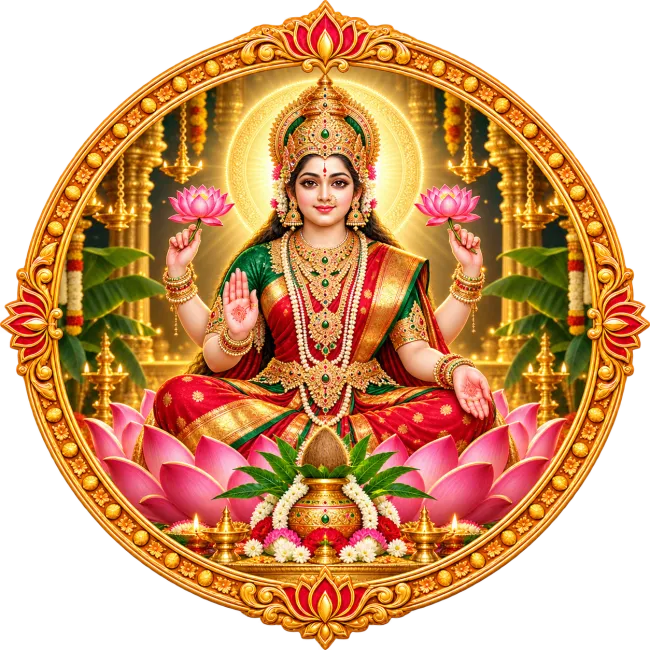
Varalakshmi Vrat Katha
Varalakshmi Vrat Katha tells the story of Charumati, a devoted woman who receives guidance from Goddess Lakshmi in a dream. The goddess asks her to observe the Varalakshmi vrat on an auspicious Friday of the Shravana month and explains how to worship her. When Charumati wakes, she shares the dream with her family and the women around her. Together, they prepare a decorated kalash and gather to perform the puja.
The women worship Maa Varalakshmi with flowers, offerings, prayers, and a sacred thread. According to the katha, they receive the goddess’s blessings, and their homes become filled with prosperity and happiness. The story is traditionally presented as an account told by Lord Shiva to Goddess Parvati. It highlights Charumati’s devotion, the willingness of neighbours to worship together, and the belief that Maa Varalakshmi cares for the well-being of the household.
The Varalakshmi Vrat Katha is read or heard during the worship of Maa Varalakshmi, the boon-giving form of Goddess Lakshmi. In the traditional telling, Goddess Parvati asks Lord Shiva about a vrat that can bring welfare and prosperity to families. Lord Shiva responds with the story of Charumati, who lived in a town called Kundina.
Charumati is remembered as a woman who treats her family and others with care. Pleased with her devotion, Maa Lakshmi appears in her dream and tells her to observe the Varalakshmi vrat on a Friday in Shravana. The goddess explains the worship to be performed and the blessings devotees seek through it. On waking, Charumati tells her family and neighbours about the dream.
When the appointed Friday arrives, Charumati and the other women clean and decorate the worship space. They establish a kalash as the symbol of Maa Varalakshmi, offer flowers and food, and pray together. A sacred thread is included in the worship and tied on the wrist according to their custom. In some tellings, the women walk around the kalash after the puja and experience signs of the goddess’s blessings.
The katha concludes with Charumati and the women sharing in the joy of the observance. Its message centres on devotion, care for family, and worship performed in a spirit of togetherness. Families in different regions may tell some details differently, but Charumati’s dream and the collective worship of Maa Varalakshmi remain the heart of the story.