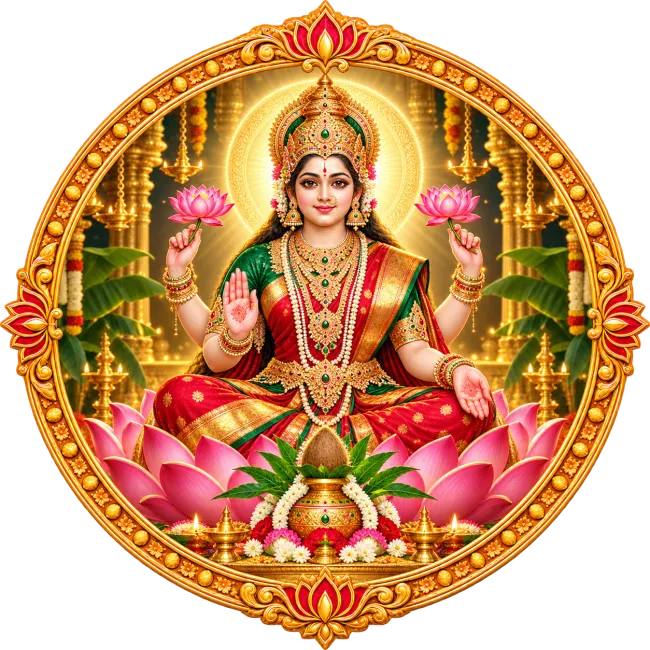
Varalakshmi Kalash Sthapana
Varalakshmi Kalash Sthapana describes the preparation and placement of the sacred kalash for Varalakshmi Vrat. In many South Indian households, the kalash is the central symbol of Maa Varalakshmi’s presence during the puja. After cleaning the worship area, devotees place a metal pot on a decorated platform, fill it with water or rice according to family practice, arrange leaves at its mouth, and set a coconut on top. The kalash may then be adorned with flowers, cloth, jewellery, or a face representing the goddess.
Once the kalash is ready, devotees make a sankalp and invoke Maa Varalakshmi with prayer. Turmeric, kumkum, flowers, a lamp, and food offerings are used in the worship. The kalash remains in the puja space for the duration followed by the household, and its concluding steps are performed according to family tradition. Careful preparation expresses a respectful welcome to the goddess and helps create a peaceful setting for the vrat.
Kalash sthapana is an important part of Varalakshmi Vrat because the decorated vessel is worshipped as a representation of Maa Varalakshmi. The arrangement is usually prepared on a clean platform or tray in the home’s puja area. Devotees may spread a little rice beneath the pot and decorate the space with flowers or a rangoli, following their household’s custom.
A clean metal kalash, commonly made of brass, copper, or silver, is filled with water or rice as the family tradition directs. Some households place a coin, turmeric, or other customary items inside. Leaves, often mango leaves, are arranged around the opening. A coconut is then placed above them. The materials and their arrangement may differ between regions, so families generally follow the method taught in their home.
The kalash is often dressed to resemble the goddess. A cloth or small sari may be draped around it, while flowers and ornaments are added as available. Some families attach a decorative Lakshmi face near the coconut. After the arrangement is complete, devotees light a lamp, make their sankalp, and invite Maa Varalakshmi to be present in the kalash through prayer.
The sthapana leads into the main puja, which includes offerings of turmeric, kumkum, flowers, and naivedyam, followed by the vrat katha and aarti. At the end of the observance, the kalash is respectfully taken down according to the family’s practice. This guide explains the main steps of preparing, decorating, and worshipping the Varalakshmi kalash while recognising that its exact form differs among households.