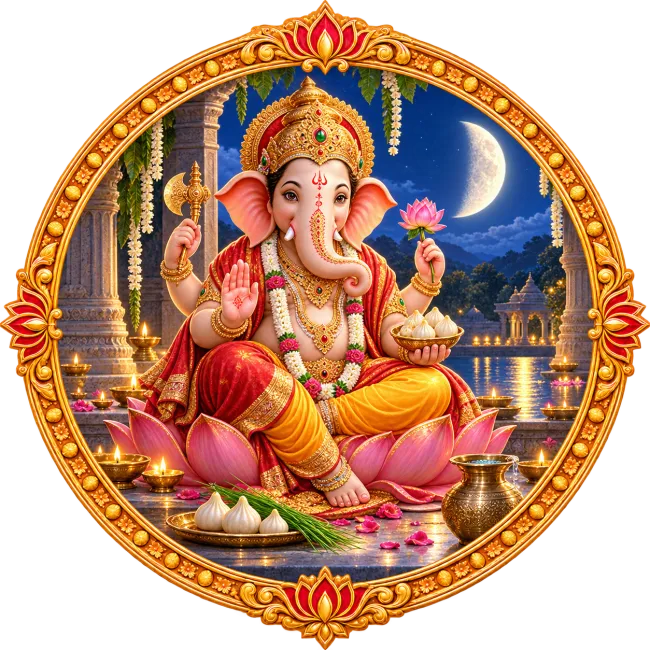
Sankashti Chaturthi Chandra Arghya Vidhi
Offering arghya to the moon is an important part of Sankashti Chaturthi Vrat. Devotees fast during the day and worship Lord Ganesha in the evening. They prepare a vessel of clean water, flowers, rice grains, a lamp, and prasad according to family tradition. After the moon rises, they sight it, offer water as arghya, and pray to Lord Ganesha and Chandra Dev. The fast is then broken in the customary manner.
The time of moonrise changes by date and location, so devotees should check the moonrise time for their city. Some families add milk or other items to the arghya, while others use water alone. This content explains the main steps of Chandra Arghya, from preparing the offering through breaking the fast.
Sankashti Chaturthi is observed with worship of Lord Ganesha and a fast traditionally completed after moonrise. Chandra Arghya is the offering made to the moon at the end of the day’s observance. It follows the Ganesha puja and, in many families, the reading or listening of the Sankashti Chaturthi Vrat Katha.
Before moonrise, devotees prepare a clean vessel with water for the arghya. Flowers, rice grains, a lamp, and prasad may also be arranged as part of the worship. Some households use water mixed with milk according to their custom. The puja items and method of preparing the offering can differ between families.
When the moon becomes visible, devotees offer arghya while praying to Chandra Dev and remembering Lord Ganesha. They then complete any remaining prayers or aarti followed in their household. After the offering, the devotee breaks the fast with water, prasad, or a meal according to family practice.
Because moonrise occurs at different times in different places, the arghya should be planned using the local moonrise time. Weather may also affect when the moon can be seen. This description presents the principal steps of Sankashti Chaturthi Chandra Arghya and explains its place at the conclusion of the vrat.