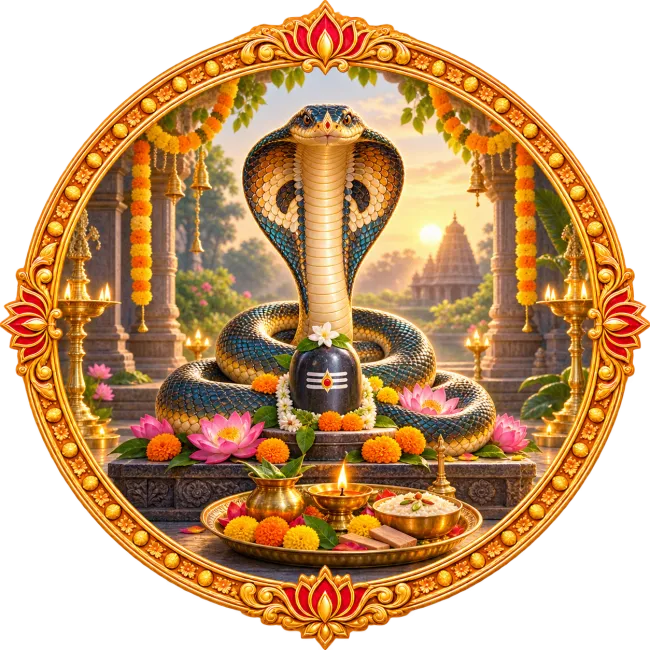
Religious Significance of Nag Panchami
Nag Panchami is a festival dedicated to the worship of Nag Devatas, or serpent deities. It is commonly observed on Shukla Paksha Panchami in the month of Shravan. Devotees offer prayers for their families’ well-being and remember the place of serpents in Hindu religious stories and imagery. Nagas are associated with Lord Shiva, Lord Vishnu resting on Sheshnag, and the story of Lord Krishna and Kaliya.
In many families, devotees worship an image or representation of a naga and listen to the Nag Panchami Vrat Katha. The festival also encourages respect for living creatures and awareness of their place in nature. Worship practices and offerings vary by region. This content explains the religious and cultural significance of Nag Panchami in clear language.
Nag Panchami is an observance centred on reverence for Nag Devatas. Its religious meaning comes from the many roles nagas hold in Hindu traditions. A serpent is shown around Lord Shiva’s neck, Lord Vishnu is depicted resting on Sheshnag, and stories of Lord Krishna include his encounter with Kaliya. These associations give serpents a place in devotional stories and temple imagery.
On Nag Panchami, families may draw or place an image of a naga in a clean worship space, offer prayers, and read or listen to a vrat katha. Devotees seek blessings for their households and express respect for the beings represented in the worship. The deity addressed, the story recited, and the offerings used may differ between communities.
The festival has a connection with the natural world as well. Snakes are living animals that form part of local ecosystems. Respect for them can be expressed without handling or disturbing them. For many families, Nag Panchami provides an opportunity to share both religious stories and a sense of care for living creatures with younger generations.
This content brings together the religious associations, family worship, and cultural meaning of Nag Panchami. It presents the festival as an occasion for prayer and respect, while recognising the variety of traditions followed across regions.