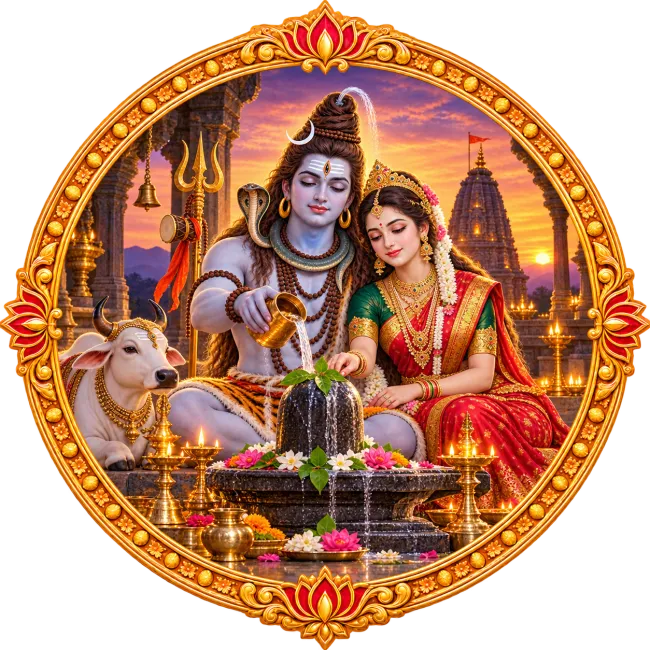
Pradosh Vrat Rules
Pradosh Vrat is observed on Trayodashi, the thirteenth lunar day of both the waxing and waning fortnights. Its central practice is worshipping Lord Shiva and Goddess Parvati during Pradosh Kaal, the period around sunset. Devotees traditionally bathe, take a vow to observe the fast, prepare the puja items, and offer prayers in the evening. Water, bel leaves, flowers, a lamp, incense, fruits, and prasad are commonly used.
Fasting practices differ between households. Some devotees eat fruit during the day, while others follow a stricter fast. After the evening puja, they may read or listen to the Pradosh Vrat Katha, perform aarti, and break the fast according to family custom. The date, Pradosh Kaal, and parana time should be checked in a local panchang. This content explains the main rules from preparation through worship and completion of the vrat.
Pradosh Vrat is dedicated to Lord Shiva and is observed twice in a lunar month, on the Trayodashi of each fortnight. The weekday on which Trayodashi falls gives rise to names such as Som Pradosh or Shani Pradosh. Although some customs differ between these observances, worship during the evening Pradosh period remains central to the vrat.
Devotees generally begin by bathing and taking a vow to fast. They prepare a clean worship space at home or plan to visit a Shiva temple. For the puja, a vessel of water, bel leaves, flowers, a lamp, incense, fruits, and offerings may be arranged. During Pradosh Kaal, they worship a Shiva lingam or an image of Shiva and Parvati, offer the prepared items, and pray for their family’s well-being.
Many devotees chant “Om Namah Shivaya,” read or listen to the Pradosh Vrat Katha, and perform aarti. The rules concerning food and water vary: some observe a fruit-based fast, while others do not eat until the evening worship. In some families, the fast is broken after the puja; in others, parana is performed the next morning.
The timing of Pradosh worship depends on the local sunset and the occurrence of Trayodashi tithi. Devotees can check a panchang for their location and follow their household tradition for fasting and parana. This description brings together the principal Pradosh Vrat rules in a clear sequence.