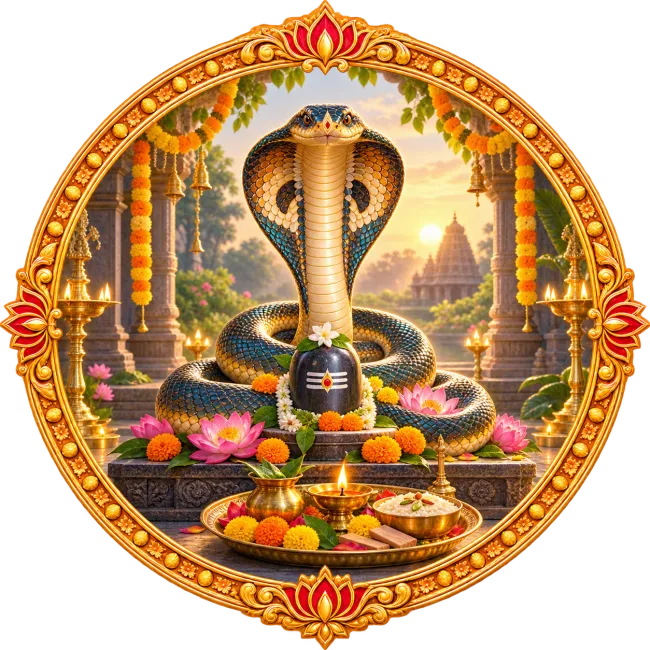
Nag Panchami Vrat Katha
Nag Panchami Vrat Katha is a traditional story about a farmer, a mother serpent, and the farmer’s daughter. While ploughing his field, the farmer accidentally harms the serpent’s young. Grieving and angry, the mother serpent bites members of his family. When she reaches his daughter, she finds the young woman worshipping the Nagas with devotion. The daughter asks forgiveness for what happened and pleads for her family’s lives. Moved by her prayer, the serpent shows mercy and restores them.
The story is told during Nag Panchami to express respect for living creatures and awareness of how human actions can affect them. Its central message is one of compassion, forgiveness, and peaceful coexistence with nature. Details of the katha vary between regions and families, but the daughter’s sincere prayer and the serpent’s change of heart remain at its centre.
Nag Panchami is a festival dedicated to the worship of Nag Devta, or serpent deities. In many homes, devotees observe a vrat, worship a drawing or image of a serpent, and listen to the Nag Panchami Vrat Katha. The story gives meaning to the observance by connecting worship with care for other living beings.
In a commonly told version, a farmer is working in his field when his plough unintentionally kills the young of a mother serpent. On discovering what has happened, the serpent is overcome by grief. She goes to the farmer’s home and bites his family members. She then seeks out his daughter, intending to bite her as well.
The daughter, however, has been worshipping the Nagas. She welcomes the mother serpent with reverence and asks her to forgive the harm caused by her father. She also begs for the lives of her loved ones. The serpent is touched by the daughter’s devotion and compassion. According to the katha, she grants the daughter’s request and brings the family back to life.
The katha closes with a lesson about the value of every life and the power of forgiveness. Families may tell it with different details or follow different customs during Nag Panchami. The story concerns a serpent as a figure in a sacred narrative; worship can be offered to an image or symbol without approaching or feeding a living snake.