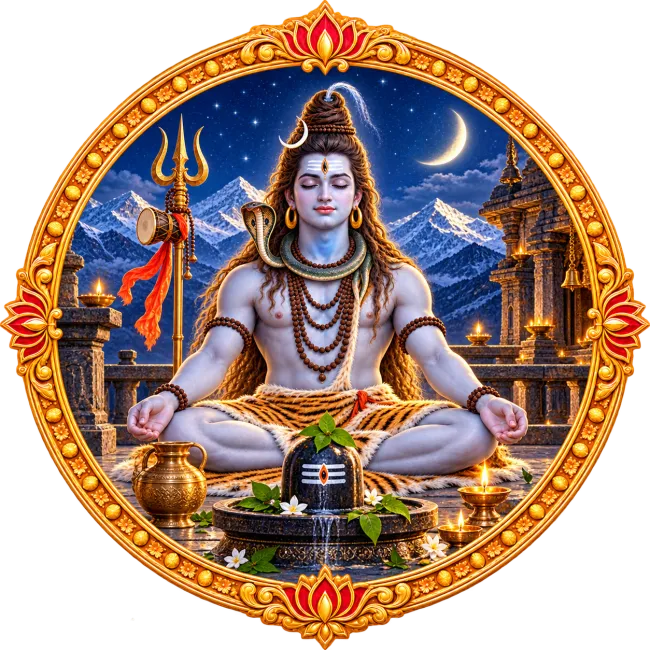
Masik Shivaratri Shiv Puja Vidhi
Masik Shivaratri Shiv Puja Vidhi explains the monthly worship of Lord Shiva associated with Krishna Paksha Chaturdashi. Devotees prepare a clean worship space, make a sankalp, and offer prayers to a Shiva linga or an image of Lord Shiva. Water, bilva leaves, flowers, a lamp, and simple naivedyam are commonly used. Evening and nighttime worship hold a special place in this observance, and some devotees pray during the Nishita Kaal around midnight.
The puja may include Shiva mantras, the Masik Shivaratri Vrat Katha, and aarti. Fasting practices differ between households: some devotees take fruit or other permitted food, while others follow a different routine. After the night’s worship, the vrat is generally concluded with paran the next morning at a time determined according to the local panchang and family tradition.
Masik Shivaratri gives devotees an opportunity to worship Lord Shiva each lunar month. It is linked to the Chaturdashi of Krishna Paksha, with particular attention given to worship at night. The puja can be performed at home or in a temple. Its exact timing should be checked against the local panchang because the Chaturdashi tithi and nighttime worship window change each month.
Before the puja, devotees bathe, wear clean clothes, and tidy the worship area. A Shiva linga or an image of Lord Shiva is placed in a suitable spot. A vessel of clean water, bilva leaves where available, flowers, a lamp, incense if customary, and fruit or another simple offering are prepared. The devotee then makes a sankalp and prays for the well-being of the family.
During the worship, water is offered to the Shiva linga, followed by bilva leaves and flowers. Devotees may chant “Om Namah Shivaya,” recite other familiar Shiva prayers, or sit quietly in remembrance of the deity. Many families read or listen to the vrat katha and perform aarti. Those observing the nighttime puja may continue with prayer during Nishita Kaal according to their capacity and household custom.
After completing the puja, prasad is shared in the manner followed at home. Devotees who have undertaken a fast conclude it the following morning with a final prayer and paran. This guide covers preparation, offerings, mantra, katha, aarti, and the completion of the observance while allowing for differences in worship and fasting traditions.