Masik Shivaratri Paran Vidhi
Masik Shivaratri Paran Vidhi explains how devotees conclude the monthly fast dedicated to Lord Shiva. Masik Shivaratri is associated with Krishna Paksha Chaturdashi, and many devotees worship Shiva at night before breaking their fast the following morning. After sunrise, they bathe, offer a final prayer to Shiva, and take water or prasad before eating a simple meal.
The exact parana time depends on when Chaturdashi ends in the devotee’s location and on the tradition followed at home. Devotees therefore check their local panchang for the appropriate window. Paran completes the sankalp taken for the vrat and gives an opportunity to thank Lord Shiva for the strength to observe it.
The monthly Shivaratri vrat commonly includes worship of Lord Shiva during the night. Some devotees perform puja near midnight, while others follow the worship routine established in their family. After this night of prayer and fasting, the vrat is brought to a close through paran the next morning.
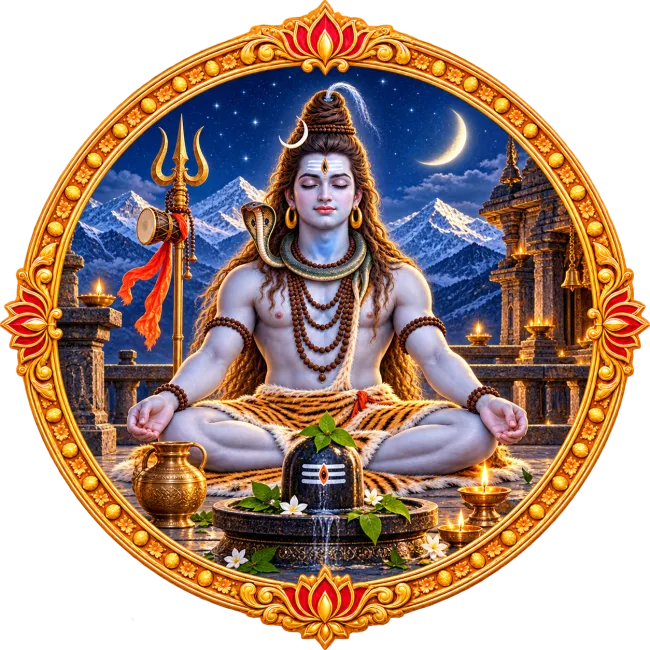
Devotees generally begin the morning by bathing and preparing a clean place for a brief Shiva puja. They may offer water and bilva leaves to a Shiva linga, light a lamp, and pray or perform aarti. After this final worship, they end the fast with water or the prasad offered to Lord Shiva.
A light, simple meal is commonly taken after the initial water or prasad. The foods chosen depend on the form of fasting followed and the family’s custom. The parana time should be checked in a local panchang because the end of Chaturdashi varies by date and place; traditions also differ in how that tithi is used to set the fasting window.
Paran is the final step of Masik Shivaratri Vrat. It brings together the previous night’s worship, a morning prayer, and a respectful return to regular meals. Devotees may also share prasad or offer food to someone according to their custom. The central purpose is to complete the vrat with gratitude and remembrance of Lord Shiva.