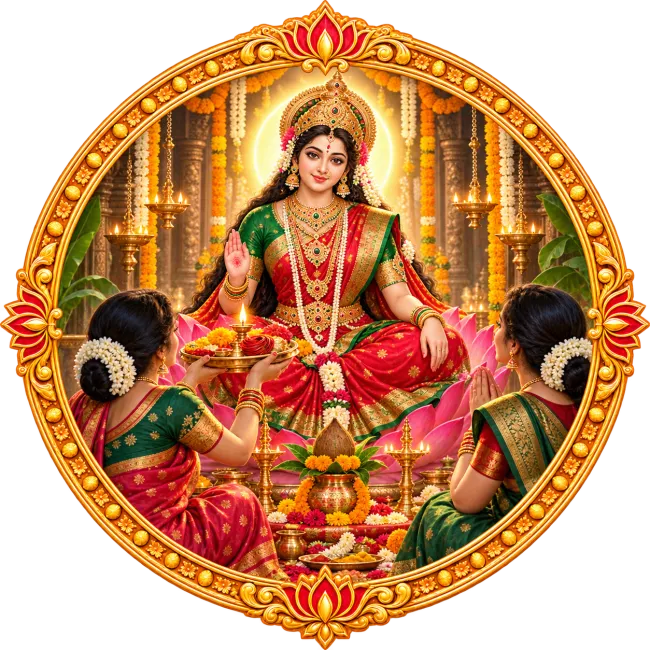
Mangala Gauri Puja Samagri
Preparing the puja items in advance helps devotees perform Mangala Gauri worship on a Shravan Tuesday in an orderly way. Common items include an image or idol of Goddess Gauri, a clean cloth for the worship space, a lamp, ghee or oil, cotton wicks, water, roli or kumkum, rice grains, flowers, fruits, sweets, incense, and prasad. A copy of the Mangala Gauri Vrat Katha can be kept ready for the story reading.
Some families also offer adornment items, such as bangles, sindoor, and a dupatta or cloth, as part of their tradition. Certain households prepare a specific number of lamps or additional offerings. The exact list varies by region and family custom. This content explains the principal Mangala Gauri puja items and their use during worship.
Mangala Gauri Puja is dedicated to Goddess Gauri, a form of Goddess Parvati, and is traditionally performed on Tuesdays during Shravan. Before the puja begins, devotees prepare a clean space and gather the materials needed for worship, offerings, the vrat katha, and aarti. Keeping the items together makes it easier to follow the customary sequence of the puja.
An image or idol of Goddess Gauri is placed in the worship area, often on a clean cloth or prepared platform. The basic materials commonly include a vessel of water, a lamp, ghee or oil, cotton wicks, roli or kumkum, rice grains, flowers, and incense. Fruits, sweets, and other prasad are arranged as offerings. Devotees may also keep the Mangala Gauri Vrat Katha and items needed for aarti nearby.
In some families, adornment items are offered to Goddess Gauri. These may include bangles, sindoor, a cloth or dupatta, and other objects customary at home. Some households use a particular number of lamps, while others include a kalash, coconut, or additional puja items. These details are part of family or regional practice rather than a single list followed everywhere.
This description helps readers prepare a Mangala Gauri Puja Samagri list for worship. The final selection of items can follow the tradition observed in their household, especially when the puja is part of a continuing vrat or its udyapan.