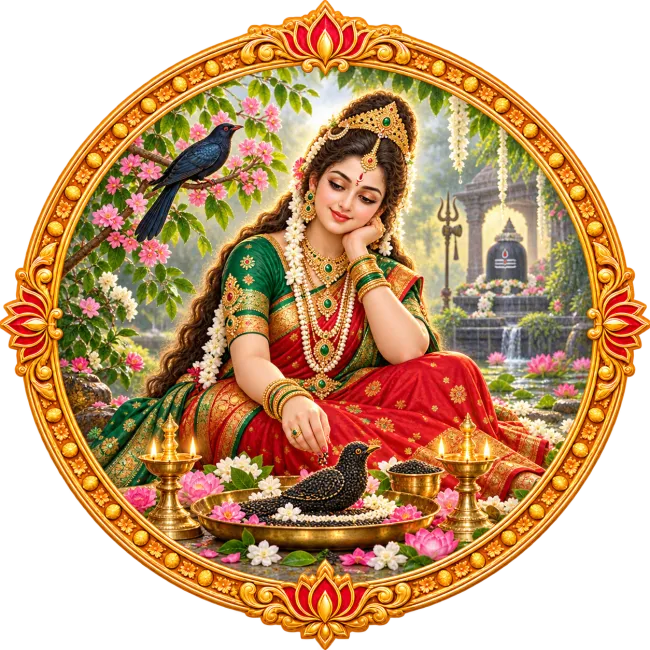
Kokila Vrat Katha
Kokila Vrat Katha connects the worship of a cuckoo, or kokila, with Goddess Sati and her reunion with Lord Shiva in her later form as Parvati. In a popular telling, Sati goes to a sacrifice organised by her father, Daksha, despite Shiva’s concern. There she witnesses Shiva being insulted and gives up her life in grief. The story then describes a period in which Sati lives in the form of a cuckoo before being born again as Parvati and renewing her devotion to Shiva.
The cuckoo in this katha represents longing, patience, and the hope of reunion. Devotees remember the story while worshipping Shiva and Parvati and a symbolic image of the bird. Another traditional account of Kokila Vrat tells of Kirtimala, who learns the month-long observance from Sage Vashishtha. These tellings differ in their events, but both connect the vrat with devotion to Maa Gauri and prayers for well-being in family life.
The Kokila Vrat Katha is heard during an observance associated with Ashadha Purnima. Some families worship on the full-moon day, while others continue their prayers through the period ending on Shravana Purnima. The name of the vrat comes from the cuckoo, a bird linked in traditional storytelling with Goddess Sati or Parvati.
In a widely told version, Sati’s father, Daksha, holds a grand sacrifice but does not invite Lord Shiva. Sati goes to the gathering and is deeply hurt by the disrespect shown to her husband. After she gives up her life, the narrative describes her passing through a long period in the form of a cuckoo. She is later born as Parvati and, through steadfast devotion, is reunited with Shiva. Details of how the cuckoo form arises vary among retellings.
A different traditional katha presents a conversation in which Sage Vashishtha explains Kokila Vrat to Kirtimala. He describes a period of regular bathing, disciplined living, and worship of a symbolic cuckoo figure. Kirtimala follows the observance with faith and is blessed, according to the story. This version gives more attention to the vrat’s daily practices.
Both accounts help explain why the kokila is honoured as a symbol during the puja. They invite devotees to reflect on patience, commitment, and care within relationships. Families may read the version handed down in their tradition and worship a drawing or small figure of the bird without disturbing a living cuckoo.