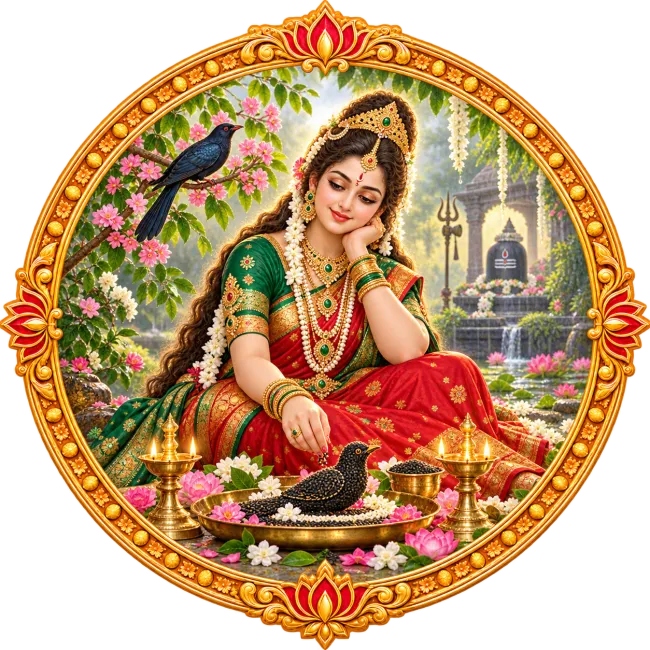
Kokila Puja Vidhi
Kokila Puja Vidhi explains the worship associated with Kokila Vrat, which is dedicated to Goddess Parvati and Lord Shiva. The word kokila refers to the cuckoo, and in this tradition the bird represents a form associated with Goddess Sati or Parvati. Devotees commonly begin the observance on Ashadha Purnima. In some regions, worship continues until Shravana Purnima, while other families follow a shorter practice.
For the puja, devotees bathe, clean the worship space, and place images of Shiva and Parvati along with a representation of the cuckoo. A lamp is lit, and flowers, water, kumkum, and fruit or another suitable offering are presented according to family custom. The vrat katha is read or heard, followed by prayer and aarti. The worship expresses devotion to the divine couple and a wish for harmony and well-being in family life.
Kokila Vrat is linked to a traditional account of Goddess Sati in the form of a cuckoo before her reunion with Lord Shiva as Parvati. The puja therefore includes remembrance of both Shiva and Parvati, as well as the symbolic worship of the kokila. The observance is associated with Ashadha Purnima, but its duration differs by regional and family tradition.
Before the puja, devotees bathe and prepare a clean place for worship. They may place a picture or idol of Lord Shiva and Goddess Parvati on a platform. A drawing or small clay figure of a cuckoo can be kept nearby as the symbol of the vrat. The use of a symbolic image allows the worship to be performed at home without seeking out or disturbing a living bird.
After making a sankalp, devotees light a lamp and offer water, flowers, kumkum, and fruit or sweets according to their means. They remember Maa Parvati in her kokila form and pray to Lord Shiva and the goddess. Reading or listening to the Kokila Vrat Katha helps explain the symbolism of the bird and the connection between this observance and the story of Sati and Parvati. The puja concludes with aarti and the sharing of prasad.
Some families keep the observance for one day, while others follow daily prayers through the period ending on Shravana Purnima. Rules for food, the timing of worship, and the concluding rites vary accordingly. This guide covers the preparation, symbolic kokila worship, katha, and aarti while allowing devotees to follow their household tradition.