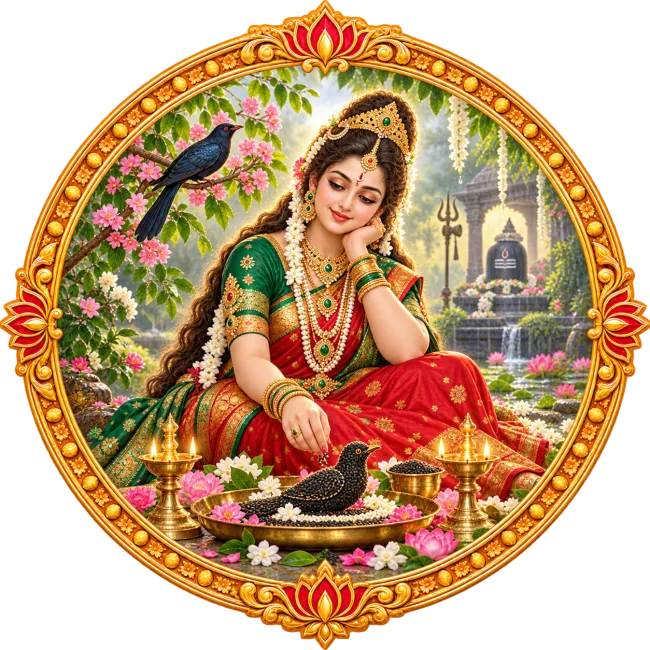
Kokila Dharmik Mahatva
Kokila Dharmik Mahatva explains the religious significance of Kokila Vrat, an observance connected with Goddess Sati or Parvati and Lord Shiva. The kokila, or cuckoo, is honoured as a symbol in stories that recall Sati’s separation from Shiva and their later reunion in her form as Parvati. The vrat is associated with Ashadha Purnima. In some family traditions, worship continues until Shravana Purnima.
Devotees pray for harmony, patience, and well-being in family life while remembering Shiva and Parvati. The worship of a symbolic cuckoo figure and the reading of the Kokila Vrat Katha give meaning to the observance. Its message is also reflected in the bird’s gentle song: devotees are encouraged to speak thoughtfully, show care in their relationships, and remain hopeful during difficult times.
Kokila Vrat has a distinctive place among observances dedicated to Maa Gauri and Lord Shiva because it includes the cuckoo as a sacred symbol. In a popular traditional account, Goddess Sati passes through a period of separation before being born as Parvati and reuniting with Shiva. The kokila represents this part of the story and reminds devotees of devotion maintained through hardship.
The vrat is associated with the full moon of Ashadha. Some households observe it on that day, while others follow a longer period of worship through Shravana Purnima. Devotees may offer prayers to Shiva and Parvati, worship a drawing or small figure of a cuckoo, and read or listen to the Kokila Vrat Katha. The exact duration and puja steps follow regional and family customs.
Another traditional account describes Kirtimala learning Kokila Vrat from Sage Vashishtha. This telling emphasises regular worship, self-discipline, and a clear resolve throughout the observance. Together, the different stories show why devotees connect this vrat with faithfulness, patience, and prayers for a caring family life.
The religious meaning of Kokila Vrat reaches beyond its ritual items. The cuckoo’s song is remembered as an image of gentle speech, while its place in the katha suggests hope after separation and difficulty. By praying, hearing the story, and practising kindness, devotees express their devotion to Maa Parvati and Lord Shiva.