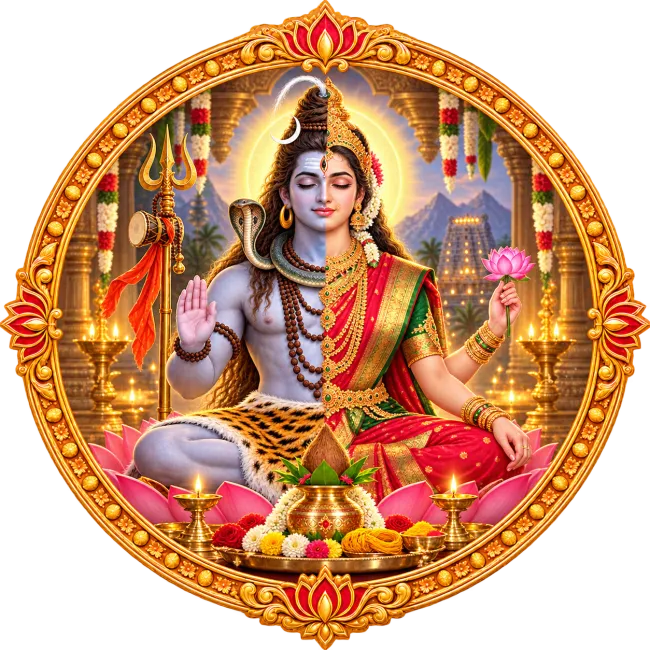
Kedar Gauri Vrat Mahatva
Kedar Gauri Vrat Mahatva explains the religious significance of worshipping Lord Shiva as Kedareshwara and Goddess Parvati as Gauri. The vrat is especially observed in South Indian traditions and is associated with Deepavali Amavasya. Some families follow a twenty-one-day observance, while others perform the main puja on the concluding day. Devotees pray for family well-being and remember the inseparable relationship between Shiva and Shakti.
The vrat’s central story describes Gauri’s worship of Shiva and the manifestation of Ardhanarishvara, a single form shared by the two deities. In many households, a sacred thread with twenty-one knots is included in the puja. Its worship, the reading of the vrat katha, and the final aarti help devotees reflect on commitment, balance, and mutual respect. The observance expresses gratitude for the support and care that sustain family life.
Kedar Gauri Vrat holds a distinctive place among observances dedicated to Shiva and Parvati because both are worshipped together. Shiva is honoured as Kedareshwara and Parvati as Gauri. In the traditional katha, Gauri performs the Kedara Vrat, and Shiva grants her a place in the left half of his form. Their united appearance is known as Ardhanarishvara.
The Ardhanarishvara form gives the vrat its central religious meaning. It represents Shiva and Shakti as inseparable aspects of a divine whole. Devotees remember this unity while praying for understanding, harmony, and care within their own families. The story of Sage Bhringi, who initially honours Shiva alone, further draws attention to the importance of recognising Gauri alongside him.
The number twenty-one has a place in many Kedar Gauri customs. Some families worship for twenty-one days and prepare a thread with twenty-one knots for the concluding puja. Other households follow a shorter observance centred on Deepavali Amavasya. The thread, offerings, vrat katha, and aarti are performed according to family tradition, with the shared worship of Shiva and Gauri at their heart.
The significance of Kedar Gauri Vrat is reflected in both its story and its practice. Regular prayer encourages patience and commitment, while the image of Ardhanarishvara invites reflection on partnership and mutual regard. The vrat gives families an occasion to worship together and seek the blessings of Shiva and Gauri for a peaceful home.