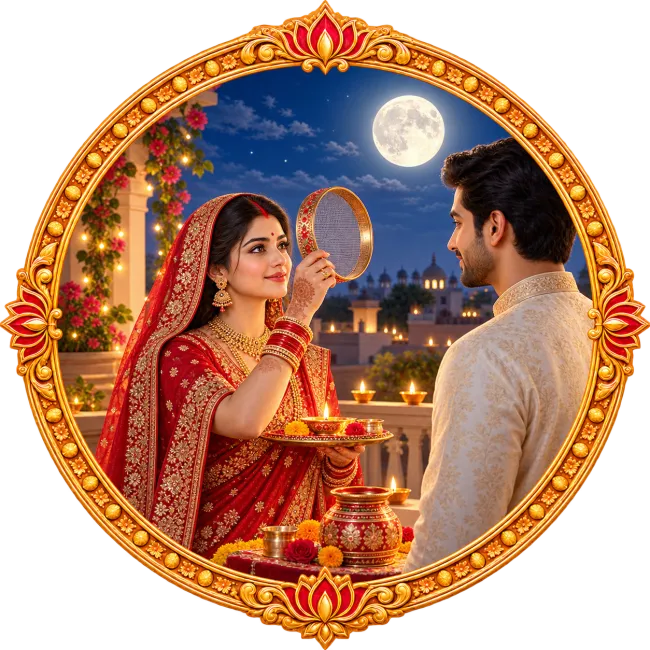
Karwa Chauth Vidhi Evam Samagri
The Karwa Chauth puja includes taking a vow to fast, performing the evening worship, listening to the vrat katha, and breaking the fast after offering water to the moon. Common puja items include a karwa, water, a lamp, roli, rice grains, flowers, sweets, fruits, a puja plate, and a sieve. Customs concerning sargi, fasting without water, and breaking the fast may vary by family and region. This content explains the puja steps and the items needed for preparation.
Karwa Chauth is a fast traditionally observed by married women while praying for their husbands’ long lives, good health, and a happy married life. Understanding the puja steps and arranging the required items in advance can help devotees perform the rituals in an orderly way. In many families, the day begins with sargi before sunrise and a vow to observe the fast. The puja space and offerings are prepared for the evening worship.
Common Karwa Chauth puja items include a karwa, clean water, a lamp, ghee or oil, a cotton wick, roli or kumkum, rice grains, flowers, incense, fruits, sweets, offerings, and a copy of the vrat katha. A vessel of water is kept ready for the moon offering, along with a sieve where it forms part of the family tradition. Some households use additional items, so it is helpful to check the customs followed at home while preparing the puja materials.
During the evening puja, devotees light the lamp, offer prayers, and listen to the Karwa Chauth Vrat Katha. After sighting the moon, they offer water to it and then break the fast according to their family custom. The order of worship, the practice of fasting without water, and the method of breaking the fast can differ between households. This content helps readers understand the Karwa Chauth puja procedure and prepare the required materials.