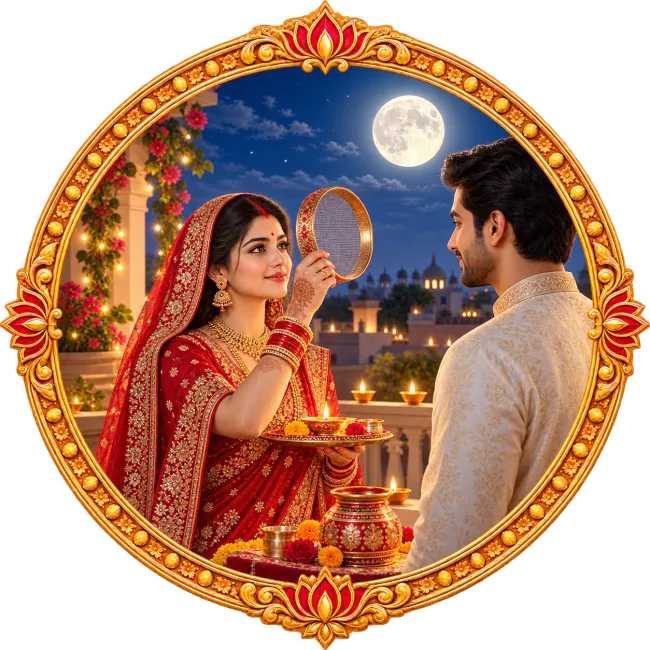
Karwa Chauth Vrat Rules
The rules of Karwa Chauth Vrat explain the customs followed from preparing for the fast to performing the puja and breaking the fast. Married women traditionally observe Karwa Chauth while praying for their husbands’ long lives, good health, and a happy married life. In many families, the day begins with sargi before sunrise and a vow to fast. Devotees then prepare the puja items, listen to the Karwa Chauth Vrat Katha in the evening, and offer water to the moon before breaking the fast. Practices such as observing a fast without water, the timing of the puja, and the method of breaking the fast may vary by family and region. This content explains the main rules and their significance in clear language.
Karwa Chauth Vrat is a Hindu festival associated with love, trust, and prayers for a spouse’s well-being. Women who observe the fast traditionally pray for their husbands’ long lives and a happy married life. The rules of Karwa Chauth cover preparation before sunrise, conduct during the day, evening worship, and the rituals performed after sighting the moon.
In many families, a woman observing the fast eats sargi before sunrise. She then takes a vow to observe the fast and prepares items for the evening puja, such as a karwa, lamp, water, fruits, and sweets. Listening to the Karwa Chauth Vrat Katha and performing the puja, often with family members or a group, are important parts of the tradition. During worship, devotees pray for their spouses’ well-being and their families’ happiness.
After the moon appears, water is offered to it as part of the ritual. The fast is then broken according to the family’s custom. In some households, the husband offers water to his wife to help her break the fast; in others, the practice differs. Customs concerning sargi, fasting without water, and the order of puja rituals can also vary between regions and families.
This content presents the main Karwa Chauth Vrat rules in a clear sequence to help readers understand how the day is traditionally observed. Anyone keeping the fast should consider both their family customs and their health needs. The central spirit of Karwa Chauth is devotion, affection, and heartfelt wishes for one’s spouse.