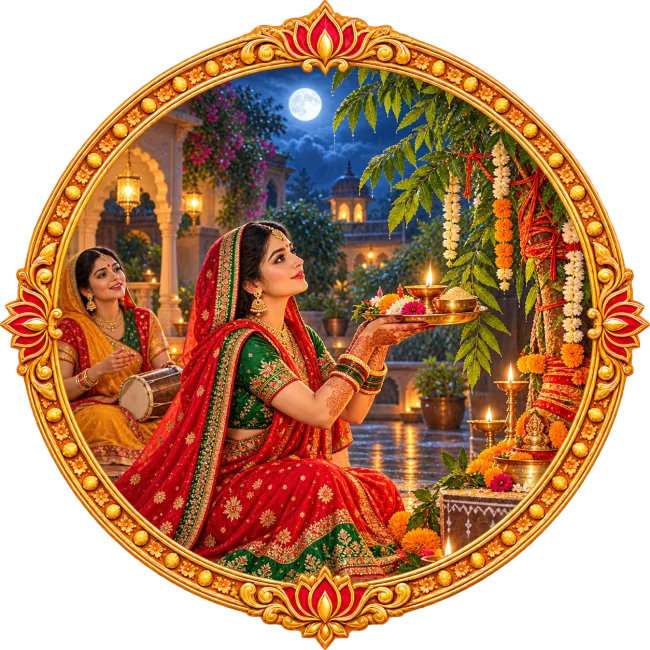
Kajari Teej Vrat Katha
The Kajari Teej Vrat Katha is an important part of the festival’s worship. In one widely told version, the wife of a poor Brahmin observes the Kajari Teej fast and wishes to have sattu for the puja. Unable to prepare it at home, her husband tries to obtain it. His circumstances eventually come before a king, who learns why the Brahmin needs the sattu and helps him. The Brahmin returns home with what his wife needs to complete her worship.
The story reflects faith, support within a family, and the effort to observe a tradition despite hardship. Different versions of the Kajari Teej katha are told across regions and households. Devotees may read or listen to the version followed in their own family during the puja.
Reading or listening to the vrat katha is a customary part of Kajari Teej worship. The story helps pass on the beliefs and family traditions associated with the festival. Kajari Teej is observed across different parts of North India, and its stories may vary in their details. The account of a poor Brahmin and his wife is one commonly told version.
According to this account, the Brahmin’s wife observes the Kajari Teej fast. She needs sattu for the puja, but the family has little money. Wanting to help her complete the worship, her husband goes out to obtain it. In a traditional telling, he finds himself in difficulty and is brought before a king. When the king understands the reason for his actions, he helps the Brahmin. The husband returns home with the required item, and his wife performs the puja with devotion.
The story brings together faith, cooperation between spouses, and compassion for someone facing hardship. After listening to the katha, devotees pray for their families’ well-being. In some households, the observance later concludes with an offering of water to the moon and the breaking of the fast.
The events and dialogue in the katha can differ across local traditions. This content introduces one popular version of the Kajari Teej Vrat Katha and the values expressed through it.