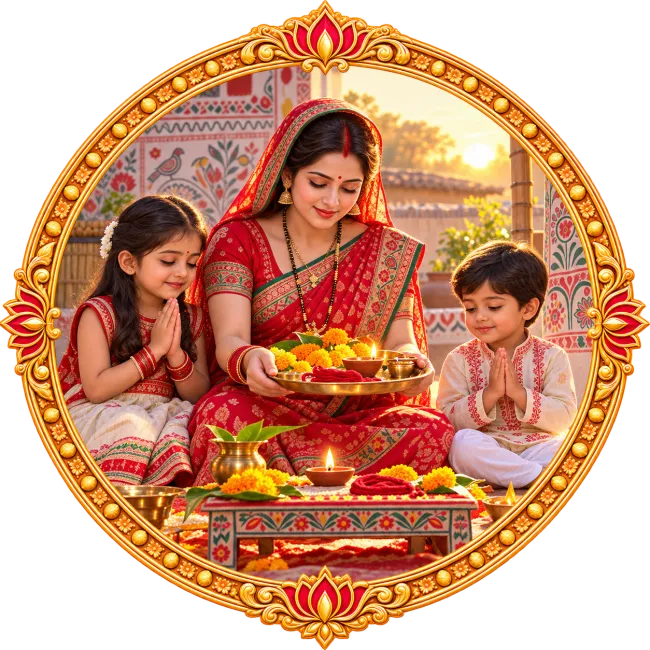
Jivitputrika (Jitiya) Vrat Rules
Jivitputrika, also known as Jitiya Vrat, is observed with prayers for children’s long lives, good health, and well-being. The observance generally begins with Nahay Khay on Saptami. The main fast and worship take place on Ashtami, and the fast is broken on Navami at the time given in the local panchang. In many families, the Ashtami fast is observed without food or water. Worship, remembrance of Jimutavahana, and listening to the Jitiya Vrat Katha are customary parts of the vrat.
Rules concerning food, water, puja items, and paran can differ by region and household. Checking the dates and paran time for one’s location and following family custom helps devotees prepare for the observance. This content explains the principal Jitiya Vrat rules from Nahay Khay through the fast, katha, and paran.
Jivitputrika Vrat, or Jitiya, is observed by mothers while praying for their children’s safety and happiness. The vrat is commonly followed in three stages: Nahay Khay, the main fast, and paran. Each stage has its own customs. Before beginning, devotees can check a local panchang for the Saptami, Ashtami, and Navami dates and the appropriate time to break the fast.
The first stage, Nahay Khay, is generally observed on Saptami. Devotees bathe and prepare a meal according to their household tradition. They also arrange the materials needed for the following day’s worship and vrat katha. The foods prepared for Nahay Khay vary across families and regions.
The main fast takes place on Ashtami. Many women observe it without food or water. During worship, devotees remember Jimutavahana and pray for their children’s long lives and well-being. They read or listen to his story and, in some regions, other traditional Jitiya stories. Fasting practices should be followed with consideration for family custom and personal health.
After completing the Ashtami observance, devotees break the fast at the prescribed time on Navami. They may offer prayers and then have water, prasad, and food according to household practice. The paran time, order of eating, and dishes prepared can differ by location and family. This description presents the main rules and sequence of Jivitputrika Vrat in clear language.