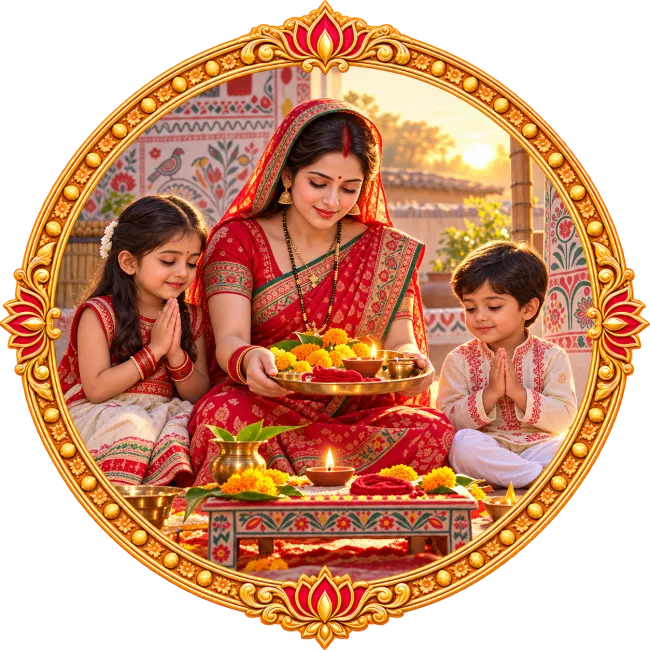
Jivitputrika (Jitiya) Vrat Paran Vidhi
Jivitputrika, also known as Jitiya Vrat, is observed with prayers for children’s long lives and well-being. The fast is broken after the Ashtami observance is complete, according to the Navami date and paran time given in the local panchang. Before breaking the fast, devotees traditionally bathe, offer prayers, and seek blessings for their children’s health and happiness. They then have water, prasad, and food according to their family custom.
Many women observe Jitiya as a fast without food or water. Checking the paran time in advance and preparing water and food beforehand can therefore be helpful. The prayers, foods served, and order of breaking the fast may differ by region and household. This content explains the preparation and main steps of Jitiya Vrat Paran Vidhi.
Jivitputrika or Jitiya Vrat is observed by mothers while praying for their children’s long lives, good health, and welfare. Paran is the customary completion of the fast. It generally takes place on Navami after the Ashtami fast has been completed. The exact time can vary by year and location, so devotees should check their local panchang for the appropriate paran time.
On the day of paran, devotees traditionally bathe and wear clean clothes. In many households, they remember Jimutavahana, perform a brief puja or offer prayers, and seek blessings for their children. After worship, the fast is broken according to family practice. The order of having water, prasad, and food, as well as the dishes prepared for paran, may vary across regional traditions.
For those observing a fast without water, having the required items ready in advance makes the process easier. Personal health should also be considered when ending the fast. This description helps readers understand when Jivitputrika Vrat is traditionally broken and how to prepare for paran according to their household custom.