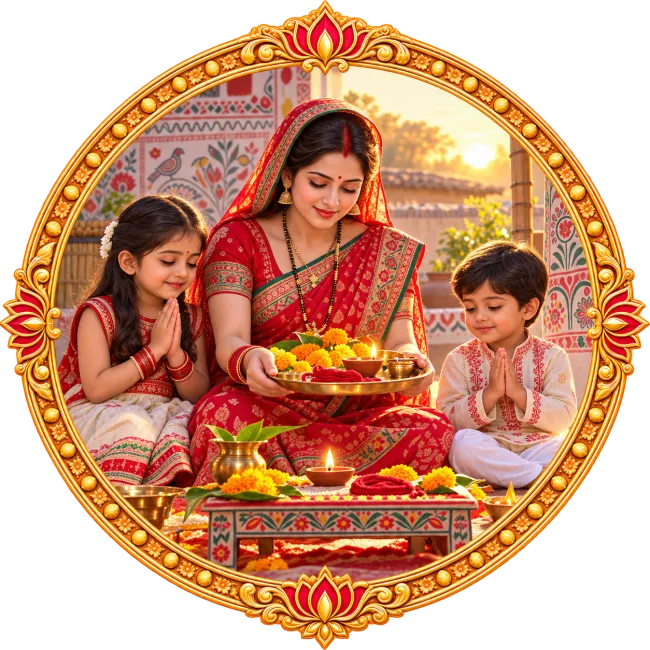
Jivitputrika (Jitiya) Vrat Katha
A principal Jivitputrika or Jitiya Vrat Katha tells the story of the compassionate prince Jimutavahana. In the traditional account, a naga was sent to Garuda each day. When Jimutavahana learned that a young naga named Shankhachuda was next, he took the naga’s place to save his life. Garuda was moved by Jimutavahana’s courage and compassion and vowed to stop killing the nagas. The story conveys selfless care and a willingness to protect another life.
During Jitiya Vrat, mothers listen to Jimutavahana’s story and pray for their children’s long lives and well-being. In some regions, a folk tale about an eagle and a jackal is also recited. The stories told and their order may vary by household and local tradition.
Jivitputrika Vrat, also called Jitiya, is observed with prayers for children’s welfare. The story of Prince Jimutavahana has an important place in its worship. It describes his courage, compassion, and decision to risk his own life to protect someone else.
According to a widely told version, a naga was sent to Garuda each day. When it was the young naga Shankhachuda’s turn, his mother was overcome with grief. Jimutavahana learned what was happening and decided to save him. He took Shankhachuda’s place on the rock where the naga was to be offered. Garuda carried Jimutavahana away, believing him to be the intended naga, but Jimutavahana remained committed to protecting Shankhachuda.
When Garuda discovered who Jimutavahana was and why he had taken the naga’s place, he was moved by the prince’s selflessness. The story says that Garuda vowed to stop killing the nagas and Jimutavahana survived. He is therefore remembered in the vrat katha for protecting life through compassion and sacrifice.
Mothers read or listen to this story during Jitiya Vrat while praying for their children’s health, safety, and long lives. Regional traditions may also include the folk tale of an eagle and a jackal. Families can follow the version and sequence of stories customary in their household. This content introduces Jimutavahana’s story and its connection with Jivitputrika Vrat.