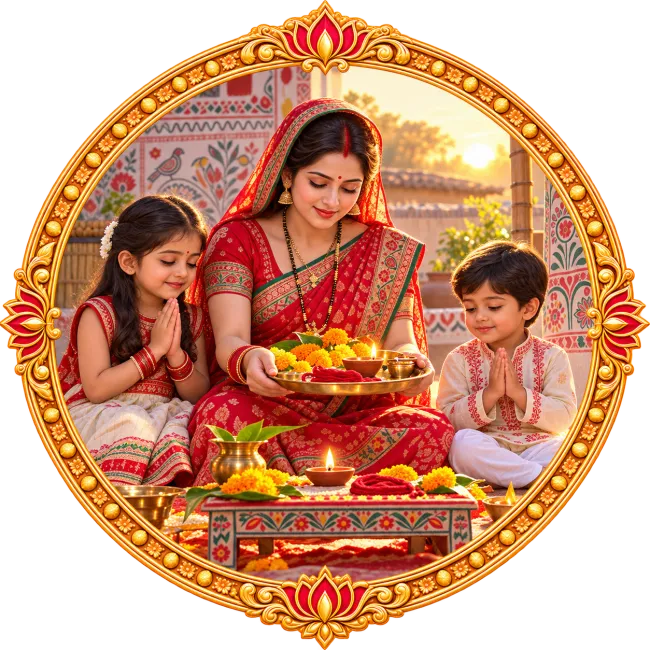
Jivitputrika (Jitiya) Nahay Khay
Nahay Khay marks the beginning of Jivitputrika, or Jitiya, Vrat. It is the day for bathing, having a customary meal, and preparing for the main fast. Nahay Khay is generally observed on Saptami, followed by the principal fast on Ashtami. Devotees bathe, prepare food according to their household tradition, and arrange the items needed for the following day’s puja and vrat katha.
The dishes prepared for Nahay Khay vary by region and family. Many households make foods associated with their local tradition and share the meal with family members. The day provides an opportunity to prepare for Jitiya Vrat and begin the observance with prayers for children’s well-being.
Jivitputrika Vrat, also known as Jitiya, is observed by mothers while praying for their children’s long lives and good health. Nahay Khay is the first stage of the observance. It commonly falls on Saptami, before the main Ashtami fast, with paran performed at the prescribed time on Navami. Devotees can check a local panchang for the dates and paran time applicable to their location.
On Nahay Khay, those observing the vrat bathe and prepare a meal according to family custom. The foods served differ across regions. Some households make particular traditional dishes, while others follow the practices passed down in their families. There is no single menu followed by every family observing Jitiya.
The day is also used to prepare for the main fast. Devotees gather the puja materials and arrange to read or listen to the Jitiya Vrat Katha. Those planning to fast the next day can prepare with their own needs and health in mind. This content explains what Nahay Khay means, where it fits in the Jitiya observance, and how families traditionally prepare for it.