Jaya Parvati Puja Vidhi
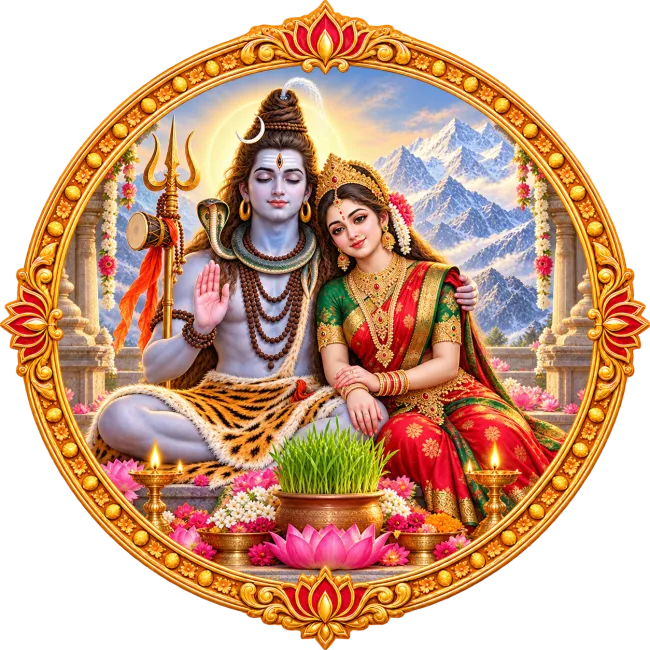
Jaya Parvati Puja Vidhi explains the worship performed during the five-day Jaya Parvati Vrat, a tradition especially observed in Gujarat. The vrat is dedicated to Goddess Parvati and Lord Shiva. On the first day, devotees clean the worship space, make a sankalp, and begin their daily prayers. In many households, wheat or other grains are sown in a small vessel; the growing shoots are cared for and included in the puja throughout the observance.
Each day, devotees offer flowers, water, kumkum, and prayers according to their family tradition. The vrat is commonly accompanied by food rules, especially avoiding salt. A night of jagran with bhajans and aarti is observed near its conclusion. After the concluding morning puja, devotees end the fast according to their household practice. The puja expresses devotion to Maa Parvati and a wish for harmony and well-being in family life.
Jaya Parvati Vrat is a five-day observance associated particularly with Gujarati households. Unmarried girls may worship Maa Parvati while praying for a suitable life partner, and married women may pray for happiness and stability in married life. The puja is performed with devotion to both Goddess Parvati and Lord Shiva, following the customs passed down in the family.
On the first day, devotees bathe, wear clean clothes, and prepare a tidy worship area. An image or idol of Maa Parvati and Lord Shiva is placed on a clean platform. A lamp is lit, and a sankalp is made to observe the vrat. Some families sow wheat or other grains in a small pot at this time and keep the vessel near the puja place for the following days.
During the five days, the deities are worshipped with water, flowers, kumkum, and other items customary at home. The vessel of growing shoots is also tended to and included in prayers where that tradition is followed. Devotees may read or listen to the Jaya Parvati Vrat Katha and perform aarti. Food during the vrat is prepared according to family rules, with avoidance of salt being a widely followed practice.
The concluding stage includes Jaya Parvati Jagran, when devotees spend the night singing bhajans and remembering the goddess. The next morning, they perform the final puja and break the fast as their family tradition directs. Customs concerning the planted grains and the concluding offerings differ by region. This guide covers the sequence from the first day’s sankalp and daily worship to the jagran and completion of the vrat.