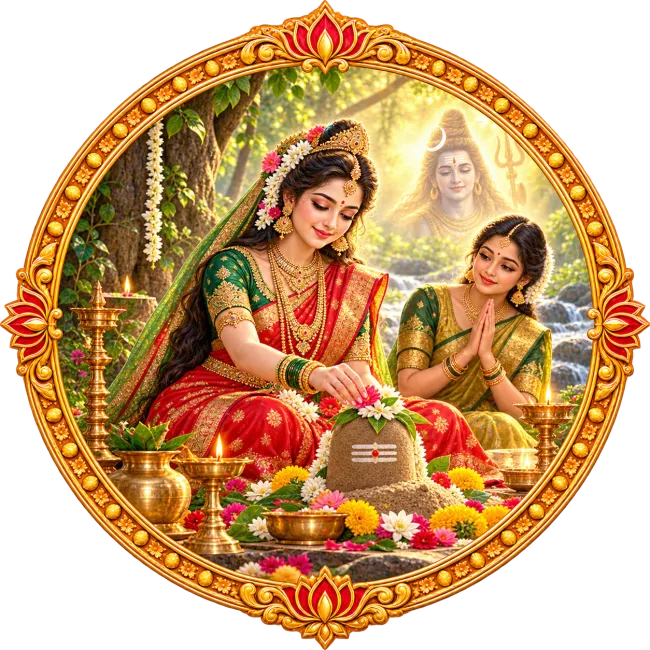
Hartalika Teej Vrat Rules
Hartalika Teej Vrat is associated with the worship of Goddess Parvati and Lord Shiva. Women observing the vrat take a vow to fast according to their family tradition and perform the Shiva-Parvati puja. Some households follow a custom of fasting without food or water, while others observe different rules. Devotees prepare a clean worship space, light a lamp, and offer flowers, bel leaves, fruits, and other puja items before an image or representation of Shiva and Parvati.
Listening to the Hartalika Teej Vrat Katha, offering prayers, and performing aarti are important parts of the observance. Some families also sing devotional songs and keep a night vigil. The fast is usually broken the following day according to household custom. Fasting practices, puja timing, and the method of breaking the fast may vary by region and family. This content explains the principal rules from preparation through paran.
Hartalika Teej Vrat is linked to the traditional account of Goddess Parvati’s penance to have Lord Shiva as her husband. On this occasion, women worship Shiva and Parvati and pray for a happy married life and their families’ well-being. The vrat rules cover taking a vow to fast, preparing for worship, listening to the vrat katha, and breaking the fast according to custom.
Devotees begin by taking a fasting vow in keeping with their household tradition. For the puja, they clean a suitable space and place an image or representation of Shiva and Parvati there. In some families, idols are made from clay or sand. A lamp, water, flowers, bel leaves, fruits, and food offerings are prepared for worship. During the puja, devotees present the offerings and read or listen to the Hartalika Teej Vrat Katha.
Fasting without food or water and staying awake for devotional worship are customs followed in many households. Other families may observe the vrat differently. Practices concerning food and water should be considered in light of both family tradition and personal health. Prayers, aarti, and devotional songs may also form part of the observance.
The fast is generally broken the following day after worship, according to the family’s custom. The timing and method of paran are not the same in every household. This description presents the main Hartalika Teej Vrat rules to help readers understand and prepare for the observance.