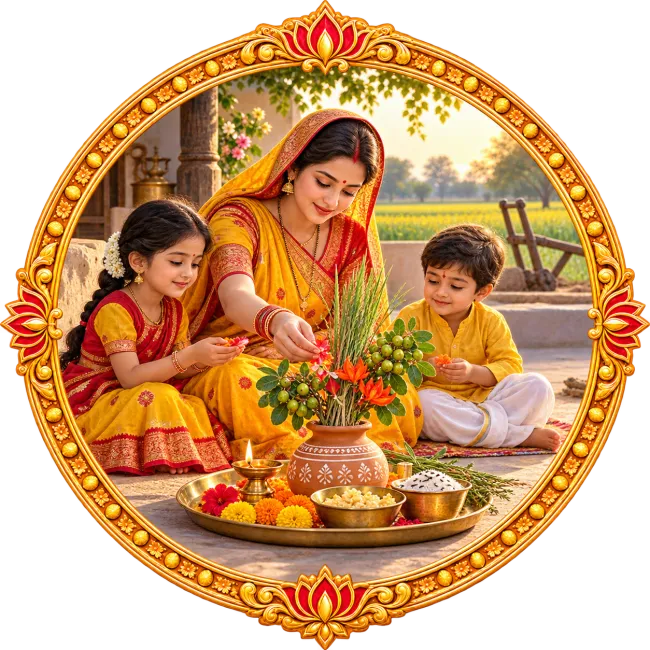
Hal Shashthi (Harchhath) Vrat Katha
A widely told Hal Shashthi or Harchhath Vrat Katha concerns a milk seller and her newborn child. According to the story, she leaves the baby near some bushes while she goes to sell milk and curd. Women observing the Harchhath fast are avoiding cow’s milk, but she dishonestly sells them a mixture of cow’s and buffalo’s milk as buffalo’s milk. Meanwhile, a farmer’s plough accidentally strikes her child.
Grieving for her child, the milk seller regrets her deception. She returns to the women, tells them the truth, and asks for forgiveness. In the traditional story, they bless her, and she finds her child alive and well. The katha conveys the importance of honesty, acknowledging a mistake, and praying for children’s welfare.
Hal Shashthi Vrat, also known as Harchhath or Halchhath, is observed with prayers for children’s long lives and well-being. Listening to the vrat katha is a customary part of the puja. The popular story of the milk seller is also connected with a food custom followed by some families: avoiding cow’s milk during the observance.
In the story, a woman earns her living by selling milk and curd. One day, she gives birth while travelling. Eager to sell her goods, she leaves her newborn beside jharberi bushes and goes to the village. It is the day of Hal Shashthi. Although her milk contains both cow’s and buffalo’s milk, she tells women observing the fast that it contains only buffalo’s milk.
A farmer is ploughing near the place where she left the child, and his plough accidentally strikes the baby. When the woman returns and sees what has happened, she is filled with remorse for deceiving the fasting women. She goes back to the village, admits what she did, and asks for forgiveness. The women forgive and bless her. According to the katha, she then returns to find her child alive and well and resolves to speak truthfully from then on.
During Harchhath puja, the story is heard as a prayer for children’s protection and as a reminder of honesty and repentance. Its wording and some details may differ across regions, so families may follow the version traditionally recited in their household.