Hal Shashthi (Harchhath) Puja Vidhi
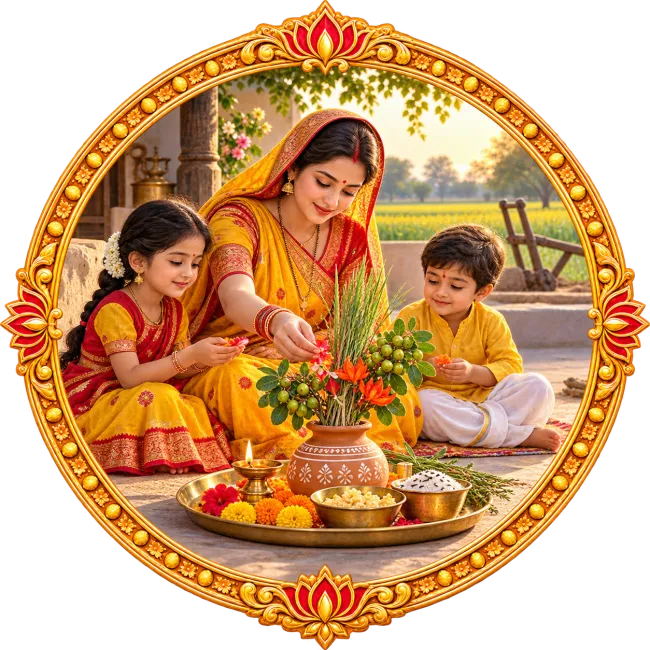
Hal Shashthi, also known as Harchhath, is observed with prayers for children’s long lives, good health, and well-being. Mothers prepare a clean space at home or at a shared worship place for the puja. In many regions, devotees make a small symbolic pond from soil and worship beside it. Water, flowers, a lamp, incense, and other items customary in the family are offered. The puja includes reading or listening to the Hal Shashthi Vrat Katha and praying for children’s welfare.
The worship space, offerings, and order of rituals may differ across regions and households. Many families also follow traditional food rules during the vrat and complete it after the puja according to their custom. This content explains the principal stages of Harchhath puja, from preparation through the katha and completion of the fast.
Mothers observe Hal Shashthi or Harchhath Vrat while praying for their children’s health, long lives, and happiness. Local traditions play an important role in this festival. Some families perform the puja at home, while women in other communities gather to worship together. Before the puja, devotees clean the chosen place and arrange the items used in their family tradition.
In many areas, a small pond or a representation of a waterbody is made from soil for the worship. Devotees prepare water, flowers, a lamp, incense, fruits, and other customary offerings. Some households also include mahua or particular regional items. The materials used can vary by location and family practice.
During the puja, devotees light the lamp and pray for their children’s well-being. They then read or listen to the Hal Shashthi Vrat Katha. Traditional food customs are also part of the observance; many families avoid grains grown in fields cultivated with a plough. After the puja and story, prasad is taken and the vrat is completed according to household custom.
This description introduces the commonly followed steps of Harchhath puja. The method of making the symbolic pond, offerings, order of worship, and way the fast is completed can differ between regions. Families may follow the practices handed down in their own households.