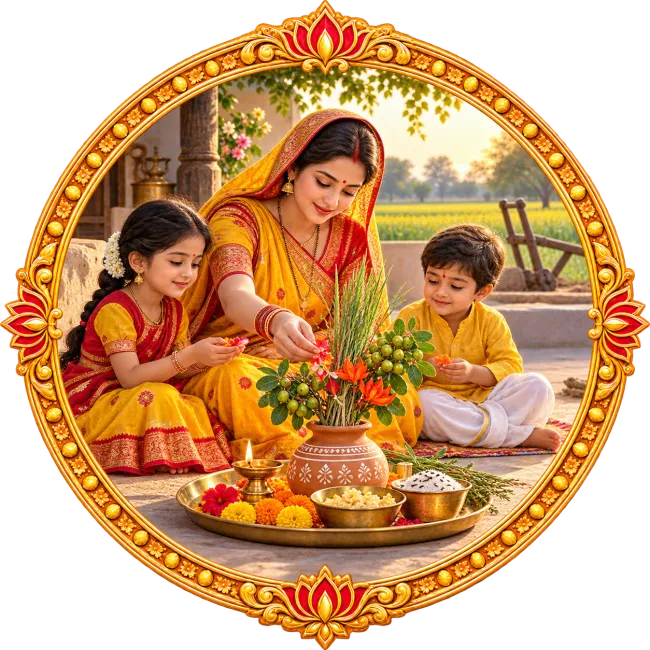
Hal Shashthi (Harchhath) Fasting Food Rules
Hal Shashthi, also known as Harchhath, is observed with prayers for children’s long lives and well-being. Its food customs are closely associated with crops grown in fields ploughed by a hal, or plough. In many regions, those observing the vrat avoid grains and other foods produced from ploughed land on this day. Families instead prepare foods permitted by their own tradition, which may include particular grains, fruits, or local ingredients.
Some households avoid cow’s milk and products made from it, using buffalo milk instead. Foods made with pasai rice, mahua, or other regional ingredients are customary in certain families. These practices are not identical everywhere. This content explains the main food traditions associated with Harchhath and helps readers prepare according to their household customs.
Food traditions form an important part of Hal Shashthi or Harchhath Vrat. Mothers observe this festival while praying for their children’s health, safety, and long lives. What a devotee eats or avoids during the vrat depends largely on local practice and the customs followed at home.
A widely observed Harchhath custom is to avoid food grown on land cultivated with a plough. For this reason, many families do not prepare dishes using such crops on the day of the vrat. In some regions, pasai rice, a traditionally used variety that grows without ploughing, is prepared instead. Mahua and other local ingredients also feature in the customary foods of certain households. The permitted foods vary, so no single menu applies to every family.
There are regional differences concerning milk products as well. Some households avoid cow’s milk and use buffalo milk or products made from it. In certain families, devotees fast during the day and eat their customary foods after the puja; elsewhere, the timing and method differ. Checking the practice followed by one’s family helps with preparing the appropriate ingredients beforehand.
This content introduces the principal food customs of Hal Shashthi Vrat so readers can plan the observance according to their tradition. Those fasting should also consider their personal health and dietary needs.