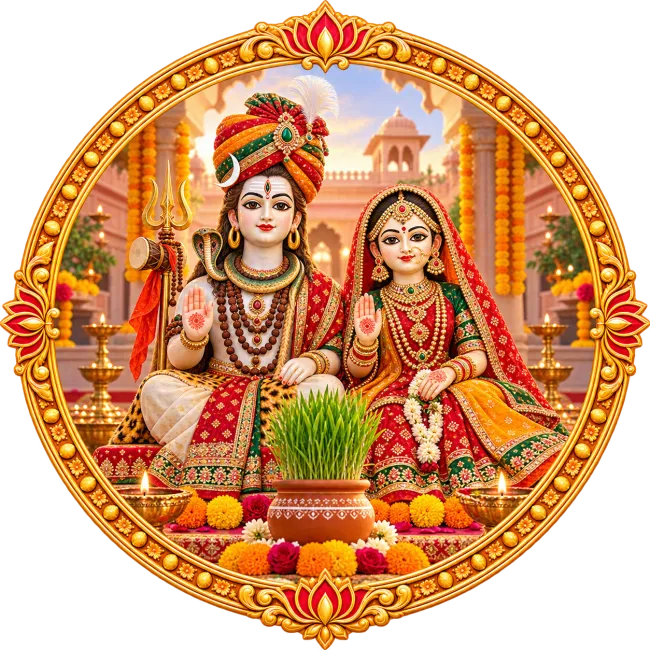
Gangaur Vrat Katha
Gangaur Vrat Katha is a traditional story about Lord Shiva and Goddess Parvati, worshipped during Gangaur as Isar and Gaura. According to a popular telling, they visit a village with Sage Narada on Chaitra Shukla Tritiya. Women with modest means arrive first and welcome them with simple offerings. Pleased by their sincere devotion, Goddess Parvati blesses them with saubhagya, or good fortune in married life. Women who have prepared elaborate offerings arrive later, and the goddess blesses them as well.
Another part of the katha describes Parvati making a Shiva linga from sand and worshipping Lord Shiva with devotion. Shiva appears and grants a blessing connected with the Gangaur observance. Together, these episodes explain why devotees listen to the story while worshipping Isar and Gaura. The katha places sincerity, generosity, and respect for every devotee at the centre of the festival.
Gangaur is especially celebrated in Rajasthan, where Lord Shiva is called Isar and Goddess Parvati is worshipped as Gaura or Gauri. Women and girls decorate their images, sing traditional songs, and hear the Gangaur Vrat Katha. The story connects the festival’s prayers for family happiness and marital well-being with the compassion of Goddess Parvati.
In a widely told version, Shiva and Parvati travel with Sage Narada and reach a village. When the women hear of their arrival, some come quickly with whatever they have: water, flowers, turmeric, or rice. Parvati accepts their simple worship and blesses them. Other women arrive later with carefully prepared food and offerings. The goddess also receives their devotion and gives them her blessing. The episode reminds listeners that a person’s means do not determine the worth of their prayer.
The katha continues with Parvati visiting a riverbank, where she shapes a Shiva linga from sand and worships it. Lord Shiva appears, pleased with her devotion, and gives a blessing associated with women who observe Gangaur and worship the divine couple. Some versions add a later episode involving Shiva, Parvati, and Narada, which further celebrates Parvati’s devotion.
Families may tell these events with different details, but the story’s central themes remain clear: welcome others without judging their circumstances, worship with a sincere heart, and care for family relationships. Reading or listening to the Gangaur Vrat Katha is one of the ways devotees remember these values during the festival.