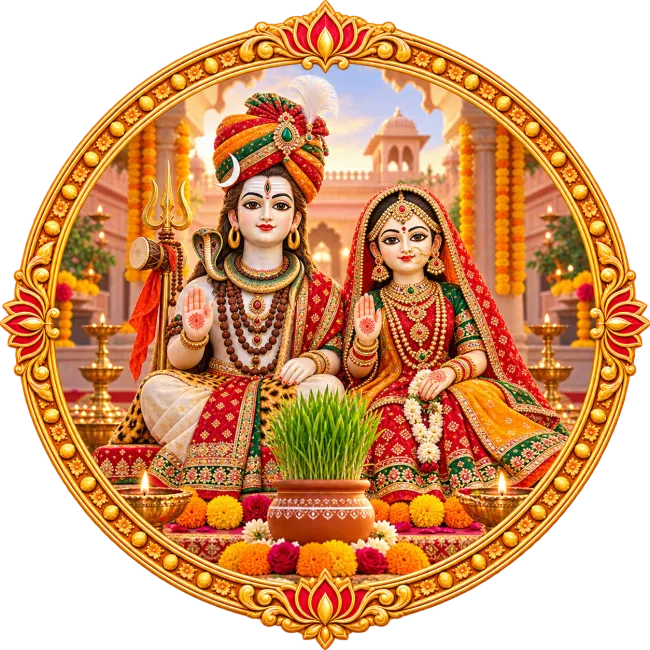
Gangaur Dharmik Mahatva
Gangaur Dharmik Mahatva explains the religious significance of the festival dedicated to Goddess Gauri and Lord Shiva, known in the Rajasthani tradition as Gaura and Isar. Celebrated especially in Rajasthan, Gangaur begins after Holi and culminates on Chaitra Shukla Tritiya. Married women pray for harmony and well-being in married life, while unmarried girls may seek blessings for a suitable life partner. The worship of Isar and Gaura expresses respect for their bond and for caring relationships within the family.
The festival brings devotion into daily life through the decoration of the deities’ figures, offerings of water and flowers, traditional songs, and the Gangaur Vrat Katha. Its religious meaning is also reflected in the story of Goddess Parvati blessing women who approach her with sincere devotion, regardless of the value of their offerings. Gangaur encourages faith, generosity, and gratitude while bringing families and communities together.
Gangaur holds a special place in the religious and cultural life of Rajasthan. Its name is associated with the worship of Shiva and Gauri, who are affectionately called Isar and Gaura. The festival continues over a number of days after Holi, with Chaitra Shukla Tritiya as its main concluding day. This period allows devotees to offer regular prayers rather than observing the occasion through a single puja.
Women and girls worship decorated figures of Isar and Gaura with water, flowers, durva grass, and other offerings customary in their homes. They sing Gangaur songs and may gather with relatives or neighbours for the puja. Married women traditionally pray for happiness and stability in family life. For unmarried girls, the observance can be a prayer for a kind and suitable life partner.
The Gangaur Vrat Katha helps explain the festival’s spiritual message. In a popular telling, Goddess Parvati blesses women who welcome her with simple offerings and genuine faith. This part of the story teaches that devotion is not measured by wealth or elaborate arrangements. The worship of Gauri also recalls her commitment to Lord Shiva, making the divine couple a focus of prayers for mutual care and understanding.
Gangaur concludes with special worship and, in many places, a ceremonial farewell to Isar and Gaura. Traditional songs, decorated figures, and processions give the festival a strong community character. Its religious importance lies in the values carried through these customs: sincere prayer, respect for others, and affection within the family.