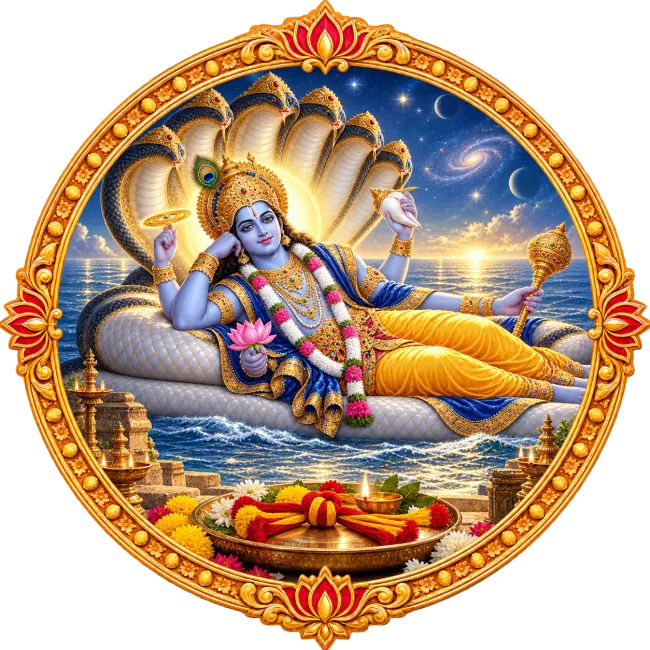
Anant Chaturdashi Puja Vidhi
Anant Chaturdashi puja is dedicated to Lord Vishnu in his Anant form and is observed on Bhadrapada Shukla Chaturdashi. Devotees prepare a clean worship space, place an image or representation of Lord Anant, and arrange water, flowers, rice grains, a lamp, fruits, sweets, and other offerings. An Anant Sutra with fourteen knots is also prepared for the puja.
During worship, the thread is placed before Lord Anant, prayers are offered, and the Anant Chaturdashi Vrat Katha is read or heard. After aarti, the thread is tied according to family custom. Those observing a fast complete it in the manner followed at home. This content explains the principal steps from puja preparation through the tying of the sacred thread.
Anant Chaturdashi is observed on the fourteenth lunar day of the waxing fortnight of Bhadrapada. In the Anant Vrat tradition, devotees worship Lord Vishnu as Anant and pray for stability, peace, and their families’ well-being. The Anant Sutra, traditionally prepared with fourteen knots, is an important part of the puja.
Before worship, devotees bathe and clean the puja area. An image or representation of Lord Anant is placed there. A vessel of water, flowers, rice grains, roli or sandalwood paste, a lamp, incense, fruits, sweets, and prasad may be arranged according to household custom. The Anant Sutra is kept with the offerings so it can be worshipped before being tied.
During the puja, devotees light the lamp, present the prepared items, and pray to Lord Anant. They read or listen to the Anant Chaturdashi Vrat Katha and perform aarti. After the prayers, the sacred thread is tied on the arm according to family tradition. Prasad is then shared, and the fast is completed as customary in the household.
The offerings, order of worship, and rules for tying or later removing the thread can vary by region and family. This description presents the main stages of Anant Chaturdashi Puja Vidhi while allowing readers to follow the practice familiar in their home.