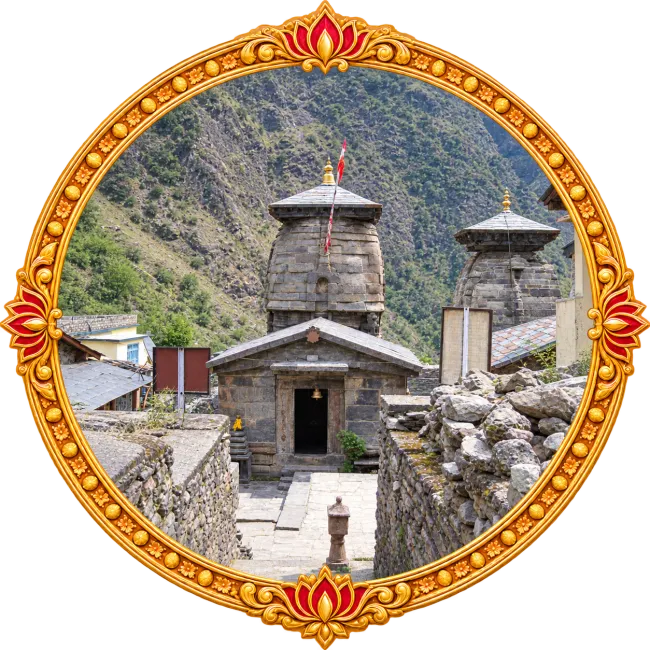
Yogadhyan Badri Temple, Pandukeshwar
Visit Yogadhyan Badri Temple in Pandukeshwar, a sacred shrine dedicated to Lord Vishnu in the Himalayan landscape of Uttarakhand. Known for its meditative deity, association with King Pandu, and connection with the Badri pilgrimage tradition, the temple holds a special place in the hearts of devotees.
Located on the route between Joshimath and Badrinath, Yogadhyan Badri invites pilgrims to pause for prayer and reflection. Its historic architecture and role in winter worship make it a meaningful destination for visitors exploring the religious heritage of the Garhwal Himalayas.
About Yogadhyan Badri Temple
Yogadhyan Badri Temple is situated in Pandukeshwar in the Chamoli district of Uttarakhand. Also known as Yogdhyan Badri or Yoga Badri, it is one of the sacred temples included in the Panch Badri pilgrimage circuit.
The temple is dedicated to Lord Vishnu, whose bronze idol is worshipped in a meditative posture. The name “Yogadhyan” reflects this association with yoga and dhyana, meaning meditation. The deity’s seated form encourages devotees to contemplate inner peace, concentration, and spiritual discipline.
According to religious tradition, King Pandu, the father of the Pandavas, installed the bronze image of Lord Vishnu here. This is a traditional account of the shrine’s origin rather than a documented construction date for the surviving building.
Pandukeshwar also plays an important role in the winter worship associated with Badrinath, maintaining a connection between the region’s temples across the changing seasons.
History of Yogadhyan Badri Temple
The history of Yogadhyan Badri combines sacred traditions with evidence of the region’s early religious institutions.
Local belief associates Pandukeshwar with King Pandu, who is said to have spent his final years performing penance here. The settlement’s name preserves his connection with the place.
Another tradition links the area with the Pandavas, who are believed to have retired here after handing over their kingdom to King Parikshit. These narratives give the shrine a significant place in the devotional geography of the Mahabharata.
Copper-plate inscriptions discovered at Pandukeshwar provide historical information about the temple establishment and early Katyuri rulers. They offer evidence of the area’s longstanding religious importance beyond its mythological associations.
For visitors, understanding the distinction between sacred legend and historical evidence adds depth to the experience of this ancient pilgrimage setting.
Religious Significance of Yogadhyan Badri Temple
Lord Vishnu in Meditation
The temple’s defining feature is its meditative image of Lord Vishnu. For devotees, this form represents self-discipline, steadiness, and devotion. Worship here offers an opportunity to seek blessings while spending time in quiet contemplation.
Part of the Panch Badri Pilgrimage
Yogadhyan Badri belongs to the Panch Badri circuit alongside Badrinath, Adi Badri, Bhavishya Badri, and Vriddha Badri. These shrines connect different forms and traditions of Vishnu worship across Uttarakhand.
Connection with King Pandu
The association with King Pandu gives the shrine particular importance for devotees interested in the religious traditions surrounding the Pandavas. His remembered penance highlights themes of reflection, responsibility, and spiritual renewal.
Winter Worship at Pandukeshwar
Pandukeshwar becomes especially significant after Badrinath Temple closes for winter. The ceremonial images of Uddhava and Kuber are brought to Pandukeshwar for continued worship.
This seasonal tradition allows devotees to participate in worship connected with Badrinath during the colder months. It also reflects the important relationship between Himalayan temples and the communities that preserve their rituals.
The winter movement concerns ceremonial images associated with Badrinath; it should not be confused with relocating the principal, permanently installed Badrinarayan deity.
Visitors planning to attend these ceremonies should confirm the annual dates separately, as they follow the religious calendar.
Architecture of Yogadhyan Badri Temple
Yogadhyan Badri forms part of Pandukeshwar’s historic stone-temple group. Its architecture adds another dimension to the settlement’s religious importance.
The shrine has a distinctive stone superstructure. Architectural studies identify features related to the Dravida tradition, while neighbouring temples display forms associated with Nagara architecture. This combination makes the complex interesting for visitors exploring the diversity of Indian temple design.
The meditative image of Lord Vishnu remains the centre of worship. Devotees can appreciate the temple’s historic character while remembering that it is an active sacred space, where rituals and local customs take priority over sightseeing.
Yogadhyan Badri Temple Timings
The following timings are published in a pilgrimage directory. They have not been independently confirmed by the temple administration and should be checked locally before travel.
The suggested daytime window is for itinerary planning, not an official special-darshan session. Separate morning and evening puja timings have not been verified. Seasonal arrangements and special ceremonies may affect access.
Offerings and Prasad at Yogadhyan Badri Temple
Devotees may wish to bring flowers, tulsi leaves, fruit, or other traditional offerings for Lord Vishnu. Before purchasing materials, ask the priest which items are accepted at the temple.
Offerings should be handed to the priest according to local practice. Visitors should not place items directly on the deity or enter restricted areas without permission.
Those interested in a special puja should enquire about its availability, procedure, duration, and charges. Prasad distribution depends on the temple’s arrangements, so visitors should confirm locally rather than expect a particular food offering every day.
Quiet prayer and respectful participation remain meaningful ways to experience the shrine, even without arranging a separate ritual.
Festivals and Important Religious Occasions
Janmashtami
Janmashtami is listed among the temple’s observances. Visitors wishing to attend should confirm the programme and any changes to normal darshan hours.
Arrival of the Winter Procession
The arrival of the ceremonial images from Badrinath is an important occasion in Pandukeshwar’s religious calendar. It marks the beginning of the associated winter worship.
Return Journey towards Badrinath
Before Badrinath reopens, the return journey of the ceremonial images is another significant event. Pilgrims should check the announced dates for the relevant year.
Best Time to Visit Yogadhyan Badri Temple
May–June and September–October are recommended periods for planning a visit. These months can also suit travellers combining Pandukeshwar with other pilgrimage destinations in the region.
During the monsoon, check road conditions and weather advisories before departure. Mountain journeys may take longer than expected, so avoid tightly packed itineraries.
Winter visits require warm clothing and flexible travel plans. The continuation of worship does not guarantee uninterrupted road access, particularly during adverse weather.
How to Reach Yogadhyan Badri Temple
By Air
Jolly Grant Airport near Dehradun is the nearest airport serving this journey. From the airport, continue by road towards Joshimath and Pandukeshwar. Allow sufficient time for the mountain drive.
By Train
Rishikesh and Haridwar are practical railway gateways. From either location, visitors can arrange onward road transport towards Joshimath and Pandukeshwar.
By Road
Pandukeshwar lies on the Joshimath–Badrinath route. Taxis and available shared transport provide onward connections, but services should be checked locally.
A common approach is:
Rishikesh → Devprayag → Rudraprayag → Karnaprayag → Chamoli → Joshimath → Pandukeshwar
Confirm return transport before beginning the visit, especially outside the main pilgrimage season.
Other Temples to Include in Your Journey
Visitors planning a longer pilgrimage can consider Badrinath Temple, Narasimha Temple in Joshimath, and the other historic shrines within Pandukeshwar.
Each destination has its own worship arrangements and access conditions. Check these separately rather than assuming that all temples follow the same seasonal calendar or daily timetable.
Allow time to experience Pandukeshwar itself instead of treating Yogadhyan Badri only as a brief roadside stop.
Essential Tips for Visitors
Wear modest clothing and remove footwear at the designated place.
Carry warm layers and comfortable walking shoes.
Confirm the day’s Aarti schedule with the priest.
Ask permission before photographing the sanctum or ceremonies.
Keep pathways clear while others are worshipping.
Carry necessary medicines and drinking water.
Avoid leaving plastic packaging or food waste.
Keep extra time for road delays and changing weather.
Conclusion
Yogadhyan Badri Temple in Pandukeshwar brings together devotion to Lord Vishnu, traditions associated with King Pandu, historic temple architecture, and the continuing winter worship of the Badri region.
Whether visited as part of the Panch Badri pilgrimage or during a journey towards Badrinath, the shrine offers an opportunity to slow down, pray, and reflect. Its significance lies not only in its past, but also in the living traditions that continue to connect devotees with this Himalayan sacred place.