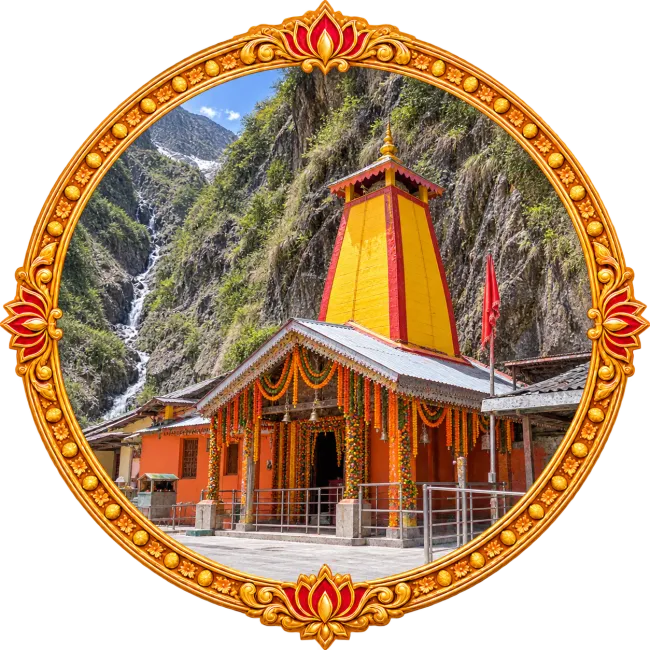
Yamunotri Temple
Visit Yamunotri Temple in Uttarakhand, a sacred Himalayan shrine dedicated to Goddess Yamuna. Situated in Uttarkashi district, the temple is traditionally the first destination of the Uttarakhand Char Dham pilgrimage, followed by Gangotri, Kedarnath and Badrinath.
Surrounded by mountain slopes and the flowing Yamuna, the shrine is known for its sacred hot springs, Divya Shila and distinctive prasadam tradition. The journey from Janki Chatti forms an important part of the pilgrimage, combining physical effort with devotion to Maa Yamuna.
About Yamunotri Temple
Yamunotri Temple stands at an elevation of approximately 3,293 metres in the Garhwal Himalayas. It is dedicated to Goddess Yamuna, who is worshipped as the divine personification of the Yamuna River.
The shrine is reached through a mountain trail from Janki Chatti, the final motorable point. The walking distance is approximately six kilometres each way.
Surya Kund and Divya Shila are important sacred features near the temple. Together with darshan of the goddess, they form the principal religious experiences of the Yamunotri pilgrimage.
History of Yamunotri Temple
The temple’s nineteenth-century construction is traditionally associated with King Sudarshan Shah of Tehri Garhwal in 1839.
After earthquake damage, the shrine was rebuilt under the patronage of Maharani Gularia Devi of Jaipur. These phases of construction and restoration reflect the continuing importance of Yamunotri as a Himalayan pilgrimage destination.
The sacred identity of the place is older than the surviving structure. Its traditions centre on the worship of the Yamuna and the spiritual significance of the river’s mountain source.
Goddess Yamuna and Her Divine Family
In Hindu tradition, Goddess Yamuna is the daughter of Surya, the Sun God, and the sister of Yama, the god associated with death and justice.
This relationship gives Yamuna worship a special place in beliefs concerning spiritual purification and freedom from fear. Devotees approach her as a compassionate mother whose blessings offer comfort and spiritual reassurance.
The river is also closely associated with Lord Krishna’s sacred stories, particularly those connected with Mathura and Vrindavan. At Yamunotri, worship focuses on the goddess in her Himalayan abode.
Association with Sage Asit Muni
Local religious tradition connects Yamunotri with Asit Muni, an ancient sage believed to have maintained his hermitage here.
This association contributes to the shrine’s identity as a place of contemplation and spiritual practice. The mountain setting, river and sacred springs form the landscape within which these traditions are remembered.
For pilgrims, the journey offers an opportunity to reflect on patience, discipline and devotion.
Religious Significance of Yamunotri Temple
Yamunotri is one of the four shrines of Uttarakhand’s Char Dham circuit. Pilgrims traditionally begin their journey here before travelling to Gangotri, Kedarnath and Badrinath.
Goddess Yamuna is revered for purification, compassion and spiritual protection. Devotees offer prayers for family well-being, peace of mind and strength during difficult circumstances.
The pilgrimage includes several connected acts of devotion:
Darshan of Maa Yamuna.
Worship at Divya Shila.
Offering prasadam prepared at Surya Kund.
Participation in Aarti.
Respectful remembrance of the sacred river.
These practices express religious faith and the devotee’s personal relationship with the goddess.
Main Deity of Yamunotri Temple
The principal deity is Goddess Yamuna, whose sacred image is housed within the temple’s sanctum.
Darshan of the goddess is the central purpose of the pilgrimage. After completing the approach through the mountain valley, devotees enter the worship area to offer prayers and express gratitude.
Priests associated with the temple come from Kharsali, the nearby village connected with the shrine’s continuing religious traditions.
Architecture and Temple Setting
Yamunotri is a compact mountain shrine whose setting forms a major part of its character. The temple stands close to the river, with steep Himalayan slopes surrounding the pilgrimage area.
Its appearance is distinguished by a colourful entrance and a tower rising above the main shrine. The sanctum remains the focus of worship, while the nearby springs and sacred rock extend the religious experience beyond the building.
The contrast between the cold mountain environment and the natural hot springs is one of Yamunotri’s most memorable features.
Yamunotri Temple Timings
The regular pilgrimage-season visiting hours are 6:00 AM to 8:00 PM.
These hours apply during the shrine’s seasonal opening period. Special ceremonies and weather-related arrangements can affect the daily routine.
Morning Puja and Aarti
Morning Mangala Aarti begins at 6:30 AM.
The ceremony marks the beginning of the day’s devotional worship. Pilgrims offer prayers to Goddess Yamuna before continuing with darshan and the other sacred stops near the temple.
Visitors staying in Janki Chatti should remember that the temple requires a substantial uphill journey. Plan the day around your walking pace, the queue and enough time for the return descent.
Evening Puja and Aarti
Evening worship brings the temple’s devotional day towards its close. Devotees gather to offer prayers and gratitude to Maa Yamuna.
If attending evening worship, arrange your stay and return journey beforehand. The mountain trail requires careful planning, and a late descent should not be treated as an ordinary town walk.
Surya Kund and Prasadam
Surya Kund is a natural hot-water spring near the temple. It is closely associated with one of Yamunotri’s best-known offerings.
Rice and potatoes are tied in cloth and cooked in the hot spring water. The cooked food is offered to the goddess and received as prasadam.
This tradition connects worship with the natural features of the sacred landscape. The spring is extremely hot, so visitors should keep a safe distance and avoid handling the water directly.
Divya Shila
Divya Shila is a sacred rock near Surya Kund. Devotees traditionally worship here before proceeding to the main temple.
Its importance lies in its place within the established sequence of pilgrimage rituals. A visit to Yamunotri therefore includes both the temple sanctum and the sacred features surrounding it.
Important Religious Occasions
Akshaya Tritiya
The annual opening of Yamunotri Temple is associated with Akshaya Tritiya. The goddess’s ceremonial return from her winter seat marks the beginning of the pilgrimage season.
Bhai Dooj
Bhai Dooj marks the seasonal closure of the high-altitude shrine. The occasion is especially meaningful because of Goddess Yamuna’s relationship with her brother Yama.
Following the closure, worship continues at Kharsali, also known as Khushimath, during the winter months.
How to Reach Yamunotri Temple
By Air
Jolly Grant Airport in Dehradun is the nearest airport serving the journey. Continue by road towards Barkot and Janki Chatti.
By Train
Dehradun, Haridwar and Rishikesh provide railway access for travellers continuing towards Yamunotri.
By Road
The approach road passes through Barkot and continues towards Janki Chatti. From there, pilgrims complete the remaining journey on the mountain trail.
From Janki Chatti
The trek to the temple is approximately six kilometres one way. Pony and palanquin services are also available for pilgrims who require assistance.
Allow a full day for the ascent, darshan, rest stops and descent rather than planning solely around the distance.
Nearby Places to Visit
Janki Chatti: The principal starting point for the temple trek.
Kharsali: The winter seat of Goddess Yamuna.
Shani Temple: A historic shrine in Kharsali dedicated to Shani Dev.
Hanuman Chatti: A settlement on the approach route.
Barkot: A common base for pilgrims travelling towards Yamunotri.
Important Visitor Guidelines
Carry warm clothing and rain protection.
Wear shoes with a firm grip.
Start the trek early and keep a comfortable pace.
Carry drinking water and essential medicines.
Keep identification and Yatra registration details accessible.
Stay clear of steep trail edges.
Give ponies and palanquins sufficient passing space.
Avoid touching the hot water at Surya Kund.
Respect photography restrictions inside the temple.
Do not leave packaging or offerings in the river.
Follow weather-related route restrictions.
Allow enough daylight for the return journey.
Conclusion
Yamunotri Temple brings together devotion to Goddess Yamuna, Himalayan pilgrimage traditions and a distinctive landscape of rivers and hot springs.
The journey from Janki Chatti, worship at Divya Shila and prasadam prepared at Surya Kund make the visit memorable. As the traditional starting point of Uttarakhand’s Char Dham pilgrimage, Yamunotri remains a place of prayer, perseverance and reverence for the sacred river.