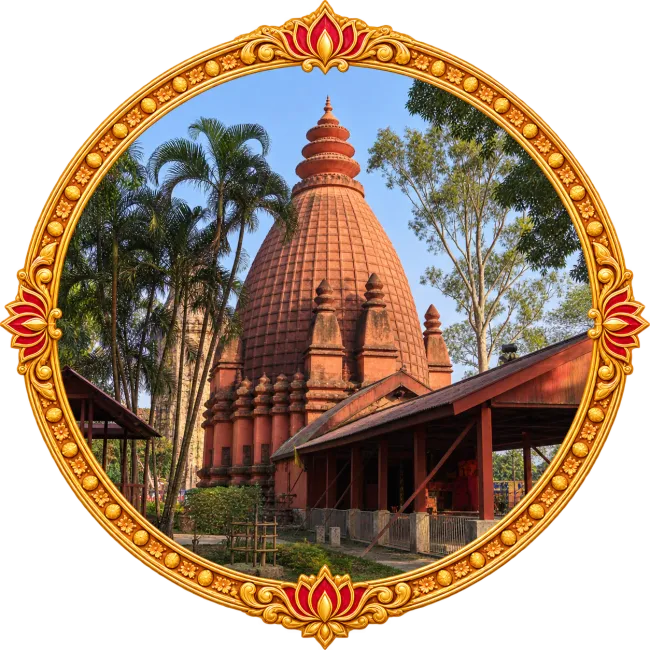
Vishnu Dol, Sivasagar
Vishnu Dol is a historic Vaishnava temple located beside the Sivasagar Tank, also known as Borpukhuri, in Sivasagar, Assam. The temple forms part of the famous Sivasagar Dol complex, which also includes Shiva Dol and Devi Dol.
Built in 1734 CE by Queen Ambika, the wife of Ahom king Siva Singha, Vishnu Dol is dedicated to Lord Vishnu and his incarnations. The temple is particularly important during Doul Utsav, Janmashtami and Vaikuntha Ekadashi.
About Vishnu Dol
Vishnu Dol stands close to the towering Shiva Dol in the centre of Sivasagar town. The presiding deity is Lord Vishnu, worshipped as the protector and preserver of the universe.
The temple follows Vaishnava worship traditions, with importance given to:
Vishnu Puja
Tulsi offering
Naam-Kirtan
Bhajan
Bhagavata recitation
Daily Bhog
Aarti
Festival processions
The shrine represents the Vaishnava element within a complex that brings together Shaiva, Shakta and Vaishnava traditions.
When Was Vishnu Dol Built and Who Built It?
Vishnu Dol was built in 1734 CE by Queen Ambika, popularly honoured as Bar Raja. She was the wife of Ahom ruler Siva Singha.
Queen Ambika sponsored the construction of three principal temples beside Borpukhuri:
- Shiva Dol
- Vishnu Dol
- Devi Dol
She also supported the excavation and development of the enormous Sivasagar Tank. These projects established the area as an important royal, religious and civic centre.
The temple underwent repairs following earthquakes, heavy rainfall and natural deterioration. Conservation efforts have preserved its Ahom-period architectural form and religious character.
Queen Ambika and Religious Harmony
Queen Ambika’s construction of temples dedicated to Shiva, Vishnu and Durga reflected the inclusive religious patronage of the Ahom rulers.
The placement of the three shrines within one complex communicates that different forms of the Divine are part of a shared sacred tradition. Devotees can worship Shiva, Vishnu and Shakti during the same pilgrimage.
Vishnu Dol also reflects the growing influence of Vaishnavism in Assam during the Ahom period.
Religious Significance
Lord Vishnu is worshipped as the cosmic preserver who protects righteousness and restores balance whenever evil becomes powerful.
Devotees visit Vishnu Dol to pray for:
- Family peace and prosperity
- Protection from danger
- Good health
- Marriage and children
- Success in education and employment
- Mental peace
- Relief from difficulties
- Devotion and spiritual progress
- Fulfilment of wishes
The temple is especially important to followers of Krishna, Rama and Assam’s Vaishnava traditions.
Architecture of Vishnu Dol
Vishnu Dol displays architectural characteristics associated with the Ahom kingdom. It is smaller than Shiva Dol but retains a prominent curvilinear Shikhara and decorated exterior.
The structure is made primarily from brick and lime mortar. Its exterior contains floral designs, sacred symbols and sculptural details.
The Garbhagriha houses the sacred representation of Lord Vishnu. A Mandapa provides space for prayer, Bhajan and festival worship.
Architectural features include:
- Curvilinear Shikhara
- Decorated temple tower
- Garbhagriha
- Mandapa
- Carved exterior surfaces
- Temple courtyard
- Festival space
- Smaller sacred structures
- Position beside Borpukhuri
Sivasagar Dol Complex
Vishnu Dol forms part of a larger temple complex.
Shiva Dol
The largest shrine is dedicated to Lord Shiva. It is known for its tall Shikhara and grand Mahashivratri celebration.
Devi Dol
Devi Dol is dedicated to Goddess Durga. Navratri and Durga Puja are its principal festivals.
Vishnu Dol
Vishnu Dol represents the Vaishnava tradition. Doul Utsav and Janmashtami are its largest celebrations.
Together, the temples preserve the religious and architectural heritage of the Ahom kingdom.
Vishnu Dol Timings
The temple follows a daily schedule for Puja, Bhog and Aarti.
Extended arrangements may be introduced during Doul Utsav, Janmashtami and other important Vaishnava festivals.
Morning Puja and Aarti
The day begins with purification of the sanctum and Mangal Puja. Morning Aarti is performed at 6:00 AM.
The morning rituals include:
- Ceremonial preparation of the sanctum
- Offering of fresh clothes
- Flower and garland decoration
- Tulsi offering
- Sandalwood paste
- Vishnu mantra chanting
- Incense and lamps
- Naivedya
- Morning Aarti
General darshan continues after the morning Shringar and Puja have been completed.
Bhog and Evening Aarti
Bhog is offered to Lord Vishnu at noon. It generally includes rice, lentils, vegetables, fruits, Kheer and sweets prepared according to Vaishnava customs.
Evening Puja begins at 5:30 PM, followed by Aarti at 6:30 PM. Devotees participate through Naam-Kirtan and the chanting of Vishnu’s names.
Shayan Puja is performed before the temple closes.
Doul Utsav
Doul Utsav is the most important festival at Vishnu Dol. It is Assam’s devotional celebration of Holi and honours the joyful form of Lord Krishna.
The festival includes:
- Special Krishna Puja
- Naam-Kirtan
- Bhajan
- Processions
- Traditional Faku colours
- Bhog distribution
- Cultural programmes
- Community celebrations
The ceremonial deity is placed on a decorated Doul or raised platform. Devotees offer flowers and colours while singing Krishna’s name.
Other Major Festivals
Krishna Janmashtami
Janmashtami is celebrated with fasting, Bhagavata recitation, Bhajan, Kirtan and special worship connected with the birth of Lord Krishna.
Nandotsav
The celebration of Krishna’s birth continues with Nandotsav, including devotional music and prasad distribution.
Rasa Purnima
Rasa Purnima commemorates the Rasa Lila of Lord Krishna through worship and cultural performances.
Vaikuntha Ekadashi
Devotees observe fasting and offer special prayers to Lord Vishnu.
Rama Navami
Lord Rama, an incarnation of Vishnu, is worshipped through prayers and recitations from the Ramayana.
Kartik Purnima
Lamps are offered during the sacred month of Kartik, and special Vishnu worship is conducted.
Puja and Religious Services
Available ceremonies may include:
- General Vishnu Puja
- Tulsi offering
- Vishnu Sahasranama recitation
- Bhagavata Path
- Naam-Kirtan
- Bhog offering
- Janmashtami Puja
- Doul Utsav offerings
- Marriage-related prayers
- Child-blessing Puja
- Family welfare worship
- Thanksgiving ceremony
Puja and Bhog arrangements should be completed through authorised temple representatives.
Offerings and Prasad
Traditional offerings include:
- Tulsi leaves
- Flowers and garlands
- Fruits
- Coconut
- Sweets
- Sandalwood paste
- Incense
- Clarified butter
- Clothes for the deity
- Monetary donations
Prasad generally includes sweets, fruits, coconut, blessed Tulsi and cooked Bhog.
Only vegetarian offerings should be brought into the temple complex.
Dress Code and Temple Rules
There is no strict dress code, but devotees should wear clean and modest clothing.
Important rules include:
- Remove footwear before entering.
- Follow the designated queue.
- Do not touch the principal deity.
- Follow photography restrictions.
- Do not damage architectural carvings.
- Keep the courtyard and Borpukhuri clean.
- Avoid alcohol, tobacco and non-vegetarian food.
- Deposit donations only at authorised counters.
- Respect ongoing Naam-Kirtan and Puja.
Entry Fee and Darshan Duration
General entry and darshan are free. Charges may apply to optional Pujas, Bhog and ritual materials.
Darshan generally requires 20–40 minutes. Visitors exploring Vishnu Dol, Shiva Dol, Devi Dol and Borpukhuri should reserve one to two hours.
Doul Utsav and Janmashtami attract large crowds, increasing the waiting period.
Best Time to Visit
October to March is the most comfortable period for visiting Sivasagar. The weather is suitable for temple visits and heritage exploration.
For peaceful darshan, visitors should arrive between 7:00 AM and 10:00 AM on a weekday.
Doul Utsav provides the most vibrant Vaishnava celebration, while Janmashtami offers special devotional programmes.
How to Reach Vishnu Dol
By Air
Jorhat Airport is approximately 65 kilometres from Sivasagar. Dibrugarh Airport provides additional flight options.
By Train
Sibsagar Town Railway Station is the nearest station. Simaluguri Junction offers wider railway connectivity.
By Road
Sivasagar is connected with Jorhat, Dibrugarh, Tinsukia and Guwahati.
Accommodation and Facilities
Sivasagar has hotels, guest houses and budget lodges.
Facilities near the Dol complex include:
- Parking
- Drinking water
- Toilets
- Shoe-storage area
- Puja shops
- Prasad stalls
- Restaurants
- Local transport
- Security assistance
Nearby Places to Visit
- Shiva Dol: The principal Shiva shrine in the complex.
- Devi Dol: A historic temple dedicated to Goddess Durga.
- Borpukhuri: The large historic tank beside the temples.
- Rang Ghar: An Ahom royal sports pavilion.
- Talatal Ghar: A palace and military structure.
- Kareng Ghar: The historic Ahom royal palace at Garhgaon.
- Joysagar Tank: A large water reservoir built during the Ahom period.
- Jaydol: A temple dedicated to Lord Vishnu.
- Charaideo Maidams: The burial grounds of Ahom royalty.
Conclusion
Vishnu Dol is an important Vaishnava temple preserving the religious and architectural heritage of the Ahom kingdom. Built by Queen Ambika in 1734 CE, it forms part of the celebrated Sivasagar Dol complex beside Borpukhuri.
The historic architecture, daily Bhog, Doul Utsav and Janmashtami celebrations attract devotees throughout the year. Visitors worship Lord Vishnu at Vishnu Dol to seek protection, prosperity, family happiness and spiritual devotion.