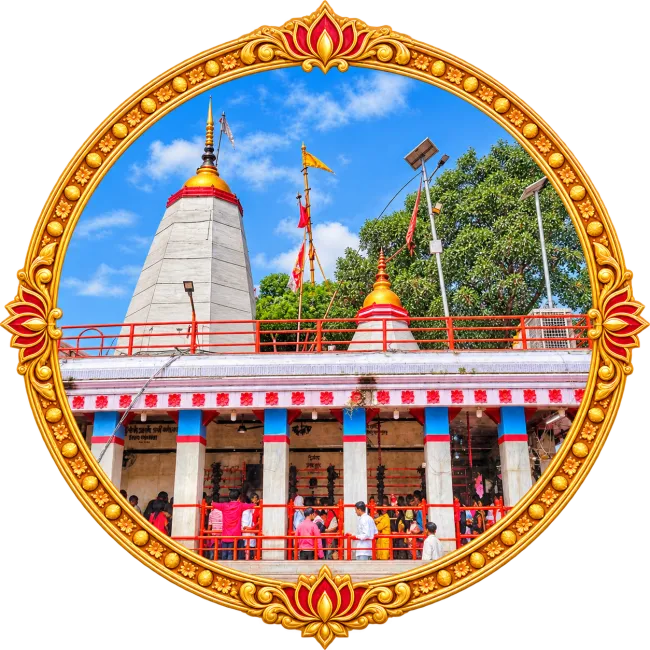
Vindhyavasini Devi Temple, Uttar Pradesh
Vindhyavasini Devi Temple is one of the most revered Shakti shrines in northern India. Located in Vindhyachal, near Mirzapur in Uttar Pradesh, the temple is dedicated to Goddess Vindhyavasini, a powerful manifestation of Goddess Durga. Her name means “the Goddess who resides in the Vindhya Mountains.”
The shrine is considered a Siddha Peetha, where devotees believe sincere prayers and spiritual practices produce divine results. Unlike most Shakti shrines associated primarily with the fallen body parts of Goddess Sati, Vindhyachal is celebrated as the place where Goddess Durga chose to reside after defeating powerful demonic forces.
About Vindhyavasini Devi Temple
Vindhyavasini Devi Temple stands in the sacred town of Vindhyachal on the banks of the River Ganga. It is situated approximately 8 kilometres from Mirzapur and attracts pilgrims throughout the year.
Goddess Vindhyavasini is worshipped as an embodiment of strength, protection and maternal compassion. She is identified with Durga, Yogamaya, Mahalakshmi and the Divine Mother who destroys evil and protects her devotees.
The temple is one of three major Shakti shrines forming the Vindhyachal Trikona Parikrama:
Vindhyavasini Devi Temple
Kali Khoh Temple
Ashtabhuja Devi Temple
Pilgrims traditionally visit these three shrines to complete the sacred triangular pilgrimage. Each temple represents a different manifestation of the Divine Mother.
When Was Vindhyavasini Devi Temple Built and Who Built It?
Vindhyavasini Devi Temple is an ancient shrine whose origin is associated with Hindu sacred tradition. Its foundation predates the surviving historical records, and no single ruler or builder is identified as the founder of the original temple.
The shrine is mentioned through traditions connected with the Puranas, the Mahabharata and the story of Goddess Yogamaya. Its long religious continuity indicates that Vindhyachal was an established centre of Shakti worship in ancient India.
Different rulers, local landholders, devotees and religious institutions contributed to the temple’s repair and expansion over the centuries. The existing structure has undergone repeated renovation to accommodate increasing numbers of pilgrims.
Modern additions include barricaded queue passages, covered waiting areas, security facilities, improved access routes, donation counters and arrangements for large Navratri gatherings.
Mythology of Goddess Vindhyavasini
According to Hindu tradition, the demon king Kansa was warned that the eighth child of his sister Devaki would bring about his death. He imprisoned Devaki and Vasudeva and killed their children soon after birth.
When Lord Krishna was born as Devaki’s eighth child, Vasudeva carried him across the Yamuna River to Gokul. He exchanged Krishna with the newborn daughter of Yashoda and returned to the prison with the baby girl.
Kansa attempted to kill the child by throwing her against a stone. However, she escaped from his hands, appeared in her divine eight-armed form and declared that the child destined to destroy him had already been born elsewhere.
The Goddess was Yogamaya, the divine feminine power of Lord Vishnu. After warning Kansa, she travelled to the Vindhya region and established her presence there. She consequently became known as Vindhyavasini.
Goddess Vindhyavasini and Mahishasura
Another tradition connects Goddess Vindhyavasini with the defeat of Mahishasura. The buffalo demon had received powerful boons and created suffering throughout the three worlds.
The combined spiritual energies of the gods manifested as Goddess Durga. She fought Mahishasura and eventually defeated him. After restoring peace, the Goddess selected the Vindhya Mountains as one of her principal dwelling places.
As Mahishasuramardini, she represents the victory of righteousness over arrogance, violence and disorder.
Connection with Nanda and Yogamaya
The Goddess is also called Nanda Devi because she appeared as the daughter of Nanda and Yashoda. Devotees worship her as the divine sister of Lord Krishna.
Her association with Krishna’s birth gives Vindhyavasini Devi Temple an important place in both Shakta and Vaishnava traditions. She is regarded as the cosmic energy that assisted Lord Vishnu’s incarnation and protected the divine plan.
Religious Significance
Vindhyavasini Devi is worshipped as a living and accessible form of the Divine Mother. Devotees believe that she remains present in Vindhyachal to protect people during the current age.
Pilgrims pray at the temple for:
Protection from danger
Courage and confidence
Good health
Marriage and children
Family welfare
Prosperity and financial stability
Success in education and employment
Relief from fear and negative influences
Victory over obstacles
Fulfilment of wishes
Spiritual strength
The shrine is especially important for people undertaking Durga worship, Navratri observances and family ceremonies.
Architecture of Vindhyavasini Devi Temple
The temple is constructed in the North Indian Nagara tradition. Its elevated spire, decorated entrance and compact sanctum are prominent architectural features.
The image of Goddess Vindhyavasini is installed inside the Garbhagriha. She is richly decorated with a crown, jewellery, flowers, garlands, sindoor and colourful clothes.
Because the sanctum is relatively small, devotees receive darshan through a continuously moving queue. The temple complex remains surrounded by a busy market selling flowers, chunri, sweets, coconuts and religious items.
The complex contains:
Main sanctum of Goddess Vindhyavasini
Prayer and offering areas
Smaller shrines
Queue passages
Donation counters
Prasad shops
Shoe-storage facilities
Administrative and security areas
Vindhyavasini Devi Temple Timings
The temple performs four principal daily Aartis. General darshan is temporarily paused during each Aarti, Shringar and Bhog ceremony.
Summer Timings
Winter Timings
During Chaitra and Sharadiya Navratri, the shrine can follow extended darshan arrangements. Queue movement may also be regulated according to crowd conditions.
Mangal Aarti and Morning Puja
Mangal Aarti is the first worship ceremony of the day. It begins at 4:00 AM and includes the ceremonial opening of the sanctum, cleaning of the worship area and preparation of the Goddess for Shringar.
The morning rituals include:
Ceremonial purification
Offering of fresh clothes
Flower and garland decoration
Application of sindoor and sandalwood
Crown and jewellery decoration
Mantra chanting
Incense offering
Lighting of lamps
Naivedya
Mangal Aarti
General morning darshan begins at 5:00 AM after completion of the ceremony.
Rajbhog Aarti
Rajbhog Aarti is performed at noon. Cooked Satvik food, sweets, fruits and dry fruits are offered to Goddess Vindhyavasini.
General darshan is suspended between 12:00 PM and 1:30 PM while Bhog, Shringar and Aarti are performed. The sanctum reopens for afternoon darshan after the ritual.
Sandhya Aarti
Sandhya Aarti is performed after sunset. Priests light lamps, offer incense and recite devotional hymns before the Goddess.
The ceremony takes place from 7:15 PM to 8:15 PM during summer and from 6:30 PM to 7:30 PM during winter.
Evening darshan resumes after the Aarti. The illuminated temple and devotional atmosphere make this one of the most beautiful times to visit.
Shayan Aarti
Shayan Aarti is the final worship ceremony of the day. The Goddess is offered prayers and prepared symbolically for rest.
The ceremony is performed from 10:30 PM to 11:00 PM during summer and from 9:30 PM to 10:30 PM during winter. The temple closes after completion of the ritual.
Vindhyachal Trikona Parikrama
The Trikona Parikrama connects three important temples dedicated to different forms of Shakti.
Vindhyavasini Devi Temple
The pilgrimage generally begins with darshan of Goddess Vindhyavasini. She represents prosperity, protection and divine maternal power.
Kali Khoh Temple
Kali Khoh is situated inside a natural cave. Goddess Kali is worshipped here as the fierce power that destroys evil and negative influences.
Ashtabhuja Devi Temple
Ashtabhuja Devi is worshipped in an eight-armed form on a nearby hill. The shrine is associated with Goddess Yogamaya, who escaped from Kansa.
Pilgrims travel between the three temples by road, auto-rickshaw or private vehicle. Some devotees undertake portions of the route on foot as an act of faith.
Major Festivals
Chaitra Navratri
Chaitra Navratri is celebrated during March or April. A major fair is organised, and lakhs of devotees visit Vindhyachal during the nine-day festival.
Sharadiya Navratri
Sharadiya Navratri is the largest annual celebration at the temple. The shrine is decorated with flowers and lights, and special Puja, Havan and devotional programmes are conducted.
Durga Ashtami
Durga Ashtami is observed with special worship, Kanya Pujan, Havan and offerings to the Goddess.
Kali Puja and Diwali
The temple is illuminated during Diwali. Special prayers are offered for prosperity, protection and family welfare.
Kajali Festival
The traditional Kajali festival is associated with the cultural heritage of Mirzapur and Vindhyachal. Devotional and folk performances form part of the regional celebrations.
Puja and Religious Services
Devotees may arrange different ceremonies according to temple customs:
General Puja
Special Puja
Mangal Aarti participation
Durga Saptashati Path
Chandi Path
Havan
Navratri Puja
Kanya Pujan
Mundan ceremony
Marriage-related prayers
Child-blessing Puja
Family welfare Puja
Thanksgiving ceremony
Pujas and donations should be arranged through authorised priests or recognised temple counters. Charges should be confirmed before beginning any ceremony.
Offerings at Vindhyavasini Devi Temple
Traditional offerings include:
Red chunri
Coconut
Red flowers
Garlands
Sindoor
Bangles
Sweets
Fruits
Dry fruits
Incense
Clarified butter
Mata’s Shringar items
Monetary donations
Offering plates are available in the market surrounding the temple.
Prasad
Prasad generally includes peda, laddoo, coconut, mishri and dry fruits. Cooked Bhog can also be arranged according to temple customs.
Devotees should purchase prasad from recognised shops, confirm prices in advance and avoid carrying plastic packaging inside restricted areas.
Dress Code and Entry Rules
There is no rigid ceremonial dress code, but visitors should wear clean and modest clothes.
Important rules include:
Remove footwear before entering the temple.
Follow the designated queue.
Maintain order inside the compact sanctum.
Do not stop for an extended period before the deity.
Follow photography restrictions.
Do not touch the main deity.
Avoid alcohol, tobacco and non-vegetarian food.
Keep the temple and Ganga ghats clean.
Deposit donations only at authorised counters.
Take care of valuables in crowded areas.
Entry Fee and Darshan Duration
General entry and darshan are free. Charges apply only to optional Pujas, offerings and special ritual services.
On ordinary weekdays, darshan may require 30–60 minutes. On Tuesdays, weekends and public holidays, the waiting period can be longer.
During Chaitra and Sharadiya Navratri, queues may require several hours. Devotees should carry water, follow barricades and cooperate with security personnel.
Best Time to Visit
October to March is the most comfortable period for visiting Vindhyachal. The weather remains relatively cool and suitable for completing the Trikona Parikrama.
Chaitra and Sharadiya Navratri provide the grandest devotional experience but attract extremely large crowds.
Visitors seeking a quieter darshan should choose an ordinary weekday and arrive between 6:00 AM and 8:00 AM. Summers can be extremely hot, while the monsoon brings heavy rainfall and increased humidity.
How to Reach Vindhyavasini Devi Temple
By Air
Lal Bahadur Shastri International Airport in Varanasi is the nearest major airport. It is approximately 70 kilometres from Vindhyachal. Taxis are available from the airport.
Prayagraj Airport is another option and is approximately 100 kilometres away.
By Train
Vindhyachal Railway Station is the nearest station and is located approximately 1 kilometre from the temple.
Mirzapur Railway Station, approximately 8 kilometres away, offers additional train connections. Auto-rickshaws, e-rickshaws and taxis are available from both stations.
By Road
Vindhyachal is connected by road with Mirzapur, Varanasi, Prayagraj, Ayodhya, Lucknow and other cities.
Accommodation and Facilities
Vindhyachal has Dharamshalas, guest houses, budget hotels and private lodges. Additional accommodation is available in Mirzapur.
Facilities near the temple include:
Drinking water
Toilets
Shoe-storage counters
Prasad shops
Vegetarian restaurants
Parking
Medical assistance
Police and security posts
Dharamshalas
Public transport
Religious-item shops
Advance booking is strongly recommended during Navratri.
Nearby Places to Visit
Kali Khoh Temple: A cave shrine dedicated to Goddess Kali.
Ashtabhuja Devi Temple: A hill shrine associated with Yogamaya.
Sita Kund: A sacred water source connected with Goddess Sita.
Ram Gaya Ghat: A religious bathing and ritual site.
Vindhyachal Ganga Ghats: Sacred ghats used for bathing and worship.
Mirzapur Ghanta Ghar: A historic landmark in Mirzapur.
Chunar Fort: An ancient riverside fort associated with several historical periods.
Siddhanath Ki Dari: A seasonal waterfall and scenic destination.
Visitor Guidelines
Carry a valid identity document, essential medicines and drinking water. Wear comfortable footwear because the Trikona Parikrama involves travel between hill and cave shrines.
Protect personal belongings in crowded markets and queues. During Navratri, follow temporary traffic diversions, barricades and administrative instructions. Complete donations and Puja arrangements only through authorised channels.
Conclusion
Vindhyavasini Devi Temple is a major centre of Shakti worship where the Divine Mother is revered as Yogamaya, Nanda Devi and the guardian of the Vindhya region. Its association with Lord Krishna’s birth, the victory over demonic forces and the Trikona Parikrama gives the shrine exceptional religious importance.
The ancient temple, four daily Aartis, Navratri celebrations and nearby Kali Khoh and Ashtabhuja shrines create a complete spiritual journey. Devotees visit Vindhyachal to seek courage, prosperity, protection and the compassionate blessings of Goddess Vindhyavasini.