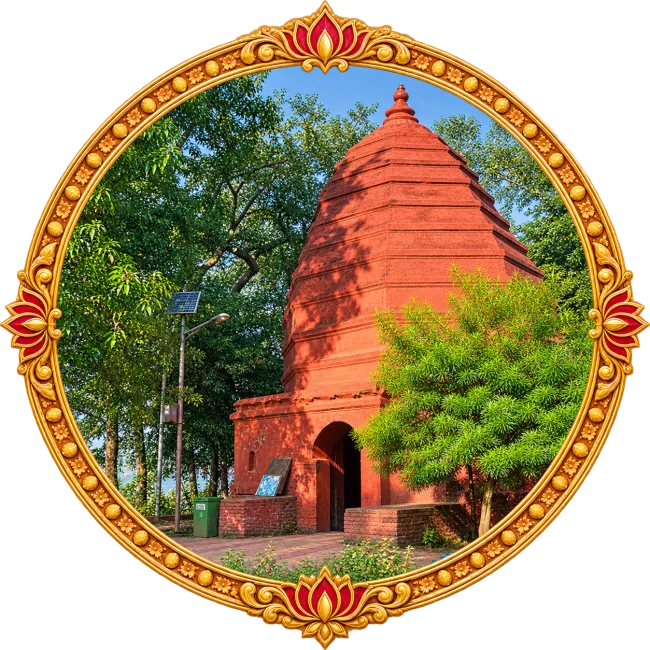
Umananda Temple, Guwahati
Umananda Temple is a historic Shiva shrine situated on Umananda Island in the Brahmaputra River at Guwahati, Assam. The small river island is popularly known as Peacock Island because of its shape and scenic appearance.
Built in 1694 CE by Ahom king Gadadhar Singha, the temple is dedicated to Lord Shiva in his Umananda form. Its island location, ancient rock carvings and connection with the legend of Kamadeva make it one of Guwahati’s most distinctive religious destinations.
About Umananda Temple
Umananda Temple stands on a rocky island between the two banks of the Brahmaputra. It can be reached only by boat, making the journey an essential part of the pilgrimage.
The name Umananda combines two Sanskrit words:
- Uma refers to Goddess Parvati.
- Ananda means joy or happiness.
Umananda therefore means “the joy of Uma” or “the Lord who brings happiness to Goddess Parvati.” Lord Shiva is worshipped here as the divine consort of Uma.
The island is also called Bhasmachal or Bhasmakuta, meaning the Hill of Ashes. This name is connected with the legend in which Lord Shiva reduced Kamadeva, the god of desire, to ashes.
When Was Umananda Temple Built and Who Built It?
Umananda Temple was built in 1694 CE by Gadadhar Singha, a powerful ruler of the Ahom dynasty. He was a devotee of Lord Shiva and supported the construction of several religious structures in Assam.
The temple was constructed under the supervision of officials and craftsmen of the Ahom kingdom. The original structure combined regional Assamese construction with traditional Hindu temple architecture.
A major earthquake in 1897 caused extensive damage to the temple. The shrine was subsequently restored by a local merchant and other devotees. Parts of the repaired structure contain Vaishnava images in addition to Shaiva carvings, reflecting the materials and artistic influences used during reconstruction.
The temple has received further repairs to protect it from weather, river conditions and the effects of regular pilgrimage.
Legend of Kamadeva and Bhasmachal
According to Hindu mythology, Lord Shiva entered deep meditation after the death of Goddess Sati. At the same time, the demon Tarakasura had become extremely powerful. A divine prophecy stated that only a son of Shiva could defeat him.
The gods needed Shiva to marry Parvati and have a child. They sent Kamadeva, the god of desire, to awaken Shiva from meditation.
Kamadeva shot his flower arrow at Shiva. Disturbed from his meditation, Shiva opened his third eye and released a powerful flame that reduced Kamadeva to ashes.
The event is traditionally believed to have occurred on Umananda Island. For this reason, the island became known as Bhasmachal, the Hill of Ashes.
Kamadeva was later restored in a bodiless form after his wife Rati prayed to Lord Shiva.
Lord Shiva and Goddess Uma
Another tradition states that Lord Shiva created the island as a peaceful place where he could reside with Goddess Parvati. The couple spent time there away from worldly disturbances.
The name Umananda reflects the joyful union of Shiva and Uma. Married couples visit the temple to pray for harmony, mutual understanding and a peaceful family life.
Religious Significance
Lord Umananda is worshipped as a compassionate form of Shiva. Devotees visit the shrine for:
Peace and emotional balance
Protection from danger
Marital harmony
Good health
Relief from fear
Success in important work
Spiritual discipline
Fulfilment of wishes
Liberation from attachment and uncontrolled desire
The temple is especially important on Mondays, Mahashivratri and during the month of Shravan.
Architecture of Umananda Temple
The shrine is constructed on the island’s rocky summit and can be reached by climbing stone steps from the boat landing point.
The temple combines Ahom-period architecture with later reconstruction. Its stone base, compact sanctum and sculptural panels reflect the regional temple-building tradition.
The Garbhagriha houses the Shiva Lingam worshipped as Umananda. The surrounding rocks contain carvings of Hindu deities, including:
Ganesha
Surya
Shiva
Parvati
Vishnu and his incarnations
Other divine and celestial figures
The temple complex includes:
Main Shiva sanctum
Prayer and offering area
Smaller shrines
Stone carvings
Bells
Hilltop pathways
River viewpoints
Boat landing steps
The island offers panoramic views of the Brahmaputra and Guwahati.
Umananda Temple Timings
The temple’s practical visiting hours are connected with daylight and boat operations. Services may be suspended during storms, flooding or unsafe river conditions.
Boat schedules can change according to season, water level, weather and daylight. Visitors should confirm the final return boat before beginning darshan.
Morning Puja and Aarti
The day begins with purification of the sanctum and Mangal Puja. Morning Aarti is performed at 6:00 AM.
The morning rituals include:
Cleaning of the sanctum
Abhishekam of the Shiva Lingam
Water and milk offering
Bilva leaf offering
Flowers and sandalwood
Incense and lamps
Mantra chanting
Naivedya
Morning Aarti
Devotees may offer water and Bilva leaves according to the instructions of the priests.
Bhog and Evening Aarti
Bhog is offered to Lord Umananda at noon. Fruits, sweets and Satvik preparations are presented to the deity.
Evening Puja begins at 4:30 PM, followed by Aarti at 5:00 PM. The setting sun over the Brahmaputra creates a peaceful atmosphere, but visitors must ensure that they do not miss the final return boat.
Major Festivals
Mahashivratri
Mahashivratri is the largest festival at Umananda Temple. Devotees begin arriving early, and special boat services may operate according to local arrangements.
The Shiva Lingam is worshipped with water, milk, curd, honey, flowers and Bilva leaves. Special Abhishekam, Aarti and night prayers are conducted.
Shravan Month
Mondays during Shravan attract large numbers of devotees. Pilgrims offer sacred water and Bilva leaves to Lord Shiva.
Shiva Chaturdashi
Special Puja and fasting are observed in honour of Lord Shiva.
Kartik Purnima
Devotees visit the Brahmaputra and temple on Kartik Purnima for ritual bathing and worship.
Magh Bihu
The temple receives additional visitors during the festive period associated with Assamese culture.
Puja and Religious Services
Available worship services may include:
General Puja
Shiva Abhishekam
Rudrabhishek
Mahamrityunjaya Mantra Path
Monday Puja
Shravan Puja
Marriage-related prayers
Family welfare Puja
Health and protection prayers
Thanksgiving worship
Puja arrangements should be made through authorised priests. Visitors should complete rituals with sufficient time remaining for the return boat.
Offerings and Prasad
Common offerings include:
Water
Milk
Bilva leaves
White flowers
Fruits
Coconut
Sandalwood paste
Incense
Clarified butter
Sweets
Monetary donations
Prasad generally consists of sweets, fruits, coconut and blessed flowers. Visitors should not throw offerings or plastic waste into the Brahmaputra.
Dress Code and Temple Rules
There is no strict dress code, but visitors should wear clean and modest clothing. Comfortable footwear is necessary for the boat landing and stone steps, although shoes must be removed before entering the shrine.
Important rules include:
Follow boat-safety instructions.
Wear a life jacket during the crossing.
Be cautious on wet and uneven steps.
Do not lean over the boat or river railings.
Follow photography restrictions.
Do not litter on the island.
Avoid feeding wildlife.
Deposit donations only at recognised counters.
Leave the island before the final boat departure.
Entry Fee and Darshan Duration
General temple entry and darshan are free. Visitors must pay the applicable boat fare. Charges may also apply to special Pujas and ritual materials.
Darshan generally requires 20–40 minutes. Including the boat journey, steps and waiting period, visitors should reserve two to three hours.
Mahashivratri and Shravan Mondays require additional time because of crowds.
Best Time to Visit
October to March is the best period for visiting the temple. The weather is pleasant, and river travel is generally comfortable.
The morning between 8:00 AM and 10:30 AM is suitable for darshan. Evening offers beautiful river views, but visitors must monitor the final boat time.
The monsoon can bring strong currents and high water levels. Boat services may be restricted when conditions are unsafe.
How to Reach Umananda Temple
By Air
Lokpriya Gopinath Bordoloi International Airport is approximately 25 kilometres from the ferry points in central Guwahati.
By Train
Guwahati Railway Station is approximately 2–3 kilometres from the main public ferry points.
By Boat
Government and private boats operate from designated ghats, including Kachari Ghat and other central riverfront points.
The boat journey usually takes 10–20 minutes, depending on the starting point and river conditions.
Facilities and Visitor Services
The island has limited facilities. Basic Puja materials, drinking water and small resting areas may be available, but visitors should not depend on extensive services.
Better facilities are available near the Guwahati riverfront, including restaurants, transport, hotels and medical shops.
Nearby Places to Visit
Kamakhya Temple: Guwahati’s principal Shakti Peetha.
Assam State Museum: Displays Assam’s cultural history.
Dighalipukhuri: A historic water body in central Guwahati.
Navagraha Temple: A hilltop temple dedicated to the nine planets.
Brahmaputra Riverfront: Known for sunset views and cruises.
Basistha Ashram: A sacred site associated with Sage Vashishtha.
Srimanta Sankardev Kalakshetra: A centre for Assamese culture.
Guwahati Planetarium: Located near the central riverfront.
Conclusion
Umananda Temple is a historic Shiva shrine distinguished by its location on a small island in the Brahmaputra River. Built by Ahom king Gadadhar Singha in 1694 CE, the temple preserves Assam’s royal, religious and architectural heritage.
Its connection with Goddess Uma, the legend of Kamadeva and the sacred form of Lord Shiva gives the island profound spiritual significance. The boat journey, stone carvings and river views make a visit to Umananda Temple both a devotional and memorable experience.