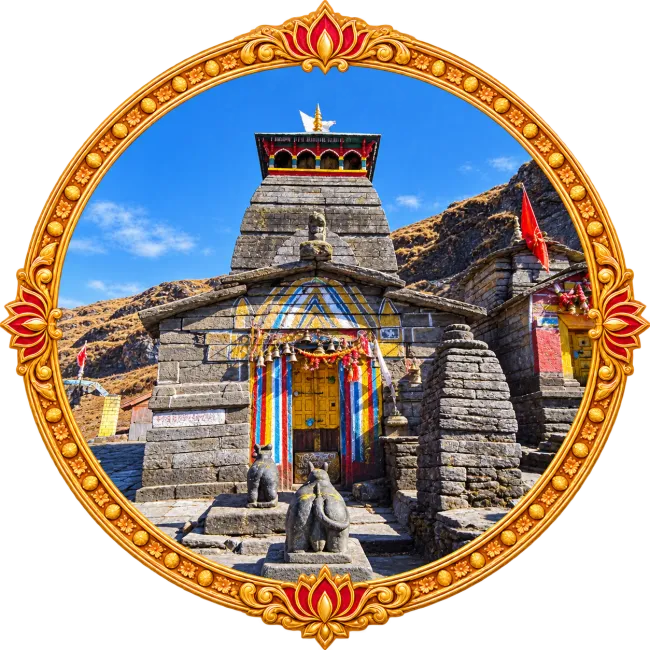
Tungnath Temple, Chopta, Uttarakhand
Tungnath Temple is an ancient Shiva shrine situated near Chopta in the Rudraprayag district of Uttarakhand. Located at an elevation of approximately 3,680 metres, it is regarded as the highest Shiva temple among the Panch Kedar shrines and one of the highest ancient Shiva temples in the world.
The temple is associated with the Pandavas and the legend of Lord Shiva appearing in the form of a bull. At Tungnath, the arms of Shiva are believed to have appeared. The beautiful trek, Himalayan views and spiritual atmosphere make it an important pilgrimage destination.
About Tungnath Temple
Tungnath means “Lord of the Peaks.” The temple is located below Chandrashila summit amid alpine meadows and Himalayan mountains.
It is one of the Panch Kedar temples:
Kedarnath
Tungnath
Rudranath
Madhyamaheshwar
Kalpeshwar
The principal deity is a Shiva Lingam representing the arms of Lord Shiva. The sanctum also contains images associated with Goddess Parvati, the Pandavas and other deities.
Tungnath remains accessible only during the warmer months. During winter, the ceremonial image is taken to Markandeshwar Temple at Makkumath, where worship continues.
When Was Tungnath Temple Built and Who Built It?
According to Hindu tradition, Tungnath Temple was established by the Pandavas after the Mahabharata war. They built the Panch Kedar shrines to worship Lord Shiva and seek forgiveness.
The surviving stone temple is more than a thousand years old and is associated with the revival of Himalayan pilgrimage under Adi Shankaracharya during the 8th century CE.
Different regional rulers, priests and devotees maintained the shrine over subsequent centuries. Its compact stone construction was designed to withstand snowfall, strong winds and the harsh Himalayan climate.
Panch Kedar Legend
After the Mahabharata war, the Pandavas wanted Lord Shiva to absolve them of the sin of killing relatives and teachers. Shiva avoided them and assumed the form of a bull in the Himalayas.
Bhima recognised the bull and attempted to catch it. The bull disappeared into the earth, but its body parts appeared at five locations:
The Pandavas built temples at these places and worshipped Lord Shiva. Tungnath consequently became the sacred shrine of Shiva’s arms.
Legend of Lord Rama
Another tradition states that Lord Rama meditated at Chandrashila after defeating Ravana. As Ravana was a Brahmin and devotee of Shiva, Rama performed penance to free himself from the consequences of the battle.
Chandrashila, meaning Moon Rock, is located above Tungnath Temple and is now a popular spiritual and trekking destination.
Religious Significance
Devotees visit Tungnath to pray for:
Forgiveness for past actions
Courage and physical strength
Protection during travel
Good health
Family welfare
Relief from fear and stress
Success in difficult work
Spiritual discipline
Inner peace
Liberation from karmic burdens
The challenging trek is itself regarded as a form of devotion and penance.
Architecture of Tungnath Temple
Tungnath Temple is built in the traditional North Indian Himalayan stone style. Its appearance resembles the Kedarnath Temple on a smaller scale.
The structure has:
Stone walls
Compact Garbhagriha
Sloping stone roof
Small temple tower
Wooden and stone entrance
Mandapa
Images of Hindu deities
Smaller surrounding shrines
The sanctum houses the sacred Shiva Lingam. The temple complex also contains shrines associated with Parvati, Ganesha, the Pandavas and other deities.
Tungnath Temple Opening Season
The temple generally opens between late April and May after winter snow begins to clear. It closes during October or November before heavy snowfall.
Opening and closing dates are declared annually according to Hindu calendrical traditions and local weather conditions.
During winter, the ceremonial image of Tungnath is worshipped at Markandeshwar Temple in Makkumath.
Tungnath Temple Timings
The following schedule applies during the normal pilgrimage season:
Heavy rain, snowfall, lightning or strong winds can cause temporary restrictions. Visitors should follow the schedule displayed at the shrine.
Morning Puja and Aarti
The day begins with Mangal Puja and preparation of the sanctum. Morning Aarti is performed at 6:30 AM.
The worship includes:
Water Abhishekam
Milk and curd offering
Bilva leaves
Flowers
Sandalwood
Sacred ash
Shiva mantra chanting
Incense and lamps
Naivedya
Morning Aarti
Devotees may participate in Abhishekam according to the system followed by the priests.
Bhog and Evening Aarti
Bhog is offered at noon. The offering generally includes fruits, sweets and simple Satvik preparations suitable for the remote mountain location.
Evening Puja begins at 5:30 PM, followed by Aarti at 6:00 PM. Visitors attending evening worship should begin descending immediately afterward unless staying in permitted accommodation near the temple.
Major Festivals
Opening-Day Ceremony
The ceremonial image arrives from Makkumath, and special Puja is performed before general darshan begins.
Closing-Day Ceremony
Before winter closure, the deity is ceremonially prepared for the journey to Makkumath.
Mahashivratri
Winter worship associated with Tungnath is performed at Markandeshwar Temple in Makkumath.
Shravan Month
Special Shiva Puja is conducted during Shravan, particularly on Mondays.
Nanda Devi Worship
Regional traditions honouring Goddess Nanda Devi form part of the wider religious culture of the area.
Puja and Religious Services
Available services during the pilgrimage season may include:
General Shiva Puja
Jalabhishek
Rudrabhishek
Mahamrityunjaya Mantra Path
Panch Kedar Puja
Family welfare prayers
Health and protection Puja
Journey-safety prayers
Thanksgiving worship
Puja arrangements should be made through authorised priests at the shrine.
Offerings and Prasad
Traditional offerings include:
Water
Milk
Bilva leaves
Flowers
Sandalwood
Sacred ash
Fruits
Dry fruits
Sweets
Monetary donations
Because of the remote location, pilgrims should carry only small quantities of permitted offerings. Plastic packaging must be brought back down the mountain.
Dress Code and Temple Rules
There is no ceremonial dress code, but warm, modest and weatherproof clothing is essential.
Visitors should carry:
Thermal layers
Waterproof jacket
Woollen cap
Gloves
Trekking shoes
Water
Essential medicines
Rain protection
Important rules include:
Remove footwear before entering.
Follow priest and local-administration instructions.
Do not photograph restricted areas.
Do not litter on the trek.
Avoid alcohol and tobacco.
Do not continue during thunderstorms.
Do not approach steep edges for photographs.
Begin descending before darkness.
Entry Fee and Darshan Duration
General darshan is free. Charges may apply to optional Pujas and ritual materials.
Darshan generally requires 20–45 minutes. The complete trek and temple visit normally require four to six hours, depending on fitness, weather and trail conditions.
Trek from Chopta to Tungnath
The trek begins at Chopta and covers approximately 3.5–4 kilometres. The trail is paved in many sections but remains steep.
The route passes through:
Rhododendron forests
Alpine meadows
Mountain viewpoints
Small seasonal refreshment points
High-altitude open slopes
Ponies may be available according to seasonal arrangements. Visitors should ascend slowly to reduce breathlessness and altitude discomfort.
Chandrashila Trek
Chandrashila summit lies approximately 1.5 kilometres above Tungnath Temple. It offers views of Himalayan peaks such as Chaukhamba, Kedarnath, Nanda Devi and Trishul when the sky is clear.
The trail is steeper and more exposed than the Chopta–Tungnath route. It should be attempted only in safe weather and adequate daylight.
Best Time to Visit
May to June and September to October are the most suitable periods.
May and June offer green landscapes and moderate daytime weather. September and October provide clearer mountain views but colder temperatures.
July and August bring heavy monsoon rain, fog and slippery trails. The temple remains closed during winter.
How to Reach Tungnath Temple
By Air
Jolly Grant Airport near Dehradun is the nearest major airport.
By Train
Rishikesh, Yog Nagari Rishikesh and Haridwar are the nearest convenient railway stations.
By Road
Travellers can reach Chopta through Rudraprayag, Kund, Ukhimath and Dugalbitta. Road services become limited during late evening and bad weather.
Accommodation and Facilities
Guest houses, camps and small lodges are available in Chopta, Dugalbitta, Baniyakund and Ukhimath.
Facilities near Tungnath are limited. Seasonal stalls may provide tea and simple food. Visitors should carry water, medicines and rain protection.
Nearby Places to Visit
Chandrashila Summit
Chopta Meadows
Deoria Tal
Omkareshwar Temple, Ukhimath
Markandeshwar Temple, Makkumath
Kedarnath Temple
Madhyamaheshwar Temple
Sari Village
Dugalbitta
Kanchula Korak Musk Deer Sanctuary
Conclusion
Tungnath Temple is the highest Panch Kedar shrine and an ancient centre of Shiva worship. Established according to tradition by the Pandavas and associated with Adi Shankaracharya, it represents the arms of Lord Shiva.
The stone temple, mountain trek and views of the Garhwal Himalayas create a deeply spiritual experience. With proper clothing, physical preparation and attention to weather conditions, devotees can undertake a safe and meaningful Tungnath pilgrimage.