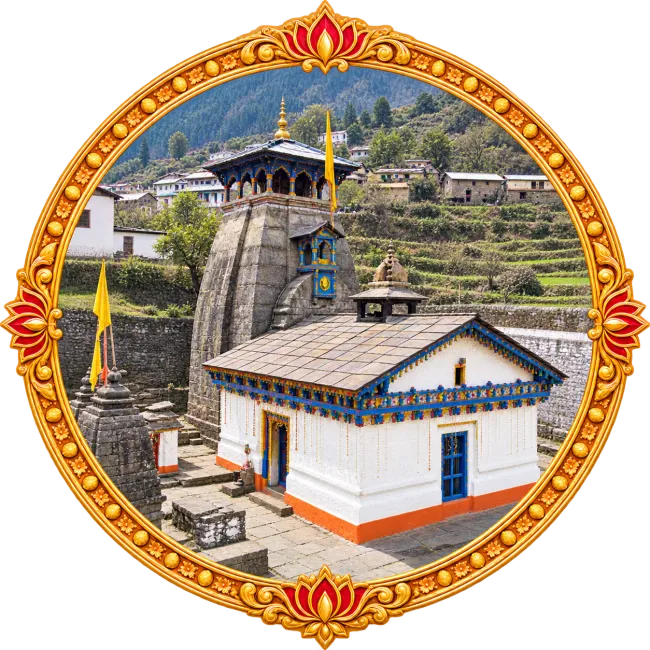
Triyuginarayan Temple, Uttarakhand
Triyuginarayan Temple is an ancient Hindu shrine located in Triyuginarayan village in the Rudraprayag district of Uttarakhand. The temple is dedicated to Lord Vishnu but is most famous as the sacred place where Lord Shiva and Goddess Parvati were married.
An eternal ceremonial fire known as the Akhand Dhuni burns in front of the temple. According to tradition, this is the same fire that witnessed the divine wedding. Couples visit the shrine to seek blessings for a harmonious marriage and may also conduct their wedding ceremonies here.
About Triyuginarayan Temple
Triyuginarayan Temple is situated at an elevation of approximately 1,980 metres. The shrine lies in the Kedarnath region and offers views of the surrounding Garhwal Himalayas.
Lord Vishnu is the principal deity and is worshipped in his Narayan form. The sanctum also contains sacred images associated with Goddess Lakshmi and other deities.
The name Triyuginarayan combines:
Tri – three
Yugi – ages or Yugas
Narayan – Lord Vishnu
The name refers to the belief that the sacred fire has continued to burn through three Yugas.
When Was Triyuginarayan Temple Built and Who Built It?
The sacred site is associated with ancient Hindu tradition and the divine marriage of Shiva and Parvati. The present stone temple is traditionally connected with Adi Shankaracharya, who revived and organised Himalayan pilgrimage centres during the 8th century CE.
The temple was constructed in a Himalayan stone style similar to Kedarnath Temple. Regional rulers, priests and local residents maintained and repaired the structure over subsequent centuries.
The Akhand Dhuni, wedding platform and sacred Kunds form part of the shrine’s ancient ritual landscape.
Divine Marriage of Shiva and Parvati
Goddess Parvati was born as the daughter of King Himavan and Queen Mainavati. She performed severe penance to receive Lord Shiva as her husband.
After accepting her devotion, Shiva agreed to marry her. The wedding took place at Triyuginarayan in the presence of gods, sages and celestial beings.
Lord Vishnu performed the duties of Parvati’s brother, while Lord Brahma served as the priest who conducted the marriage ceremony.
The sacred fire in front of the temple witnessed the wedding and has been maintained as the Akhand Dhuni.
Akhand Dhuni
The Akhand Dhuni is the most distinctive feature of Triyuginarayan Temple. It burns inside a square Havan Kund in front of the main shrine.
Devotees offer pieces of wood to the fire and receive sacred ash as a blessing. Married couples keep the ash in their homes and pray for harmony, stability and lifelong companionship.
Visitors should place offerings only according to the instructions of the priests. Plastic, chemical materials and unauthorised objects must never be placed in the fire.
Religious Significance
Triyuginarayan is one of India’s most important temples for marriage-related prayers.
Devotees visit to seek:
A suitable marriage partner
Blessings for a happy marriage
Marital harmony
Family welfare
Children
Protection from relationship difficulties
Good health
Spiritual devotion
Fulfilment of wishes
The shrine is also sacred to devotees of Vishnu, Shiva and Parvati because all three traditions are represented in the wedding legend.
Architecture of Triyuginarayan Temple
The temple is built from large stone blocks in the traditional Garhwali style. Its architecture resembles Kedarnath Temple but on a smaller scale.
The structure includes:
Garbhagriha
Mandapa
Stone tower
Sloping stone roof
Entrance porch
Akhand Dhuni
Wedding platform
Sacred Kunds
Smaller shrines
The sanctum houses the image of Lord Vishnu. The simple stone construction blends naturally with the Himalayan village surroundings.
Sacred Kunds
Several sacred water tanks are located near the temple.
Brahma Kund
Lord Brahma is believed to have purified himself here before conducting the divine wedding.
Vishnu Kund
Lord Vishnu used this Kund while performing the duties connected with the marriage ceremony.
Rudra Kund
Lord Shiva is traditionally associated with ritual bathing at Rudra Kund.
Saraswati Kund
Saraswati Kund is considered the source feeding the other three Kunds. Tradition connects its water with the navel of Lord Vishnu.
Devotees should keep the Kunds clean and avoid using soap or throwing ritual waste into the water.
Triyuginarayan Temple Timings
The temple remains open throughout the year, but snow and road conditions can affect access during winter.
Summer Timings
Winter Timings
Wedding ceremonies and special rituals can temporarily affect general darshan.
Morning Puja and Aarti
The day begins with Mangal Puja and preparation of the sanctum. Morning Aarti is followed by worship of Lord Narayan and the Akhand Dhuni.
Morning rituals include:
Sanctum purification
Flower and Tulsi offering
Sandalwood
Incense and lamps
Vishnu mantra chanting
Naivedya
Morning Aarti
Prayer at the Akhand Dhuni
Bhog and Evening Aarti
Bhog is offered to Lord Vishnu at noon. Fruits, sweets, rice and Satvik preparations may form part of the offering.
Evening Puja includes lamps, flowers, devotional hymns and worship of the eternal fire. Couples often participate together and pray for a peaceful married life.
Weddings at Triyuginarayan Temple
Hindu weddings can be conducted at the shrine according to temple arrangements. The couple takes sacred rounds before the Akhand Dhuni.
Wedding arrangements may include:
Temple permission
Priest booking
Date and Muhurat selection
Marriage registration documents
Limited guest arrangements
Puja materials
Havan
Traditional wedding rituals
Couples should organise the ceremony through authorised temple representatives and confirm accommodation, transport and weather conditions in advance.
Major Festivals
Vivah Panchami
The festival celebrates divine marriage traditions and is considered auspicious for couples.
Mahashivratri
Lord Shiva and Goddess Parvati are worshipped through special Puja and Havan.
Akshaya Tritiya
The day is considered highly auspicious for marriages and new beginnings.
Kartik Purnima
Devotees offer lamps and pray for marital harmony and family welfare.
Janmashtami
Lord Vishnu is worshipped through Bhajan, fasting and special Puja.
Shravan Month
Special prayers are offered to Shiva and Parvati, particularly on Mondays.
Puja and Religious Services
Available ceremonies may include:
General Vishnu Puja
Shiva–Parvati Puja
Marriage ceremony
Marriage-blessing Puja
Vivah Badha Nivaran Puja
Family welfare Puja
Havan
Akhand Dhuni offering
Child-blessing prayer
Thanksgiving worship
Puja and wedding arrangements should be completed through authorised priests.
Offerings and Prasad
Traditional offerings include:
Tulsi leaves
Flowers
Coconut
Fruits
Sweets
Sandalwood
Incense
Clarified butter
Wood for the sacred fire
Wedding cloth
Monetary donations
Sacred ash from the Akhand Dhuni is given as a blessing according to temple customs.
Dress Code and Temple Rules
Visitors should wear modest clothing and carry warm layers throughout the year.
Important rules include:
Remove footwear before entering.
Do not place unauthorised materials in the sacred fire.
Follow photography restrictions.
Keep the Kunds clean.
Respect wedding ceremonies.
Avoid alcohol, tobacco and non-vegetarian food.
Deposit donations only at authorised counters.
Follow local weather and road instructions.
Entry Fee and Darshan Duration
General entry and darshan are free. Charges apply to optional Pujas, Havan and wedding services.
A normal visit requires 45–90 minutes. Couples attending a Puja or wedding ceremony should reserve several hours.
Best Time to Visit
April to June and September to November are the most suitable periods. The weather remains comfortable, and road access is generally convenient.
Winter offers a peaceful atmosphere but can bring snow and road disruptions. The July–August monsoon may cause landslides and travel delays.
How to Reach Triyuginarayan Temple
By Air
Jolly Grant Airport near Dehradun is the nearest major airport.
By Train
Rishikesh, Yog Nagari Rishikesh and Haridwar are the nearest convenient railway stations.
By Road
Triyuginarayan is connected by mountain road with Sonprayag and Guptkashi.
Accommodation and Facilities
Guest houses, homestays and basic lodges are available in Triyuginarayan. More accommodation is available in Sonprayag and Guptkashi.
Facilities include parking, Puja shops, basic restaurants, drinking water, toilets and wedding-service arrangements.
Nearby Places to Visit
Kedarnath Temple
Gaurikund
Sonprayag
Guptkashi Vishwanath Temple
Ardhanarishwar Temple
Omkareshwar Temple, Ukhimath
Kalimath Temple
Chopta
Tungnath Temple
Deoria Tal
Conclusion
Triyuginarayan Temple is a sacred Vishnu shrine celebrated as the wedding place of Lord Shiva and Goddess Parvati. Its ancient stone architecture, Akhand Dhuni and sacred Kunds preserve one of Hindu tradition’s most important divine marriage legends.
Couples and families visit the temple to seek marital harmony, companionship and spiritual blessings. With advance planning and respect for the shrine’s customs, Triyuginarayan offers a deeply meaningful pilgrimage and wedding destination.