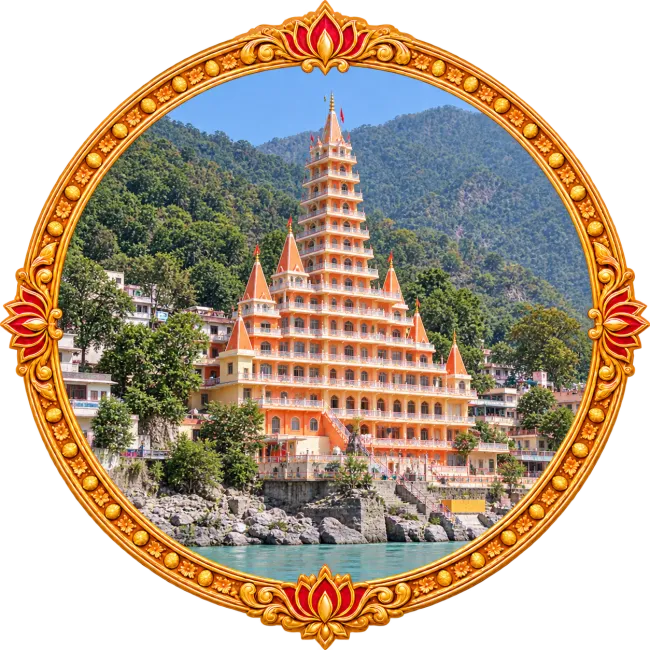
Trayambakeshwar Temple, Rishikesh
Visit Trayambakeshwar Temple in Rishikesh, a prominent riverside shrine popularly known as Tera Manzil Mandir. Rising thirteen storeys above the banks of the Ganga, the temple is one of the most recognisable landmarks in the Lakshman Jhula area.
Associated with Lord Shiva, the complex also contains shrines dedicated to several other Hindu deities. Its multilevel layout brings together opportunities for worship and views of the river, surrounding hills and Rishikesh’s spiritual neighbourhoods.
About Trayambakeshwar Temple
Trayambakeshwar Temple stands beside the Ganga in the Lakshman Jhula area of Rishikesh. Its popular name, Tera Manzil Mandir, refers to its thirteen floors.
The name Trayambakeshwar is associated with Lord Shiva as the three-eyed Lord. Although Shiva occupies a central position in the temple’s religious identity, visitors encounter numerous smaller shrines as they move through the building.
This is the Rishikesh temple, distinct from the Trimbakeshwar Jyotirlinga Temple near Nashik in Maharashtra.
History and Religious Tradition
Local tradition associates the sacred site with Adi Shankaracharya and his connection with Shiva worship. This association belongs to the temple’s devotional history and should be distinguished from the construction history of the present thirteen-storey building.
Today, the temple is an established landmark of the Lakshman Jhula neighbourhood. Its arrangement of many shrines within one building gives it a distinctive place among Rishikesh’s religious destinations.
Religious Significance of Trayambakeshwar Temple
Trayambakeshwar represents Lord Shiva’s three-eyed form. In Hindu tradition, Shiva’s third eye symbolises spiritual insight and awareness beyond ordinary perception.
For devotees, a visit offers time to step away from everyday concerns and focus on prayer. Worshippers may reflect on qualities associated with Shiva, including detachment, compassion and inner discipline.
The presence of several deities also makes the temple suitable for families whose members follow different devotional traditions. Visitors can spend time at individual shrines without needing to follow a rigid sequence.
A meaningful visit need not involve elaborate rituals. Quiet prayer, respectful darshan and consideration for fellow worshippers can be central to the experience.
Main Deity and Other Shrines
Lord Shiva is worshipped in the form of a Shiva Lingam at the uppermost level of the temple.
Other shrines within the building include representations of:
Lord Vishnu.
Lord Rama.
Goddess Durga.
Goddess Kali.
Lord Hanuman.
Goddess Saraswati.
The smaller shrines create a floor-by-floor devotional journey. Visitors can pause at selected shrines or continue towards the principal Shiva shrine.
Architecture of Trayambakeshwar Temple
The temple’s most distinctive feature is its thirteen-storey construction. Its tiered appearance makes it readily identifiable along the riverfront.
The architectural experience is shaped by the relationship between the building, its shrines and the surrounding landscape. As visitors move upwards, the view opens towards the Ganga and nearby hills.
Important features include:
A multistorey, tiered structure.
Numerous shrines arranged across different levels.
Stairways connecting the floors.
Religious images and decorative details.
Upper-level views across the river.
Unlike a temple centred entirely on a single ground-level sanctum, Trayambakeshwar encourages visitors to move vertically through a series of devotional spaces.
Trayambakeshwar Temple Timings
The temple has morning and afternoon-to-evening visiting sessions, with a midday closure.
Allow enough time to visit the shrines and climb at a comfortable pace before the end of your chosen session.
Darshan and Worship
A visit can include darshan at several shrines rather than only one deity. You may pause for a brief prayer at each level or spend more time at the shrine that holds particular significance for you.
Keep stairways and entrances clear while praying. If travelling in a group, avoid gathering in narrow passages where other visitors need to move through.
For any optional ritual, understand what is included and agree to it before participating. General darshan should not be confused with choosing an additional priest-led service.
Festivals and Important Worship Days
Maha Shivratri
Maha Shivratri is an important occasion for devotees visiting the Shiva shrine. The festival is associated with prayer, fasting and remembrance of Lord Shiva.
Visitors seeking a more active pilgrimage atmosphere may choose this occasion, while allowing additional time for movement through the temple.
Shravan Mondays
Mondays during Shravan are another particularly busy period for Shiva worship at Trayambakeshwar Temple.
If your priority is a less crowded visit, choose an ordinary weekday outside these major religious occasions.
Offerings and Devotional Etiquette
Keep offerings simple and easy to carry while climbing the stairs. Avoid taking large bags or excessive quantities of ritual materials through the building.
Use the designated offering areas and do not place food, flowers or packaging on stairways, balconies or railings. Avoid lighting incense or lamps outside spaces intended for that purpose.
A respectful visit also includes giving other devotees enough room for darshan and keeping conversations quiet near the shrines.
Suggested Visit Duration
Allow one to two hours if you wish to explore multiple floors without rushing. This is a planning allowance rather than a fixed duration; the time required depends on your pace and the number of shrines you visit.
Families with elderly members or people who find stairs difficult should plan a shorter visit suited to their comfort. Reaching the highest floor is not necessary for a meaningful devotional experience.
How to Reach Trayambakeshwar Temple
By Air
Jolly Grant Airport in Dehradun is the nearest airport serving Rishikesh. Continue by road towards the temple’s riverbank location.
By Train
Rishikesh Railway Station provides rail access to the town. From the station, arrange local transport towards Trayambakeshwar Temple in the Lakshman Jhula area.
By Road
When arranging transport, use both names—Trayambakeshwar Temple and Tera Manzil Mandir—to identify the destination.
Specify the temple itself rather than only the Lakshman Jhula neighbourhood, as road access depends on which side of the river you are approaching from. Keep some time available for the final walk through the local streets.
Places to Include in Your Rishikesh Itinerary
Lakshman Jhula Area
The temple’s surrounding neighbourhood offers river views and a chance to explore the religious atmosphere of this part of Rishikesh.
Parmarth Niketan
Parmarth Niketan can be included as a separate spiritual stop during a wider visit to the town.
Beatles Ashram
The Beatles Ashram offers a different perspective on Rishikesh’s connection with meditation and international visitors.
Triveni Ghat
Triveni Ghat is a major riverfront pilgrimage destination known for its evening Ganga Aarti.
Bharat Mandir
Bharat Mandir, near Triveni Ghat, is a historic shrine dedicated to Lord Vishnu. These destinations require separate travel and are not all immediately beside Trayambakeshwar Temple.
Important Visitor Guidelines
Wear clean, modest clothing.
Remove footwear at the designated place.
Climb slowly and take breaks when needed.
Keep children close on stairs and upper floors.
Avoid leaning over railings for photographs.
Keep your phone silent near worship areas.
Respect photography restrictions at individual shrines.
Do not obstruct stairways or entrances.
Carry drinking water without littering.
Take extra care on wet surfaces.
Choose how many floors to visit according to your comfort.
Leave enough time to descend before closing.
Conclusion
Trayambakeshwar Temple combines a distinctive thirteen-storey design with the devotional atmosphere of Rishikesh’s riverfront.
Its Shiva shrine, numerous smaller sanctuaries and views of the Ganga make it an engaging destination for pilgrims and visitors alike. Whether you explore several floors or spend time at only a few shrines, the temple offers an opportunity for prayer and reflection beside one of India’s most sacred rivers.