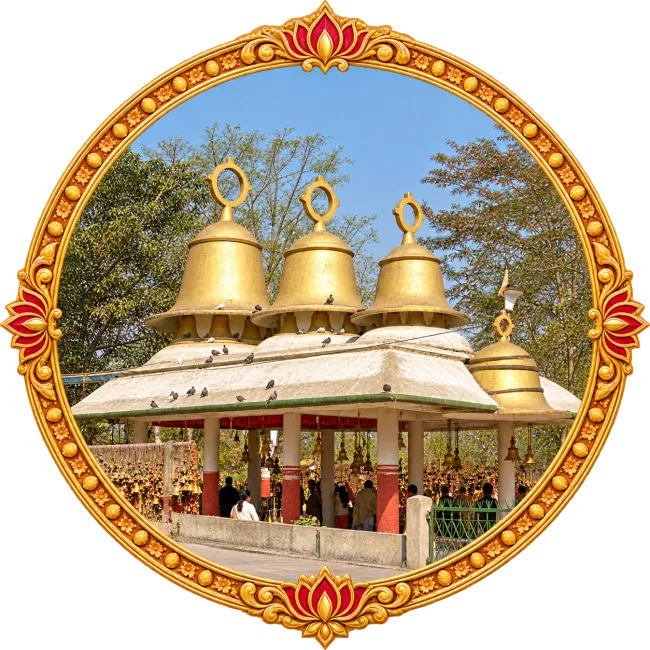
Tilinga Mandir, Tinsukia
Tilinga Mandir, popularly known as the Bell Temple, is a famous Shiva shrine located at Bordubi near Tinsukia in Assam. The temple is known for the countless bells tied to its trees, railings and specially constructed frames by devotees whose wishes have been fulfilled.
The word Tilinga means bell in Assamese. The temple is dedicated to Lord Shiva and is centred on a sacred Shiva Lingam situated beneath an old banyan tree. Its unusual bell-offering tradition makes it one of Assam’s most distinctive religious destinations.
About Tilinga Mandir
Tilinga Mandir is situated beside the main road at Bordubi in the Tinsukia district. The temple is surrounded by trees, tea-growing areas and the landscape of upper Assam.
The principal deity is Lord Shiva, worshipped through a Shiva Lingam beneath a sacred banyan tree. Devotees believe that sincere prayers made at this spot are fulfilled by Mahadev.
After a wish is fulfilled, devotees return and offer a bell. Over several decades, thousands of bells of different sizes have accumulated throughout the complex.
The bells are made from brass, bronze, copper, aluminium and other metals. Some are small enough to fit in the hand, while others are large ceremonial bells.
When Was Tilinga Mandir Built and Who Built It?
The temple’s organised history began in 1965, when a Shiva Lingam was discovered near the roots of a banyan tree at Bordubi.
Local residents regarded the discovery as a divine manifestation and began offering prayers at the site. A simple shrine was established around the Lingam, and regular worship gradually began.
As stories of fulfilled wishes spread, devotees started offering bells as thanksgiving. The number of visitors increased, and the small shrine developed into the present temple complex.
Tilinga Mandir was therefore not constructed by a king or royal dynasty. It developed through the collective devotion and contributions of local residents, pilgrims and temple committees.
Legend of the Sacred Shiva Lingam
According to local tradition, people noticed a sacred stone formation beneath the banyan tree. Religious signs and experiences connected with the location led residents to identify it as a Shiva Lingam.
The Lingam was left in its natural position under the tree and worship began without moving it. Devotees experienced the place as spiritually powerful and started making personal vows.
When their prayers were fulfilled, they returned with bells. This practice became the temple’s defining tradition.
Significance of the Bells
The bell offering represents gratitude rather than a payment for divine favour. A devotee usually makes a sincere prayer and promises to return after the wish is fulfilled.
The bell symbolises:
Gratitude to Lord Shiva
Fulfilment of a vow
Removal of obstacles
Awakening of spiritual awareness
Victory over fear and negativity
Communication of devotion through sacred sound
When bells ring in the wind, devotees interpret the sound as continuous praise of Lord Shiva.
Some visitors also tie a red thread or cloth while making a prayer, but they should follow the current rules of the temple and avoid damaging trees.
Religious Significance
Tilinga Mandir is especially known as a wish-fulfilling Shiva shrine. Devotees pray for:
Good health and recovery
Marriage and children
Family welfare
Success in education
Employment and business growth
Safe travel
Protection from danger
Relief from stress and fear
Freedom from obstacles
Fulfilment of personal wishes
The temple is important to communities living in Tinsukia, Duliajan, Digboi, Doomdooma and nearby tea-growing regions.
Temple Layout and Architecture
Tilinga Mandir does not resemble a grand royal temple. Its spiritual identity is centred on the natural banyan tree, the Shiva Lingam and thousands of bells.
The complex includes:
Sacred banyan tree
Main Shiva Lingam
Covered worship area
Nandi image
Bell-hanging frames
Temple courtyard
Smaller shrines
Puja and offering counters
Pilgrim queue passages
The bells covering the trees and structures create the temple’s unique appearance. Visitors should use designated frames and must not drive nails into trees.
Tilinga Mandir Timings
The temple follows a daily schedule for Abhishekam, Puja and Aarti.
Mahashivratri, Shravan Mondays and public holidays can bring longer queues and special worship arrangements.
Morning Puja and Aarti
The day begins with Mangal Puja and cleaning of the worship area. Morning Aarti is performed at 5:30 AM.
The morning rituals include:
Water Abhishekam
Milk offering
Bilva leaves
Flowers
Sandalwood paste
Sacred ash
Shiva mantra chanting
Incense and lamps
Naivedya
Morning Aarti
Devotees may perform Jalabhishek according to the system established by the temple.
Bhog and Evening Aarti
Bhog is offered to Lord Shiva at noon. Fruits, sweets and Satvik preparations form part of the ceremonial offering.
Evening Puja begins at 5:30 PM, followed by Aarti at 6:30 PM. The ringing of numerous bells creates a powerful devotional atmosphere.
Shayan Puja is performed before the temple closes.
How to Offer a Bell
Devotees wishing to offer a bell should follow the temple’s designated process:
Obtain or bring a suitable bell.
Present it at the authorised offering area.
Perform Puja or Sankalpa with the priest if desired.
Tie or place the bell only on a designated frame.
Avoid damaging the banyan tree or other plants.
Do not block pathways with large bells.
Request assistance for heavy ceremonial bells.
Visitors should not remove, exchange or touch bells offered by other devotees.
Major Festivals
Mahashivratri
Mahashivratri is the largest annual festival at Tilinga Mandir. Thousands of devotees offer water, milk, honey, flowers, Bilva leaves and bells.
Special Abhishekam, Aarti, Bhajan and night worship are organised.
Shravan Month
Mondays during Shravan attract large numbers of worshippers. Devotees perform Jalabhishek and offer new bells after fulfilled vows.
Kartik Purnima
Lamps are lit, and special prayers are offered to Lord Shiva.
Makar Sankranti
Devotees visit the temple for worship and charitable activities.
Bhairav Ashtami
Lord Shiva is worshipped in his protective Bhairava form.
Puja and Religious Services
Available religious services may include:
General Shiva Puja
Jalabhishek
Rudrabhishek
Mahamrityunjaya Mantra Path
Bell-offering Puja
Mahashivratri Puja
Shravan Monday worship
Marriage-related prayers
Child-blessing Puja
Health and protection prayers
Family welfare Puja
Puja arrangements and donations should be completed through authorised temple representatives.
Offerings and Prasad
Common offerings include:
Bells
Water
Milk
Bilva leaves
White flowers
Fruits
Coconut
Sandalwood paste
Sacred ash
Incense
Clarified butter
Sweets
Monetary donations
Prasad generally includes fruits, coconut, sweets and blessed flowers.
Dress Code and Temple Rules
There is no strict dress code, but visitors should wear clean and modest clothing.
Important rules include:
Remove footwear before entering.
Follow the designated queue.
Do not touch the Lingam without permission.
Hang bells only at authorised locations.
Do not drive nails into trees.
Do not remove bells.
Follow photography restrictions.
Keep the temple clean.
Avoid alcohol and tobacco.
Deposit donations only at authorised counters.
Entry Fee and Darshan Duration
General entry and darshan are free. Charges may apply to optional Pujas, ritual materials and bells purchased from local shops.
Darshan generally requires 20–45 minutes. Devotees performing Abhishekam or bell-offering Puja should allow additional time.
During Mahashivratri and Shravan Mondays, waiting time can extend to several hours.
Best Time to Visit
October to March is the most comfortable period for visiting Tinsukia. The weather is suitable for road travel and temple visits.
Early morning between 7:00 AM and 10:00 AM is ideal for peaceful darshan. Mahashivratri provides the grandest spiritual atmosphere but attracts the largest crowds.
The monsoon brings heavy rain to upper Assam, so visitors should check road conditions before travelling.
How to Reach Tilinga Mandir
By Air
Dibrugarh Airport at Mohanbari is approximately 45 kilometres from the temple.
By Train
Tinsukia Junction and New Tinsukia Junction are the nearest major railway stations.
By Road
The temple is located at Bordubi and is accessible from Tinsukia, Duliajan and Digboi by bus, taxi, auto-rickshaw or private vehicle.
Accommodation and Facilities
Hotels and guest houses are available in Tinsukia, Duliajan and Digboi.
Facilities near the temple include:
Parking
Drinking water
Shoe-storage area
Puja shops
Bell shops
Prasad stalls
Food outlets
Local transport
Basic resting spaces
Nearby Places to Visit
Dibru-Saikhowa National Park: Known for wetlands, forests and wildlife.
Digboi Oil Museum: Connected with Assam’s petroleum history.
Digboi War Cemetery: A historic Second World War cemetery.
Dehing Patkai National Park: A rainforest and wildlife destination.
Na-Pukhuri: A popular recreational area in Tinsukia.
Duliajan: An important oil-industry town surrounded by greenery.
Dibrugarh: A major city known for tea gardens and the Brahmaputra.
Conclusion
Tilinga Mandir is a distinctive Shiva shrine known for its sacred banyan tree and thousands of bells offered by grateful devotees. Established after the discovery of the Shiva Lingam in 1965, the temple developed through community faith rather than royal patronage.
Its bell-offering tradition, daily Aartis and Mahashivratri celebrations attract pilgrims from across Assam. Devotees visit Tilinga Mandir to seek protection, relief from obstacles and fulfilment of their sincere wishes.