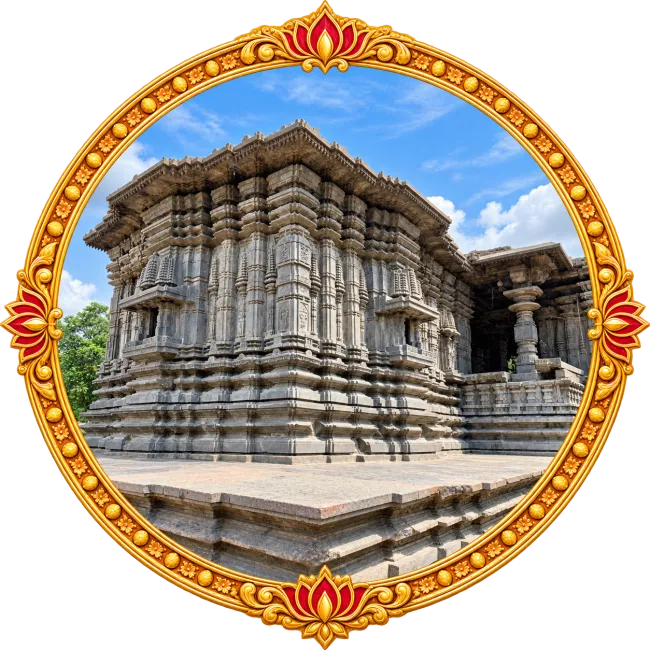
Thousand Pillar Temple, Hanamkonda
Thousand Pillar Temple in Hanamkonda, Telangana, is one of the finest surviving monuments of the Kakatiya dynasty. Constructed in 1163 CE by King Rudra Deva, the temple is dedicated principally to Lord Shiva as Sri Rudreshwara Swamy.
Designed as a Trikutalaya, the temple originally contained three principal shrines dedicated to Shiva, Vishnu and Surya. Its star-shaped platform, intricately carved pillars, polished monolithic Nandi and advanced engineering make it an important destination for devotees, historians and architecture enthusiasts.
About Thousand Pillar Temple
Thousand Pillar Temple is situated in Hanamkonda, part of the Warangal urban region. Its official and traditional name is Sri Rudreshwara Swamy Temple.
The name “Thousand Pillar Temple” refers to the large number of beautifully arranged pillars incorporated into its halls, corridors and architectural design. These pillars were positioned so that they supported the structure without unnecessarily obstructing the view of the main deities.
The complex is celebrated for:
Kakatiya architecture
Trikutalaya design
Lord Rudreshwara shrine
Vishnu and Surya traditions
Intricately carved pillars
Monolithic Nandi
Star-shaped platform
Polished black stone sculptures
Sandbox foundation technique
Historical inscriptions
The temple functions both as an active Shiva shrine and a protected heritage monument.
When and Who Built a Thousand Pillar Temple?
Thousand Pillar Temple was constructed in 1163 CE by Kakatiya ruler Rudra Deva.
Rudra Deva was one of the important early rulers who strengthened the Kakatiya kingdom and helped transform Hanamkonda into a major political and cultural centre.
The temple was dedicated to Lord Shiva as Rudreshwara, a name connected with both the deity and the king.
Kakatiya rulers supported Shaivism while also respecting Vaishnavite, Jain and other religious traditions. This inclusive outlook is reflected in the three principal shrines dedicated to Shiva, Vishnu and Surya.
The temple suffered damage during invasions and political conflict following the decline of the Kakatiya kingdom in the fourteenth century. Several architectural elements were displaced or destroyed.
Later repairs and conservation work helped preserve the surviving sanctum, Nandi, pillars and sculptural remains.
Kakatiya Dynasty and Hanamkonda
Hanamkonda was an early capital and major centre of the Kakatiya dynasty before the rulers shifted their principal capital to Warangal.
The Kakatiyas governed large parts of the Telugu-speaking region between the twelfth and fourteenth centuries. They supported:
Temple construction
Irrigation tanks
Forts
Trade
Sculpture
Telugu literature
Dance and music
Religious institutions
Their architects developed a distinctive style using star-shaped platforms, polished stone, lathe-turned pillars, detailed brackets and advanced foundations.
Thousand Pillar Temple represents an important stage in this architectural development. The later Ramappa Temple displays several techniques that were refined under Kakatiya patronage.
Why Is It Called Thousand Pillar Temple?
The name refers to the numerous pillars distributed through the temple complex.
These pillars vary in shape, size and function. Some support halls and corridors, while others serve decorative and spatial purposes.
Kakatiya architects arranged the pillars to create:
Structural strength
Balanced interior spaces
Clear views of the sanctums
Areas for dance and religious gatherings
Rhythmic patterns of light and shadow
Detailed sculptural surfaces
Not all original pillars survive in their initial positions because of historical damage and later conservation work.
The name expresses the architectural abundance of the complex rather than requiring visitors to count exactly one thousand visible pillars.
Religious Significance
The temple’s three-shrine design represents important aspects of Hindu worship.
Lord Shiva
Shiva is worshipped as Rudreshwara, representing transformation, discipline and spiritual liberation.
Lord Vishnu
Vishnu represents preservation, divine protection and cosmic order.
Lord Surya
Surya represents light, health, energy and the passage of time.
Together, the three shrines symbolise a broad and inclusive religious vision.
Devotees visit the temple to pray for:
Good health and long life
Courage and mental strength
Family peace
Marriage and marital harmony
Blessings for children
Professional success
Relief from obstacles
Protection from negative influences
Knowledge and clarity
Spiritual discipline
Forgiveness for past actions
Liberation and inner peace
Main Deities and Shrines
Sri Rudreshwara Swamy
Lord Shiva is worshipped in the principal surviving sanctum as Sri Rudreshwara Swamy. The Shiva Lingam receives regular Abhishekam, Archana and Aarti.
Lord Vishnu
The temple’s original Trikutalaya plan included a shrine dedicated to Lord Vishnu.
Lord Surya
The third shrine was dedicated to Surya, the Sun God. This reflects the importance of solar worship during the Kakatiya period.
Other sacred figures and sculptures include:
Lord Ganesha
Nandi
Goddess Parvati
Kartikeya
Divine guardians
Dancers and musicians
Mythological animals
Floral and geometric designs
Trikutalaya Design
Trikutalaya means a temple with three sanctums.
The three shrines were arranged around a shared central hall. This allowed devotees to worship Shiva, Vishnu and Surya within one integrated complex.
The architectural plan reflects:
Religious harmony
Geometric precision
Efficient movement of devotees
Shared ceremonial space
Balanced structural design
The principal Shiva shrine remains the centre of active worship today.
Architecture of Thousand Pillar Temple
The temple is built on a raised, star-shaped platform. Its form creates projecting angles that provide extensive surfaces for sculpture.
Star-Shaped Platform
The star-shaped base is an important feature of Kakatiya architecture. It gives the temple a dynamic appearance when viewed from different angles.
Carved Pillars
The pillars contain:
Floral patterns
Geometric designs
Deities
Dancers
Musicians
Animals
Mythological figures
Decorative bands
Some pillars have polished surfaces that reflect light.
Rock-Cutting and Polishing
Hard stone was shaped, carved and polished using advanced traditional techniques.
The high level of finish on the pillars and Nandi demonstrates the skill of Kakatiya artisans.
Mandapams
The temple halls were used for worship, gatherings, dance and ceremonial performances.
Open designs allowed air and light to enter while maintaining structural strength.
Monolithic Nandi
A large monolithic Nandi stands within the temple complex facing the Shiva sanctum.
The bull is carved from a single block of dark stone and has a highly polished surface.
Its ornaments include:
Necklaces
Bells
Decorative ropes
Floral designs
Carved folds and details
Despite its massive size, the sculpture displays a calm facial expression and delicate ornamentation.
Visitors must not climb onto, sit upon or scratch the Nandi.
Sandbox Foundation Technique
Kakatiya builders used a specialised foundation technique involving sand and other materials beneath heavy structures.
This foundation helped distribute weight and provided resistance against ground movement.
A refined version of this engineering technique is also associated with other Kakatiya monuments, including Ramappa Temple.
The construction demonstrates that medieval builders possessed advanced knowledge of soil, weight distribution and structural stability.
Damage and Conservation
The temple experienced damage during the political conflicts that followed the decline of the Kakatiya dynasty.
Pillars, halls and portions of the superstructure were affected. Some sculptures were broken or displaced.
Modern conservation work has focused on:
Stabilising the foundation
Restoring damaged halls
Reassembling stone elements
Protecting sculptures
Controlling visitor movement
Preserving active worship
Certain sections may be temporarily restricted during archaeological conservation. Visitors must follow all barriers and instructions.
Thousand Pillar Temple Timings
The temple grounds and active sanctum follow this regular schedule:
Timings and accessible areas may be reorganised during Maha Shivaratri, Kakatiya cultural programmes and conservation work.
Morning Puja and Aarti
The temple opens at 6:00 AM with Suprabhata prayers and the ceremonial opening of the Shiva sanctum.
Morning Abhishekam is performed from 6:30 AM to 7:30 AM. The Shiva Lingam is worshipped with sacred water and other permitted offerings.
Morning Puja and Aarti are conducted at 8:00 AM.
The best morning darshan period is from 7:00 AM to 10:00 AM. This is also the best time to observe the architecture before the stone surfaces become hot.
Madhyahna Puja
Madhyahna Puja and Naivedyam are performed at 11:30 AM.
The active sanctum closes for the afternoon break at 12:00 PM. Heritage access to permitted exterior sections may continue.
Visitors should not enter ritual areas or cross barriers while the sanctum is closed.
Evening Puja and Aarti
The active sanctum reopens at 4:00 PM. Evening Puja and Deepa Aradhana are performed at 6:30 PM.
The best evening darshan period is from 4:30 PM to 6:30 PM.
Night Aarti is conducted at 7:30 PM, and the temple closes at 8:00 PM.
Maha Shivaratri
Maha Shivaratri is the temple’s most important religious festival.
Special activities include:
Rudrabhishekam
Bilvarchana
Shiva Sahasranama
Fasting
Devotional singing
Night worship
Cultural programmes
Special Aarti
Large crowds gather, and temple timings may be extended.
Kakatiya Cultural Significance
The temple serves as an important symbol of Telangana’s Kakatiya heritage.
Cultural programmes may include:
Classical dance
Perini Shivatandavam
Telugu devotional music
Heritage walks
Historical exhibitions
Sculpture workshops
Archaeological lectures
Such programmes are organised only in approved areas and do not replace the temple’s ritual schedule.
Major Festivals
Other important occasions include:
Karthika Masam
Pradosham
Shravan Mondays
Ganesh Chaturthi
Ugadi
Deepavali
Navaratri
Sankranti
Monthly Shivaratri
Special Abhishekam and Aarti may be conducted during these observances.
Sevas and Offerings
Available temple Sevas may include:
Abhishekam
Rudrabhishekam
Panchamrita Abhishekam
Bilvarchana
Sahasranama Archana
Special Aarti
Deepa Seva
Vahana Puja
Annadanam donation
Festival sponsorship
Bilva leaves, flowers, coconuts, fruits and sacred lamps are common offerings.
Seva tickets should be purchased only through authorised counters.
Prasadam
Devotees may receive:
Sacred ash
Kumkum
Flowers
Sandalwood paste
Food prasadam on selected days
Other blessed ritual items
Prasadam should be accepted respectfully. Food and packaging should not be left within the heritage complex.
Dress Code and Entry Rules
Visitors should wear clean and modest clothing.
Men may wear a dhoti, kurta-pyjama or full-length trousers with a shirt. Women may wear a saree, salwar kameez or another modest outfit.
Footwear must be removed before entering the active worship area.
Visitors must not:
Touch or scratch sculptures
Climb onto the platform or Nandi
Strike pillars
Cross conservation barriers
Use flash in restricted areas
Write on stone surfaces
Leave plastic waste
Conduct professional photography without permission
Photography may be restricted near the Shiva sanctum.
Entry Fee and Visit Duration
General temple entry and darshan are available without an entry fee. Charges may apply to special Sevas or authorised professional services.
A regular visit requires 1 to 1½ hours. Architecture enthusiasts should keep 2 hours available.
A combined visit to Warangal Fort, Ramappa Temple and other Kakatiya monuments requires a full day or more.
Best Time to Visit
October to February is the most comfortable period for visiting Hanamkonda.
For peaceful darshan and architecture viewing, visit between 7:00 AM and 10:00 AM.
The best evening period is from 4:30 PM to 6:30 PM, when softer light highlights the pillar carvings.
Summer afternoons can become extremely hot because much of the complex is built from exposed stone.
How to Reach Thousand Pillar Temple
By Air
Rajiv Gandhi International Airport in Hyderabad is the nearest major airport. Taxis, trains and buses connect Hyderabad with Warangal and Hanamkonda.
By Train
Warangal Railway Station, Kazipet Junction and Hanamkonda railway facilities provide regional connectivity.
Kazipet Junction is a major railhead with trains connecting Hyderabad, Vijayawada, Delhi, Chennai and other cities.
By Road
Hanamkonda is well connected with Hyderabad, Karimnagar, Khammam and other Telangana cities.
Government and private buses operate regularly. Local buses, taxis and auto-rickshaws are available within the Warangal–Hanamkonda region.
Nearby Places to Visit
Visitors may also explore:
Warangal Fort
Bhadrakali Temple
Padmakshi Temple
Siddheshwara Temple
Ramappa Temple
Ramappa Lake
Pakhal Lake
Kakatiya Musical Garden
Regional Science Centre
Kakatiya Rock Garden
Inavolu Mallanna Temple
Kolanupaka Jain Temple
Suggested Kakatiya Heritage Circuit
A practical heritage circuit can include:
Thousand Pillar Temple
Bhadrakali Temple
Warangal Fort
Kakatiya Kala Thoranam
Ramappa Temple
Ramappa Lake
Begin early if planning to complete the circuit in one day.
Visitor Guidelines
Complete darshan before exploring the sculptures and Nandi. This helps avoid missing Puja because of the sanctum’s afternoon break.
Use an authorised guide if you want detailed explanations of Kakatiya history and sculpture.
Do not strike the pillars to test their sound. Such actions can damage the stone.
Carry drinking water and sun protection, particularly from March to June.
Follow all conservation signs and do not enter sections undergoing restoration.
Conclusion
Thousand Pillar Temple is one of Telangana’s greatest architectural and spiritual landmarks. Constructed in 1163 CE by Kakatiya king Rudra Deva, it preserves the dynasty’s devotion, engineering knowledge and artistic excellence.
Its Trikutalaya plan, Rudreshwara shrine, monolithic Nandi, star-shaped platform and intricately carved pillars create an unforgettable experience.
A visit to Thousand Pillar Temple offers devotees the blessings of Lord Shiva while allowing visitors to explore the magnificent cultural heritage of the Kakatiya Empire.