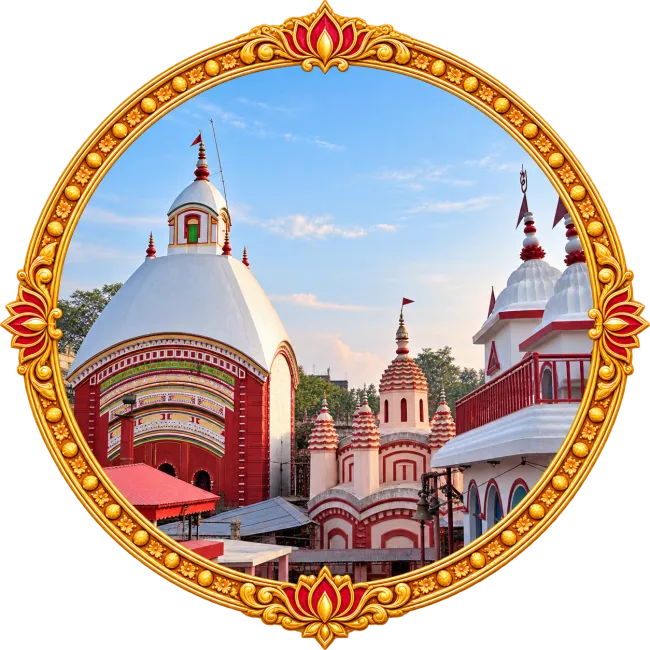
Tarapith Temple, West Bengal
Tarapith Temple is one of the most important Shakti and Tantric pilgrimage centres in India. Located in the Birbhum district of West Bengal, the temple is dedicated to Goddess Tara, a powerful manifestation of the Divine Mother. The name “Tarapith” means the sacred seat of Tara—the Goddess who guides devotees across fear, suffering and the cycle of worldly existence.
The temple is closely associated with Tantric worship, the ancient sage Vashishtha and the saint Bamakhyapa. Its red-roofed structure, sacred image of Maa Tara and proximity to the Tarapith Mahashmashan give the pilgrimage site a distinctive spiritual identity.
About Tarapith Temple
Tarapith Temple is situated in Tarapith town near Rampurhat in Birbhum district. The shrine is dedicated to Maa Tara, one of the ten Mahavidyas in the Shakta and Tantric traditions.
The name Tara means “one who saves” or “one who carries devotees across difficulties.” She is regarded as a compassionate mother who grants protection, spiritual wisdom and freedom from fear.
The deity worshipped inside the sanctum has two significant forms. The public image is a metal representation of Maa Tara, decorated with clothes, flowers, jewellery, garlands and a silver crown. Behind this decorated image is the ancient stone form of the Goddess, depicting Maa Tara nursing Lord Shiva like a mother feeding her child.
This maternal form distinguishes Tarapith from many other Shakti temples. Despite her association with fierce Tantric practices, Maa Tara is worshipped here as a compassionate and protective mother.
When Was Tarapith Temple Built and Who Built It?
The sacred site is ancient, but the present temple structure was constructed in 1818 by Jagannath Ray, a wealthy merchant and devotee from Mallarpur.
Earlier shrines existed at Tarapith before the construction of the present building. Local tradition also associates the development of the sacred site with Raja Ramjivan Ray, who supported the worship of Maa Tara and contributed to the establishment of a temple at the location.
The earlier structure deteriorated over time. Jagannath Ray subsequently built the present temple and arranged for regular worship of the Goddess.
The temple has undergone repairs and renovations since its construction, but its traditional Bengali architectural character has been preserved. Pilgrim facilities, queue passages, security arrangements and surrounding buildings were added as the shrine’s popularity increased.
Tarapith as a Shakti Peetha
Tarapith is traditionally associated with the story of Goddess Sati and Lord Shiva. Sati was the daughter of King Daksha and the wife of Lord Shiva.
Daksha organised a grand yajna but deliberately did not invite Shiva and Sati. Sati attended the ceremony, where her father insulted Lord Shiva. Unable to tolerate the humiliation, she entered the sacrificial fire and gave up her life.
Lord Shiva carried Sati’s body and began performing the destructive Tandava. To protect creation, Lord Vishnu used the Sudarshana Chakra to divide her body. The parts fell at different locations, which became sacred Shakti Peethas.
According to the tradition associated with Tarapith, the third eye or eyeball of Goddess Sati fell in this region. The Bengali word Tara can also refer to the pupil of the eye, strengthening the site’s symbolic connection with the Goddess’s vision and divine knowledge.
Tarapith is not included in every classical list of the principal Shakti Peethas, but it is widely revered as a Siddha Peetha—a sacred site where spiritual practices are believed to produce powerful results.
Legend of Sage Vashishtha
Tarapith is closely connected with Sage Vashishtha, one of the great sages of Hindu tradition. According to the legend, Vashishtha practised intense meditation to receive the blessings of Goddess Tara.
His initial spiritual practices did not produce the desired result. After receiving divine guidance, he travelled to a sacred place known as Mahachina, where he learned the appropriate Tantric method of worship.
Vashishtha returned and meditated beneath a silk-cotton tree near the cremation ground at Tarapith. Pleased with his devotion, Maa Tara appeared before him.
The sage requested to see the Goddess in the compassionate maternal form in which she had nursed Lord Shiva. Maa Tara granted his wish, and this form became the central object of worship at Tarapith.
Legend of Maa Tara and Lord Shiva
According to Hindu mythology, poison emerged during the churning of the cosmic ocean. Lord Shiva consumed the poison to protect the universe, but its power caused him immense suffering.
Goddess Tara took Shiva onto her lap and nursed him like a mother. Her divine milk neutralised the poison and restored him.
The ancient stone image at Tarapith represents this compassionate form. Maa Tara is shown holding Shiva to her breast, symbolising unconditional maternal love, healing and protection.
Bamakhyapa and Tarapith
Tarapith is deeply associated with Bamakhyapa, a renowned Tantric saint who lived during the 19th and early 20th centuries. His name means “the mad saint of the Mother,” reflecting his intense and unconventional devotion to Maa Tara.
Bamakhyapa spent much of his life meditating in the Tarapith Mahashmashan. His behaviour often appeared unusual, but devotees regarded him as a spiritually realised saint.
He treated Maa Tara as his own mother and is associated with numerous stories of miracles, healing and divine insight. His shrine and Samadhi remain important places of worship near the Mahashmashan.
The home associated with Bamakhyapa and several memorials connected with his life can also be visited in Tarapith.
Religious Significance
Maa Tara is worshipped as the Goddess of compassion, protection, knowledge and liberation. Devotees believe that she removes fear and guides them through difficult periods.
People visit Tarapith to pray for:
- Protection from danger
- Recovery from illness
- Relief from fear and emotional suffering
- Family welfare
- Marriage and children
- Success in education and employment
- Spiritual knowledge
- Freedom from negative influences
- Fulfilment of wishes
- Inner courage and peace
Tantric practitioners regard Tarapith as an important centre for meditation, mantra practice and the worship of the Mahavidyas.
Architecture of Tarapith Temple
The temple displays traditional Bengali architecture. It is a compact structure with a curved roof, thick walls and an elevated base.
Its exterior is decorated with terracotta panels depicting scenes from Hindu mythology. The sloping roof and ornamental arches reflect the architectural traditions of rural Bengal.
The sanctum is small, and devotees receive darshan through a continuously moving queue. The decorated metal image of Maa Tara is placed before the ancient stone form.
The temple complex includes:
- Main sanctum of Maa Tara
- Worship and offering area
- Queue passages
- Natmandir or prayer space
- Prasad counters
- Shoe-storage facilities
- Smaller shrines
- Administrative offices
- Access routes leading towards the Mahashmashan
Tarapith Temple Timings
The temple generally follows the same opening schedule throughout the year. Festival days may have extended hours and specially regulated queue arrangements.
On Amavasya, Kaushiki Amavasya, Kali Puja and major festival days, darshan arrangements can continue for extended hours. Ritual requirements may temporarily affect access to the sanctum.
Morning Puja and Aarti
Temple worship begins before sunrise. The priests open the sanctum and prepare the Goddess for ceremonial bathing and Shringar.
The morning rituals include:
- Mangal Aarti
- Ceremonial bathing of the deity
- Offering of fresh clothes
- Flower and garland decoration
- Application of sindoor
- Mantra chanting
- Incense offering
- Lighting of lamps
- Naivedya
- Morning darshan
After Shringar is completed, the decorated form of Maa Tara is presented to devotees.
Early morning is the best time for a comparatively peaceful darshan. However, special Puja groups and pilgrims seeking the first darshan can also create queues before sunrise.
Anna Bhog Puja
Anna Bhog is offered to Maa Tara at noon. The offering consists of cooked Satvik food, rice, vegetables, sweets and other traditional items prepared according to temple customs.
General darshan may be paused or regulated while Bhog is presented. The consecrated food is later distributed as prasad according to established arrangements.
Evening Puja and Aarti
The evening ceremony begins with incense, flowers and the lighting of lamps. Priests perform Aarti while devotees sing hymns and chant the name of Maa Tara.
The evening Aarti is performed at 7:00 PM. After the ceremony, general darshan continues.
Shital Bhog is offered later in the evening, followed by Shayan Puja. These rituals mark the conclusion of the day’s formal worship.
Tarapith Mahashmashan
The Mahashmashan, or great cremation ground, is an essential part of Tarapith’s spiritual identity. It is situated near the Dwarka River and has been used for Tantric meditation for centuries.
Bamakhyapa and other practitioners performed spiritual disciplines here. The cremation ground symbolises the temporary nature of physical life and the need to overcome fear, ego and attachment.
Funeral ceremonies continue to take place at the Mahashmashan. Visitors should therefore behave respectfully, avoid disturbing rituals and refrain from intrusive photography.
The Samadhi of Bamakhyapa and shrines dedicated to other practitioners are situated in this area.
Major Festivals
Kaushiki Amavasya
Kaushiki Amavasya is the most important annual festival at Tarapith. Tantric practitioners and devotees gather in very large numbers for special worship, meditation and all-night religious ceremonies.
Kali Puja
Kali Puja is celebrated with elaborate decoration, special offerings, Aarti and night-long worship. Maa Tara is worshipped as a powerful form of Kali.
Chaitra Navratri
Special Puja, Havan and devotional recitation are organised during Chaitra Navratri.
Sharadiya Navratri
The temple receives large numbers of pilgrims during Sharadiya Navratri. The nine forms of the Divine Mother are worshipped through special rituals.
Durga Puja
Durga Puja is celebrated with devotion throughout the region. Additional arrangements are made for pilgrims visiting Maa Tara.
Bamakhyapa’s Birth Anniversary
Devotees commemorate the life and teachings of Bamakhyapa through Puja, devotional songs and visits to his Samadhi.
Puja and Religious Services
Devotees can arrange different forms of worship:
- General Puja
- Special Puja
- Maa Tara Puja
- Havan
- Chandi Path
- Tara Mantra worship
- Amavasya Puja
- Navratri Puja
- Marriage-related prayers
- Child-blessing Puja
- Family welfare Puja
- Thanksgiving ceremony
- Anna Bhog offering
Puja arrangements should be made through authorised priests or recognised temple counters. Visitors should confirm charges before purchasing ritual materials or engaging a priest.
Offerings at Tarapith Temple
Common offerings include:
- Red hibiscus flowers
- Red chunri
- Sindoor
- Coconut
- Sweets
- Fruits
- Garlands
- Bangles
- Incense
- Clarified butter
- Maa Tara’s Shringar items
- Monetary donations
Red hibiscus is especially associated with the worship of Maa Tara and Goddess Kali.
Prasad
Prasad generally includes sweets, coconut, mishri, dry fruits and flowers blessed during worship. Anna Bhog can also be arranged according to temple procedures.
Numerous shops near the temple sell prepared Puja plates and packaged prasad. Visitors should use recognised counters and confirm the contents and price before purchasing.
Dress Code and Entry Rules
There is no rigid dress code, but devotees should wear modest and clean clothing.
Important rules include:
- Remove footwear before entering the temple.
- Follow the designated queue.
- Maintain order inside the small sanctum.
- Do not obstruct other devotees.
- Follow photography restrictions.
- Do not touch the ancient stone image.
- Keep the temple and riverbank clean.
- Avoid carrying unnecessary valuables.
- Deposit donations at authorised counters.
- Treat the cremation ground with respect.
- Do not engage unauthorised guides or ritual agents.
Entry Fee and Darshan Duration
General temple entry and darshan are free. Charges apply to optional special Pujas, Bhog offerings and ritual materials.
On regular weekdays, darshan can require 30–60 minutes. On Tuesdays, Saturdays, Amavasya and major festivals, waiting time may extend to several hours.
Kaushiki Amavasya and Kali Puja attract extremely large crowds. Visitors attending during these festivals should allow substantial time for security checks and queue movement.
Best Time to Visit
October to March is the most comfortable period for visiting Tarapith because the weather is comparatively cool.
Chaitra Navratri, Sharadiya Navratri, Kali Puja and Kaushiki Amavasya provide the grandest religious atmosphere but also attract the largest crowds.
Visitors seeking peaceful darshan should choose a normal weekday and arrive before 7:00 AM. Summers can be hot and humid, while the monsoon brings heavy rainfall.
How to Reach Tarapith Temple
By Air
Kazi Nazrul Islam Airport near Durgapur is the nearest operational airport for many travellers. Netaji Subhas Chandra Bose International Airport in Kolkata provides wider domestic and international connectivity.
Taxis and road transport are available from these airports to Tarapith.
By Train
Rampurhat Junction is the nearest major railway station. It is approximately 8 kilometres from Tarapith.
Trains connect Rampurhat with Kolkata, Howrah, Sealdah, Bardhaman, Asansol and other major cities. Taxis, auto-rickshaws and local vehicles are available outside the station.
By Road
Tarapith is connected by road with Kolkata, Durgapur, Asansol, Bardhaman, Bolpur and Suri. Government buses, private buses and taxis operate on these routes.
Accommodation and Facilities
Tarapith has a wide range of hotels, guest houses, Dharamshalas and budget lodges. Accommodation should be reserved in advance for Amavasya, Kali Puja, Navratri and weekends.
Facilities near the temple include:
- Drinking water
- Toilets
- Shoe-storage counters
- Prasad shops
- Vegetarian food outlets
- Parking
- Medical facilities
- Police and security posts
- Banks and cash machines
- Public transport
- Dharamshalas
Nearby Places to Visit
- Tarapith Mahashmashan: The cremation ground associated with Tantric practice.
- Bamakhyapa Samadhi: A memorial dedicated to the famous saint.
- Bamakhyapa Temple: A shrine commemorating his devotion to Maa Tara.
- Birchandrapur: A spiritual destination associated with Vaishnava tradition.
- Nalateswari Temple: A Shakti shrine at Nalhati.
- Bakreshwar Temple: A Shiva pilgrimage site known for natural hot springs.
- Santiniketan: A cultural destination associated with Rabindranath Tagore.
- Fullara Shakti Peetha: A sacred Shakti shrine near Labhpur.
Visitor Guidelines
Carry a valid identity document, essential medicines and sufficient drinking water. Protect personal belongings in crowded areas and avoid carrying expensive jewellery.
Confirm Puja charges before engaging any priest. During major festivals, follow police barricades, queue systems and traffic diversions. Visitors to the Mahashmashan must maintain silence and respect funeral ceremonies.
Conclusion
Tarapith Temple is a powerful centre of Shakti worship where Maa Tara is revered as both a fierce Goddess and a compassionate mother. Its connections with Sage Vashishtha, Bamakhyapa, Tantric practice and the Shakti tradition give the shrine exceptional spiritual importance.
The ancient stone image, traditional Bengali temple architecture, daily worship and nearby Mahashmashan create a pilgrimage experience unlike any other. Devotees visit Tarapith to seek protection, healing, knowledge and the loving blessings of Maa Tara.