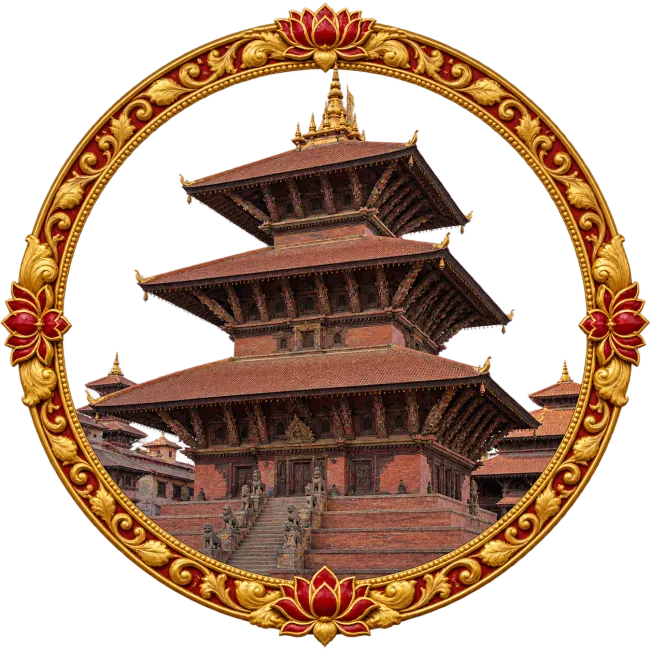
Taleju Bhawani Temple, Kathmandu
Visit Taleju Bhawani Temple in Kathmandu Durbar Square, one of Nepal’s most sacred royal temples dedicated to Goddess Taleju. Built in 1564 by Malla King Mahendra Malla, the three-storeyed temple served as the principal shrine of the royal family of Kathmandu.
The temple is distinguished by its towering pagoda-style architecture, elevated platform and restricted religious traditions. Unlike most Hindu temples, its inner sanctum remains closed to the general public throughout the year. Hindu devotees are permitted to enter only on Maha Navami, the ninth day of the Dashain festival.
About Taleju Bhawani Temple
Taleju Bhawani Temple is situated within the historic Hanuman Dhoka Palace complex at Kathmandu Durbar Square. The temple is dedicated to Goddess Taleju, a powerful manifestation of Goddess Durga.
Goddess Taleju was worshipped as the Kuldevi or family goddess of the Malla rulers. The kings sought her blessings before making important political decisions, beginning military campaigns or conducting royal ceremonies.
The temple stands on a high platform and rises above the surrounding monuments. Its elevated position reflects the supreme importance of Goddess Taleju within the former Malla kingdom.
Although visitors can view the exterior from Kathmandu Durbar Square, entry into the inner temple is strictly controlled. The shrine opens to Hindu devotees only on Maha Navami.
History of Taleju Bhawani Temple
Taleju Bhawani Temple was constructed in 1564 by King Mahendra Malla of Kathmandu. He ruled during the 16th century and commissioned the temple as a royal shrine dedicated to the protective goddess of the Malla dynasty.
The worship of Taleju Bhawani in Nepal began before the construction of the Kathmandu temple. The goddess is believed to have been brought into the Kathmandu Valley through the rulers of the Tirhut and Simraungadh regions.
According to historical tradition, King Harisimha Deva brought the worship of Taleju into the Kathmandu Valley after leaving the Mithila region. The goddess was later accepted as the guardian deity of the Malla kings.
Separate Taleju temples were eventually established within the royal palace complexes of:
Kathmandu
Bhaktapur
Patan
King Mahendra Malla constructed the Kathmandu temple in an exceptionally elevated and grand form. After its completion, the shrine became the spiritual centre of royal ceremonies and state worship.
The Shah rulers who later unified Nepal continued to respect the religious importance of Goddess Taleju. Even after the end of royal rule, the ancient rituals of the temple continued under authorized priests and traditional Guthi institutions.
Legend of Goddess Taleju and the Malla King
A famous legend connects Goddess Taleju with a Malla king of Kathmandu.
According to the story, Goddess Taleju regularly visited the king in human form. The king and goddess discussed matters concerning the kingdom and played a sacred dice game.
The goddess placed one condition upon these meetings: no other person should see them together.
One night, the queen became suspicious and followed the king. When she entered the room and saw the goddess, the condition was broken.
Goddess Taleju disappeared and told the king that she would no longer appear before him in her adult form. However, she promised that her divine presence could be found in a young girl belonging to the Shakya community.
The king was instructed to identify and worship this girl as the living goddess Kumari. This legend established a spiritual relationship between Goddess Taleju and the Kumari tradition of Kathmandu.
Connection Between Taleju Bhawani and Kumari
The Royal Kumari of Kathmandu is regarded as the living manifestation of Goddess Taleju.
A young girl from the Shakya community is selected according to established religious and astrological traditions. After selection, she resides at Kumari Ghar near the Taleju Temple.
The Kumari participates in important festivals and gives blessings to devotees. During Indra Jatra, she is carried through Kathmandu in a ceremonial chariot.
The relationship between Taleju and Kumari represents two forms of the same divine feminine power:
Taleju Bhawani is worshipped inside the royal temple.
Kumari represents the goddess in a living human form.
Historically, the king received blessings from the Kumari as a sign of divine approval for his rule.
Religious Significance of Taleju Bhawani Temple
Taleju Bhawani Temple represents divine power, royal protection and the authority of the goddess over the kingdom.
The goddess is regarded as a fierce but compassionate manifestation of Durga. She destroys evil, protects the community and grants courage to sincere devotees.
Hindu devotees visit the temple on Maha Navami to pray for:
Protection from negative forces
Courage and confidence
Victory over difficulties
Family peace and prosperity
Success in important work
Strength to overcome enemies
Removal of obstacles
Recovery from illness
Blessings for the nation
Spiritual discipline
Fulfilment of sincere wishes
Protection of children and family members
Receiving darshan on Maha Navami is considered particularly auspicious because it is the only day when the temple opens to the general Hindu public.
Main Deity of Taleju Bhawani Temple
The principal deity is Goddess Taleju Bhawani, worshipped as a royal and Tantric form of Goddess Durga.
The sacred deity remains inside the restricted sanctum and is worshipped by authorized priests. Detailed information about the inner rituals and form of the deity is traditionally kept private.
The goddess is offered:
Red flowers
Vermilion
Red cloth
Sacred grains
Incense
Oil lamps
Fruits and sweets
Traditional ornaments
Tantric ritual materials
The privacy surrounding the main deity reflects the temple’s historic function as a royal and esoteric shrine.
Architecture of Taleju Bhawani Temple
Taleju Bhawani Temple is one of the most impressive examples of traditional Newari pagoda architecture.
The shrine rises from a multi-level elevated platform and contains three roof tiers. Its height allows it to dominate the skyline of Kathmandu Durbar Square.
Important architectural features include:
Three-storeyed pagoda structure
High multi-level plinth
Traditional tiered roofs
Gilded metal details
Carved wooden supports
Decorative windows and doors
Images of protective deities
Traditional Newari brickwork
Sacred bells and metal ornaments
Restricted inner courtyards
Royal ceremonial spaces
The temple’s high platform symbolizes the elevated status of Goddess Taleju. The architectural arrangement also separates the sacred inner shrine from the public areas of the palace complex.
The temple was affected by earthquakes over the centuries and underwent repair and conservation while preserving its traditional design.
Taleju Bhawani Temple Timings
The inner temple remains closed to the general public on regular days. Only authorized priests and caretakers may enter for daily rituals.
Regular-Day Schedule
Maha Navami Public Darshan Schedule
Entry time and queue arrangements on Maha Navami may be changed by the temple authority according to festival requirements, security and the number of devotees.
Morning Puja and Aarti
Daily morning Puja is performed privately by authorized priests. Members of the general public cannot enter the temple to attend this ceremony.
On Maha Navami, the temple opens at 4:00 AM. Morning Puja and Aarti are performed at 4:30 AM, followed by public darshan at 5:00 AM.
Goddess Taleju is worshipped with:
Red flowers
Vermilion
Sacred water
Incense
Oil lamps
Rice and grains
Red cloth
Fruits and sweets
Durga and Taleju mantras
Devotees should arrive before 5:00 AM if they want to avoid the longest queues.
Bhog and Special Puja
On Maha Navami, Bhog and special worship are performed at 12:00 PM.
Traditional offerings are presented to Goddess Taleju during ceremonies conducted by authorized priests. Certain royal and Tantric rituals remain private and cannot be witnessed by regular visitors.
Public darshan may pause temporarily while these rituals are conducted.
Evening Puja and Aarti
Daily evening Puja is performed privately inside the temple. Public participation is not permitted on regular days.
On Maha Navami, evening Puja and Aarti are performed at 5:00 PM. The temple closes after the completion of the final rituals at 6:00 PM.
Devotees waiting for evening darshan should join the official queue early because entry may stop before the closing ceremony.
Maha Navami Celebration
Maha Navami is the most important day at Taleju Bhawani Temple. It falls on the ninth day of the Dashain festival and is the only day when Hindu devotees can enter the temple.
The celebration includes:
Special morning Puja
Public darshan of Goddess Taleju
Royal and Tantric rituals
Durga Mantra recitation
Offerings of flowers and vermilion
Ceremonial lamps
Traditional music
Bhog offering
Worship of weapons and tools
Blessings for courage and victory
Thousands of devotees form long queues inside Kathmandu Durbar Square. Security checks and controlled entry are used to manage the crowd.
Other Festivals Connected with Taleju Bhawani
Dashain
The complete Dashain period is highly important for Goddess Taleju. Private worship continues from Ghatasthapana through Vijayadashami.
Ghatasthapana
The sacred Kalash is established, marking the beginning of Navratri and Dashain.
Phulpati
Traditional flowers and sacred plants are ceremonially brought for the goddess.
Maha Ashtami
Powerful Shakti rituals are conducted privately on the eighth day of Dashain.
Vijayadashami
The goddess is worshipped for victory, protection and prosperity.
Indra Jatra
The Royal Kumari, regarded as the living form of Taleju, participates in the grand chariot procession.
Kumari Puja
Young girls are worshipped as manifestations of divine feminine power during selected religious occasions.
Traditional Offerings
Offerings made to Goddess Taleju may include:
Red hibiscus flowers
Marigold garlands
Red cloth
Vermilion
Rice and grains
Fruits and sweets
Incense sticks
Oil or ghee lamps
Sacred red threads
Coconut
Monetary donations
Because access to the shrine is limited, devotees should follow instructions regarding where offerings may be deposited.
Only authorized priests can carry selected offerings into the inner sanctum.
Entry Rules and Visit Duration
The inner Taleju Temple is closed to the public throughout the year except on Maha Navami.
Entry on Maha Navami is restricted to Hindu devotees. Visitors may be required to confirm their religious identity before entering restricted sections.
There is no separate temple fee for Hindu devotees on Maha Navami. However, the Kathmandu Durbar Square heritage-area ticket applies to eligible visitors.
A regular exterior visit requires 30–45 minutes. Visitors exploring the complete Durbar Square should keep two to three hours.
On Maha Navami, darshan may require several hours because of long queues.
Visitor Guidelines
Inner temple entry is permitted only on Maha Navami.
Maha Navami entry is restricted to Hindu devotees.
Wear clean, modest and traditional clothing.
Remove footwear at the designated location.
Follow the official darshan queue.
Carry only essential belongings.
Do not photograph the inner sanctum.
Photography may be restricted during ceremonies.
Keep mobile phones switched off or silent.
Do not touch ancient carvings or structures.
Use authorized counters for offerings and donations.
Respect private Tantric and royal rituals.
Keep Kathmandu Durbar Square clean.
Follow instructions from priests, security personnel and heritage officials.
Keep children and elderly devotees under supervision.
Best Time to Visit
Maha Navami is the only day for public darshan inside Taleju Bhawani Temple.
Visitors interested in viewing the temple’s exterior and architecture can visit Kathmandu Durbar Square throughout the year. October to March offers pleasant weather for exploring the heritage area.
For Maha Navami darshan, devotees should reach the temple between 4:00 AM and 5:00 AM. The queue becomes significantly longer later in the morning.
How to Reach Taleju Bhawani Temple
By Air
Tribhuvan International Airport is the nearest airport. Taxis and private vehicles are available from the airport to Kathmandu Durbar Square.
From Thamel
Kathmandu Durbar Square is approximately 1.5 kilometres from Thamel. Visitors can walk or use a taxi or cycle-rickshaw.
From Ratna Park
Local buses, taxis and cycle-rickshaws are available from Ratna Park. Walking to the square is also possible.
By Taxi
Visitors should ask the driver to drop them near Basantapur or Kathmandu Durbar Square. Vehicles are restricted within certain pedestrian areas.
From India
Indian visitors can reach Kathmandu by air or enter Nepal through the Raxaul–Birgunj, Sunauli–Bhairahawa or Panitanki–Kakarbhitta border.
Indian citizens should carry a valid passport or voter identity card and confirm transportation requirements before departure.
Nearby Places to Visit
Hanuman Dhoka Palace
Kumari Ghar
Kal Bhairav Temple
Seto Bhairav
Jagannath Temple
Kasthamandap
Gaddi Baithak
Shiva-Parvati Temple
Indra Chowk
Ason Market
Freak Street
Swayambhunath Temple
Conclusion
Taleju Bhawani Temple is one of Kathmandu’s most sacred royal shrines. Built by King Mahendra Malla in 1564, the temple represents the spiritual power that once protected the Malla kings and their kingdom.
Its towering pagoda architecture, restricted worship traditions and connection with the Living Goddess Kumari give it a unique place in Nepal’s religious heritage.
Because public entry is permitted only on Maha Navami, receiving darshan of Goddess Taleju is considered a rare and highly auspicious experience. The temple remains a powerful symbol of Shakti, royal history and the living traditions of Kathmandu.