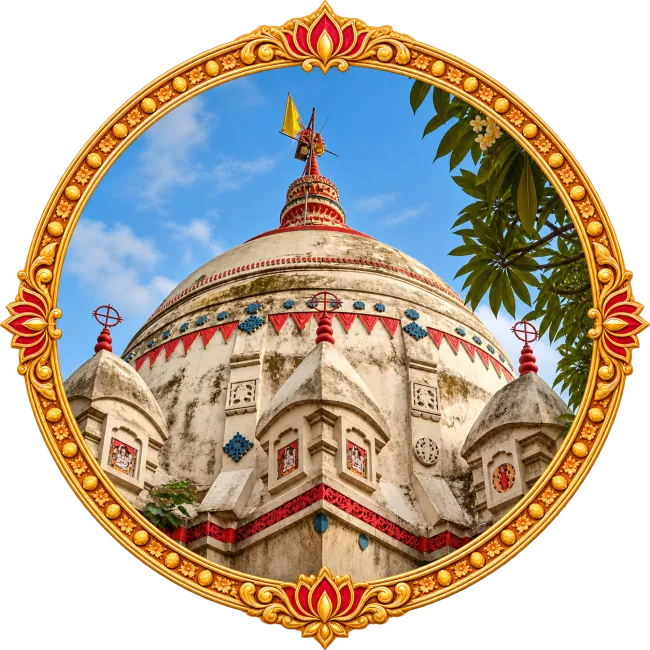
Sukreswar Temple, Guwahati
Sukreswar Temple is a historic Shiva shrine located on the southern bank of the Brahmaputra River in Guwahati, Assam. Situated on Sukreswar Hill near Pan Bazaar, the temple is known for its large Shiva Lingam, Ahom-period architecture and peaceful riverside setting.
Built in 1744 CE by Ahom king Pramatta Singha, the temple is associated with Sage Shukracharya, the spiritual teacher of the Asuras. Devotees visit Sukreswar Temple to worship Lord Shiva and pray for health, protection, marital harmony and spiritual peace.
About Sukreswar Temple
Sukreswar Temple stands on a hillock overlooking the Brahmaputra River. Its central location makes it one of the most accessible historic temples in Guwahati.
The shrine houses a large Shiva Lingam worshipped as Sukreswar Mahadev. It is regarded as one of the largest Shiva Lingams in the region.
A flight of stone steps descends from the temple towards Sukreswar Ghat on the Brahmaputra. Devotees traditionally visit the riverbank before or after receiving darshan.
The temple is particularly important during Mahashivratri, Shravan and Mondays, which are traditionally dedicated to Lord Shiva.
When Was Sukreswar Temple Built and Who Built It?
Sukreswar Temple was built in 1744 CE by Ahom king Pramatta Singha. He ruled Assam from 1744 to 1751 and supported the construction of temples and religious institutions.
The king built a permanent temple at the sacred site associated with Sage Shukra and installed the large Shiva Lingam within its sanctum.
His successor, King Rajeswar Singha, continued to support the shrine and granted land for its maintenance and daily worship.
The temple later underwent repairs because of earthquakes, weather and age. The original association with the Ahom dynasty remains visible in its stone construction and architectural form.
Legend of Sage Shukracharya
Sukreswar Temple is associated with Sage Shukracharya, also known as Shukra. He was the spiritual teacher of the Asuras and an important figure in Hindu mythology and astrology.
According to local tradition, Sage Shukra established an Ashram on the hill beside the Brahmaputra. He installed a Shiva Lingam and performed intense meditation to receive the blessings of Lord Shiva.
Pleased with his devotion, Shiva granted him spiritual knowledge and the Sanjeevani Vidya—the power associated with restoring life.
The Shiva Lingam became known as Sukreswar, meaning the Lord worshipped by Shukra. The hill and surrounding locality also came to be associated with the sage.
Religious Significance
Sukreswar Mahadev is worshipped as a compassionate form of Lord Shiva. Devotees believe that sincere worship at the temple grants mental peace, courage and protection.
People pray here for:
Good health and recovery
Protection from danger
Marital harmony
Marriage and children
Relief from fear and stress
Success in education and employment
Spiritual wisdom
Freedom from negative influences
Peace for departed family members
Fulfilment of wishes
Because the temple is connected with Shukra, some devotees also pray for harmony in relationships, artistic success and prosperity.
Architecture of Sukreswar Temple
The temple reflects Ahom-period architectural traditions. It has a solid stone base, thick walls and a dome-like superstructure above the Garbhagriha.
The large Shiva Lingam occupies the central sanctum. Devotees can offer water, milk, flowers and Bilva leaves according to temple arrangements.
The complex includes:
Main Shiva sanctum
Sabha Mandap
Smaller shrines
Temple courtyard
Stone steps leading to the river
Sukreswar Ghat
Puja and offering counters
Riverside viewpoints
The temple offers broad views of the Brahmaputra, especially during the morning and evening.
Sukreswar Ghat
Sukreswar Ghat is situated below the temple and is reached through a long flight of steps. The ghat is used for bathing, religious ceremonies and ancestral rituals.
Devotees perform Tarpan and Pind Daan on selected occasions. Religious bathing is considered auspicious, but visitors should enter the water only in permitted areas.
The Brahmaputra has strong currents and rapidly changing water levels. Bathing should be avoided during flooding, heavy rain or unsafe river conditions.
Sukreswar Temple Timings
The temple follows a daily schedule for Abhishekam, Puja, Bhog and Aarti.
Extended arrangements may be introduced during Mahashivratri, Shravan Mondays and other important occasions.
Morning Puja and Aarti
The temple day begins with Mangal Puja. Morning Aarti is performed at 6:00 AM, followed by Abhishekam of the Shiva Lingam.
The morning worship includes:
Sanctum purification
Water and milk Abhishekam
Offering of curd, honey and clarified butter
Bilva leaves
Flowers and sandalwood
Incense and lamps
Shiva mantra chanting
Naivedya
Morning Aarti
Devotees should use only permitted offerings and follow the instructions of the priests.
Bhog and Evening Aarti
Bhog is offered to Lord Sukreswar at noon. Fruits, sweets and Satvik food are presented to the deity.
Evening Puja begins at 5:30 PM, followed by Aarti at 6:30 PM. The river and setting sun create a peaceful atmosphere during the evening ceremony.
Shayan Puja is performed before the temple closes.
Major Festivals
Mahashivratri
Mahashivratri is the largest festival at Sukreswar Temple. Devotees begin arriving before sunrise and offer water, milk, honey, flowers and Bilva leaves.
Special Abhishekam, Rudra Path, Aarti and night worship are organised. Queue and traffic arrangements are introduced to manage the large gathering.
Shravan Month
Mondays during Shravan attract many Shiva devotees. Pilgrims carry sacred water and offer it to the Shiva Lingam.
Kartik Purnima
Devotees visit Sukreswar Ghat for ritual bathing, lamp offerings and temple worship.
Makar Sankranti
Prayers and charitable activities are organised during Makar Sankranti. Devotees visit the Brahmaputra and offer worship to Lord Shiva.
Guru Purnima
The temple’s association with Sage Shukracharya gives Guru Purnima special significance.
Puja and Religious Services
The temple may provide arrangements for:
General Shiva Puja
Jalabhishek
Rudrabhishek
Mahamrityunjaya Mantra Path
Mahashivratri Puja
Shravan Monday Puja
Marriage-related prayers
Family welfare Puja
Health and protection prayers
Tarpan
Pind Daan
Havan
Special ceremonies and ancestral rituals should be arranged through authorised priests. Charges should be confirmed before beginning the ceremony.
Offerings and Prasad
Traditional offerings include:
Water
Milk
Curd
Honey
Bilva leaves
White flowers
Fruits
Coconut
Sandalwood paste
Incense
Clarified butter
Sweets
Monetary donations
Prasad generally includes fruits, coconut, sweets and blessed flowers. Plastic and ritual waste must not be thrown into the Brahmaputra.
Dress Code and Temple Rules
There is no strict dress code, but devotees should wear clean and modest clothing.
Important rules include:
Remove footwear before entering.
Follow the designated queue.
Do not touch the Shiva Lingam without permission.
Follow photography restrictions.
Be cautious on the river steps.
Do not enter the river during strong currents.
Keep the temple and ghat clean.
Avoid alcohol and tobacco.
Deposit donations only at authorised counters.
Follow directions issued by priests and security staff.
Entry Fee and Darshan Duration
General entry and darshan are free. Charges apply to optional Pujas, ancestral ceremonies and ritual materials.
Darshan usually requires 20–40 minutes. Visitors planning to explore the ghat should reserve one to two hours.
During Mahashivratri and Shravan Mondays, waiting time can extend to several hours.
Best Time to Visit
October to March is the best period for visiting Sukreswar Temple. The weather is comfortable, and the Brahmaputra riverfront is pleasant.
Early morning between 7:00 AM and 10:00 AM is suitable for Puja and darshan. Evening is ideal for views of the river and participation in Aarti.
The monsoon brings high water levels and strong currents. Visitors should remain away from restricted sections of the ghat.
How to Reach Sukreswar Temple
By Air
Lokpriya Gopinath Bordoloi International Airport is approximately 22 kilometres from the temple.
By Train
Guwahati Railway Station is approximately 2 kilometres away.
By Road
The temple is accessible by city bus, taxi, auto-rickshaw and app-based cab.
Accommodation and Facilities
Hotels, guest houses and budget lodges are available in Pan Bazaar, Paltan Bazaar and other central areas.
Facilities near the temple include:
Drinking water
Shoe-storage space
Puja shops
Food outlets
Local transport
Basic resting areas
River access
Security assistance
Nearby Places to Visit
Umananda Temple: A Shiva shrine on Peacock Island.
Ugratara Temple: A historic Shakti temple near Jorpukhuri.
Navagraha Temple: An Ahom-period temple on Chitrachal Hill.
Kamakhya Temple: Guwahati’s principal Shakti Peetha.
Assam State Museum: A museum of Assamese art and history.
Dighalipukhuri: A historic lake in central Guwahati.
Brahmaputra Riverfront: Known for evening views and cruises.
Guwahati Planetarium: A popular educational attraction.
Conclusion
Sukreswar Temple is an important Shiva shrine combining Ahom royal history, the legend of Sage Shukracharya and the spiritual beauty of the Brahmaputra riverfront. Built by King Pramatta Singha in 1744 CE, the temple preserves a significant part of Guwahati’s religious heritage.
The large Shiva Lingam, daily Aartis, sacred ghat and peaceful riverside setting attract devotees throughout the year. Visitors worship Sukreswar Mahadev for health, protection, wisdom and spiritual peace.