Srivilliputhur Andal Temple, Srivilliputhur
Visit Srivilliputhur Andal Temple in Tamil Nadu, one of South India’s most sacred Vishnu temples and the birthplace of Goddess Andal. The temple is dedicated to Andal, Lord Rangamannar and Lord Vishnu as Vatapatrasayi.
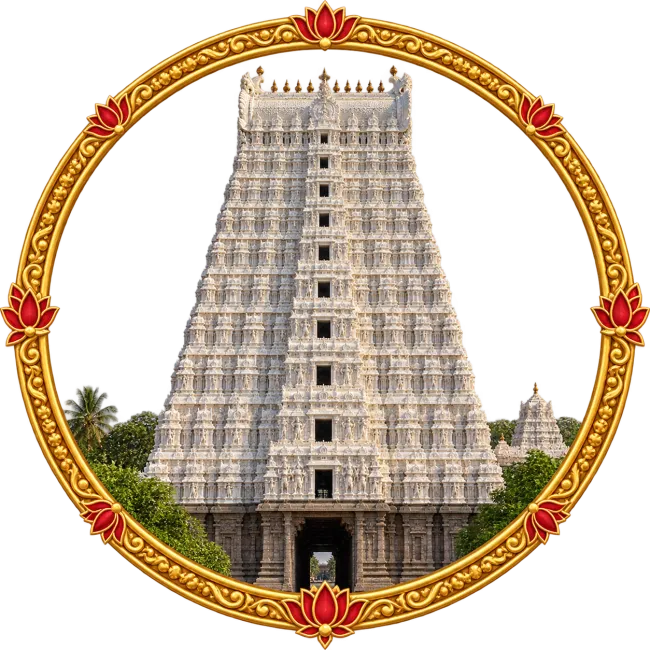
Srivilliputhur is one of the 108 Divya Desams praised by the Alvar saints. The temple is famous for its towering Rajagopuram, which serves as the official emblem of the Government of Tamil Nadu. Its history is closely connected with Periyalvar and Andal, the only female Alvar saint.
About Srivilliputhur Andal Temple
Srivilliputhur Andal Temple is located in Srivilliputhur town of Virudhunagar district, Tamil Nadu.
The temple complex contains two principal sections:
- Vatapatrasayi Temple
- Andal and Rangamannar Temple
Lord Vishnu is worshipped as Vatapatrasayi in a reclining form. Goddess Andal is worshipped with Lord Rangamannar, the royal form of Vishnu whom she accepted as her divine husband.
The temple is one of the most important pilgrimage destinations in the Sri Vaishnava tradition.
History of Srivilliputhur Andal Temple
The religious history of Srivilliputhur is connected with the Pandya period. The original shrine of Lord Vatapatrasayi is traditionally associated with the Pandya kings.
King Vallabhadeva of the Pandya dynasty is linked with the development of the temple and the story of Periyalvar.
According to tradition, Periyalvar won a religious debate at the Pandya court by explaining the supremacy of Lord Vishnu. He received a reward of gold from the king and used his wealth for the service and development of the temple.
The temple was later expanded by:
- Later Pandya rulers
- Vijayanagara kings
- Madurai Nayaks
- Local Sri Vaishnava communities
The Andal shrine, Mandapams, corridors and decorative structures were developed through these later periods.
Inscriptions in the temple record land grants, donations, lamps, festivals and arrangements for daily worship.
Legend of Villi and the Founding of Srivilliputhur
According to local tradition, two hunter brothers named Villi and Kandan lived in the forested region.
During a hunting expedition, Kandan was attacked and killed by a tiger. Villi searched for his brother but could not find him.
Lord Vishnu appeared in Villi’s dream and revealed what had happened. The Lord also showed him a sacred image hidden beneath the forest.
Villi discovered the divine image and established a shrine. A settlement developed around it and became known as Srivilliputhur:
- Sri refers to the divine Lord.
- Villi refers to the hunter.
- Puthur means a new settlement or town.
The legend connects the town’s origin with divine guidance and devotion.
Birth Story of Goddess Andal
Periyalvar, also known as Vishnuchittar, was a devoted worshipper of Lord Vishnu. He maintained a sacred Tulsi garden and prepared flower garlands for the deity.
One day, he discovered a baby girl beneath a Tulsi plant. He accepted the child as a divine blessing and named her Kodhai.
Kodhai grew up listening to stories about Lord Krishna and developed intense devotion towards him. She decided that she would marry only Lord Vishnu.
She later became known as Andal, meaning the woman who ruled over the Lord through her devotion.
Soodikodutha Sudarkodi Tradition
Periyalvar prepared fresh flower garlands every day for Lord Vatapatrasayi.
Before the garlands were taken to the temple, Andal secretly wore them and looked at herself, imagining that she was Lord Vishnu’s bride. She then returned the garlands for temple worship.
When Periyalvar discovered this, he felt that a garland already worn by a person should not be offered to the deity. He prepared a new garland and presented it to the Lord.
That night, Lord Vishnu appeared in his dream and said that he preferred the garland worn by Andal.
From then onwards, Andal became known as Soodikodutha Sudarkodi—the radiant maiden who first wore and then offered the garland to the Lord.
This tradition represents the belief that pure devotion is more valuable than external ritual perfection.
Marriage of Andal and Lord Ranganatha
Andal wished to marry Lord Ranganatha of Srirangam. Her devotional poems describe her longing for union with Lord Vishnu.
According to tradition, Lord Ranganatha appeared in the dreams of temple priests and instructed them to bring Andal to Srirangam.
Andal travelled to Sri Ranganathaswamy Temple dressed as a bride. When she entered the sanctum, she merged with Lord Ranganatha and attained eternal divine union.
At Srivilliputhur, she is worshipped with Lord Rangamannar, the royal bridegroom form of Vishnu.
Andal as the Only Female Alvar
Andal is the only woman among the twelve Alvar saints.
She composed two important Tamil devotional works:
Tiruppavai
Tiruppavai contains 30 verses recited during the Tamil month of Margazhi. The hymns describe young girls observing a sacred vow and seeking the blessings of Lord Krishna.
Nachiyar Tirumozhi
Nachiyar Tirumozhi contains verses expressing Andal’s intense devotion and desire to marry Lord Vishnu.
These compositions remain central to Sri Vaishnava worship and Tamil devotional literature.
Divya Desam Significance
Srivilliputhur is one of the 108 Divya Desams praised in the Nalayira Divya Prabandham.
Both Periyalvar and Andal were born in Srivilliputhur, giving the temple exceptional importance.
Devotees visit the temple for:
- Blessings for marriage
- Removal of delays in marriage
- Family peace and prosperity
- Devotion to Lord Vishnu
- Health and well-being of children
- Success in education
- Relief from obstacles
- Spiritual wisdom
- Development of pure devotion
- Fulfilment of sincere wishes
Unmarried devotees commonly recite Tiruppavai and pray to Andal for a suitable life partner.
Main Deities of the Temple
Goddess Andal
Andal is worshipped as the divine bride of Lord Vishnu. She is shown wearing traditional bridal ornaments and holding a parrot.
Lord Rangamannar
Lord Vishnu is worshipped as Rangamannar in a royal standing posture. Andal and Garuda are present near him.
Lord Vatapatrasayi
Lord Vishnu is shown reclining upon Adishesha. The name Vatapatrasayi refers to the form of Vishnu resting upon a banyan leaf during the cosmic dissolution.
Periyalvar
A separate shrine honours Periyalvar, the foster father of Andal and one of the twelve Alvars.
Sacred Garland Tradition
The garlands worn by Andal remain central to temple worship.
Every year, a garland from Srivilliputhur is ceremonially sent to Tirumala Venkateswara Temple for the Garuda Seva during Brahmotsavam.
A garland is also sent for the Chithirai festival connected with Lord Kallazhagar near Madurai.
This tradition represents Andal’s continuing relationship with different forms of Lord Vishnu.
Architecture of Srivilliputhur Andal Temple
The temple is constructed in the traditional Dravidian architectural style.
Important features include:
- Eleven-tiered Rajagopuram
- Vatapatrasayi sanctum
- Andal and Rangamannar shrine
- Carved stone Mandapams
- Long Prakarams
- Ancient inscriptions
- Sculptures of Alvar saints
- Temple chariot
- Sacred Tulsi garden
- Festival halls
- Traditional temple kitchen
- Thirumukkulam temple tank
The architecture reflects contributions made during the Pandya, Vijayanagara and Nayaka periods.
Rajagopuram and Tamil Nadu Emblem
The temple’s Rajagopuram rises approximately 59 metres and contains eleven tiers.
Its balanced proportions and Dravidian design made it an important symbol of Tamil architectural heritage.
The tower’s outline was selected for the official emblem of the Government of Tamil Nadu. It represents the state’s ancient culture, architecture and religious history.
Srivilliputhur Andal Temple Timings
Festival timings may differ during Aadi Pooram, Margazhi, Vaikunta Ekadashi and Brahmotsavam.
Morning Puja and Deepa Aradhana
The temple opens at 6:00 AM with Vishwaroopa Darshan.
Morning Puja and Deepa Aradhana are performed at 6:30 AM. The deities are worshipped with:
- Tulsi leaves
- Flower garlands
- Sandalwood paste
- Incense
- Lamps
- Fruits
- Naivedyam
- Silk garments
- Divya Prabandham recitation
Kalasanthi Puja is performed at 8:00 AM.
The period between 6:30 AM and 8:30 AM is suitable for peaceful darshan.
Tiruppavai Recitation and Special Archana
Tiruppavai recitation and special Archana are generally performed between 8:30 AM and 11:00 AM.
Devotees may arrange:
- Andal Sahasranama Archana
- Tiruppavai recitation
- Tulsi Archana
- Marriage prayer
- Flower garland Seva
- Saree offering
- Ghee-lamp offering
- Annadanam
- Special Naivedyam
Bookings should be made through official temple counters.
Uchikala Puja
Uchikala Puja is performed at 11:30 AM. Naivedyam, flowers, incense and lamps are presented before the deities.
The morning session closes at 12:00 PM.
Evening Puja and Deepa Aradhana
The temple reopens at 4:00 PM.
Sayaraksha Puja and Deepa Aradhana are performed at 6:00 PM. Devotees can participate in evening recitation and receive darshan of Andal and Rangamannar.
Ardha Jama Puja is performed at 8:00 PM. The temple closes at 8:30 PM.
Aadi Pooram Festival
Aadi Pooram is the temple’s most important annual festival. It celebrates the appearance of Goddess Andal.
The festival extends for several days and includes:
- Flag hoisting
- Special Abhishekam
- Bridal Alankarams
- Vahana processions
- Tiruppavai recitation
- Temple chariot festival
- Divine wedding ceremonies
- Music and devotional programmes
- Distribution of Prasadam
The massive temple chariot is pulled through the streets of Srivilliputhur by thousands of devotees.
Other Major Festivals
Margazhi Tiruppavai Festival
All 30 verses of Tiruppavai are recited during the Tamil month of Margazhi.
Vaikunta Ekadashi
The Paramapada Vasal is opened, symbolizing entry into Vaikuntha.
Panguni Uthiram
The divine relationship between Andal and Lord Vishnu is celebrated through wedding rituals.
Ennaikappu Festival
The deity receives a special protective oil application and ceremonial decoration.
Krishna Jayanti
Lord Krishna’s birth is celebrated with Bhajans, special Puja and processions.
Rama Navami
Special recitation and worship are performed for Lord Rama.
Purattasi Saturdays
Saturdays during Purattasi are considered especially auspicious for Vishnu worship.
Offerings and Prasadam
Common offerings include:
- Tulsi garlands
- Flower garlands
- Sarees
- Bangles
- Turmeric and Kumkum
- Fruits
- Coconut
- Butter
- Sugar candy
- Ghee lamps
- Monetary donations
- Annadanam sponsorship
Temple Prasadam may include:
- Akkaravadisal
- Sakkarai Pongal
- Puliyodarai
- Curd rice
- Sundal
- Laddu
- Fruits
Akkaravadisal, a sweet preparation made with rice, milk, jaggery and ghee, is closely associated with Andal’s devotional tradition.
Dress Code and Entry Rules
Devotees should wear clean, modest and traditional clothing.
Recommended clothing includes:
- Dhoti, Veshti or full-length trousers for men
- Saree, half-saree, Salwar Kameez or other modest clothing for women
- Traditional clothing for children
Shorts, sleeveless outfits and revealing clothing should be avoided.
Photography and videography are restricted near the sanctums. Mobile phones should remain silent.
Entry into selected inner areas follows traditional Hindu temple rules.
Entry Fee and Visit Duration
General darshan is free. Paid Archana, Seva and special-darshan tickets may be available.
A regular visit requires one to two hours. Visitors exploring both major temple sections and the surrounding heritage area should keep two to three hours.
During Aadi Pooram and Vaikunta Ekadashi, darshan may require several hours.
Visitor Guidelines
- Remove footwear at the designated stand.
- Wear traditional and modest clothing.
- Visit both the Andal and Vatapatrasayi shrines.
- Keep mobile phones silent.
- Follow photography restrictions.
- Do not touch ancient sculptures or inscriptions.
- Use official counters for Sevas and donations.
- Do not purchase darshan access from unauthorized agents.
- Maintain silence during Tiruppavai recitation.
- Accept Prasadam respectfully.
- Keep the temple and tank clean.
- Carry drinking water during hot weather.
- Keep children and elderly devotees under supervision.
- Follow instructions from priests and security personnel.
Best Time to Visit
November to February is the best period for visiting Srivilliputhur because the weather remains pleasant.
For peaceful darshan, visit between 6:30 AM and 8:30 AM.
The Tamil month of Margazhi is especially suitable for devotees wishing to experience Tiruppavai recitation.
Aadi Pooram offers the grandest devotional experience but attracts large crowds.
How to Reach Srivilliputhur Andal Temple
By Air
Madurai International Airport is the nearest major airport, located approximately 75 kilometres from Srivilliputhur.
By Train
Srivilliputhur Railway Station is located a short distance from the temple. Trains connect the town with Madurai, Virudhunagar, Rajapalayam, Tenkasi and Chennai.
By Bus
Regular government and private buses connect Srivilliputhur with Madurai, Virudhunagar, Rajapalayam, Sivakasi, Tirunelveli and other towns.
By Road
Taxis, auto-rickshaws and private vehicles are easily available. Road access near the temple may be restricted during the chariot festival.
Nearby Places to Visit
- Thirumukkulam
- Periyalvar Shrine
- Madavar Vilagam Vaidyanathar Temple
- Shenbaga Thoppu
- Grizzled Squirrel Wildlife Sanctuary
- Rajapalayam
- Ayyanar Falls
- Sathuragiri Hills
- Sivakasi
- Virudhunagar
- Thiruthangal Ninra Narayana Perumal Temple
- Tirumalapuram Rock-Cut Caves
Conclusion
Srivilliputhur Andal Temple is one of India’s most important Vaishnava pilgrimage destinations and the sacred birthplace of Goddess Andal.
The temple preserves the inspiring story of a young devotee whose unconditional love allowed her to attain eternal union with Lord Vishnu. Its Rajagopuram, sacred garland tradition and Aadi Pooram chariot festival reflect the depth of Tamil devotional culture.
Worshipping Andal and Lord Rangamannar is believed to provide marital happiness, family prosperity and pure devotion. A visit to Srivilliputhur offers devotees a profound experience of Sri Vaishnava philosophy, Tamil poetry and South Indian temple heritage.