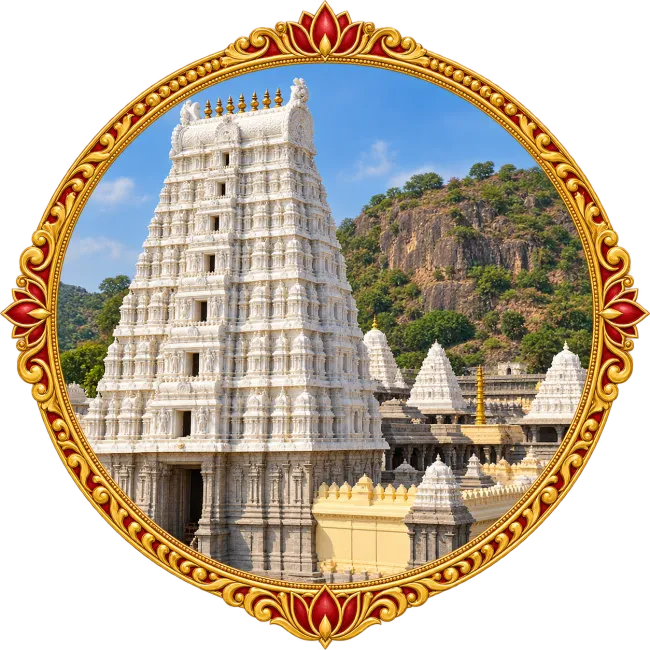
Srikalahasti Temple, Srikalahasti
Srikalahasti Temple in Srikalahasti, Andhra Pradesh, is one of the most sacred temples dedicated to Lord Shiva. The temple is particularly famous for its Vayu Lingam, which represents the element of air among the Pancha Bhoota Sthalams. It is also one of India’s most important centres for Rahu–Ketu Puja, Sarpa Dosha Nivarana and remedies associated with planetary difficulties.
Situated near the banks of the Swarnamukhi River, the temple combines ancient spiritual traditions, magnificent Dravidian architecture and several powerful legends. The stories of the spider, serpent, elephant and the devoted hunter Kannappa are closely connected with the temple. Thousands of devotees visit Srikalahasti every day to worship Lord Shiva, seek relief from doshas and experience its sacred atmosphere.
About Srikalahasti Temple
Srikalahasti Temple, officially known as Sri Kalahasteeswara Swamy Temple, is dedicated to Lord Shiva as Sri Kalahasteeswara. Goddess Parvati is worshipped here as Sri Gnana Prasunambika Devi.
The presiding Shiva Lingam is known as the Vayu Lingam because it represents Vayu, or air. The temple is one of the five Pancha Bhoota Sthalams, where Lord Shiva is worshipped through the five natural elements:
- Ekambareswarar Temple, Kanchipuram – Earth
- Jambukeswarar Temple, Tiruvanaikaval – Water
- Arunachaleswarar Temple, Tiruvannamalai – Fire
- Srikalahasti Temple – Air
- Chidambaram Nataraja Temple – Space
An important feature of Srikalahasti Temple is that the flame of a lamp inside the sanctum is believed to move continuously despite the absence of an apparent flow of air. Devotees regard this as a manifestation of the Vayu principle represented by the deity.
The temple is also called Dakshina Kailasam, meaning the Kailash of South India. Its location between a hill and the Swarnamukhi River adds to its spiritual and natural significance.
When and Who Built Srikalahasti Temple?
The earliest structure of Srikalahasti Temple is associated with the Pallava period and is believed to have originated during the fifth century. The temple was considerably expanded under the Chola rulers between the tenth and twelfth centuries.
Important additions were made during the reigns of Rajendra Chola I, Kulottunga Chola I and other Chola kings. They constructed stone mandapams, shrines, corridors and other architectural features while also providing grants for worship and temple administration.
The temple received further support from the rulers of the Vijayanagara Empire. Emperor Krishnadevaraya visited Srikalahasti during the early sixteenth century and commissioned major structures, including a grand mandapam. The Vijayanagara additions strengthened the temple’s position as a leading Shaivite pilgrimage centre.
Thus, Srikalahasti Temple was not constructed by a single king. It developed over several centuries through the contributions of Pallava, Chola and Vijayanagara rulers.
Meaning of the Name Srikalahasti
The name Srikalahasti is associated with three devoted creatures that worshipped Lord Shiva at this sacred place:
- Sri refers to a spider
- Kala refers to a serpent
- Hasti refers to an elephant
According to the temple legend, all three were deeply devoted to Lord Shiva and worshipped the Shiva Lingam in their own ways.
The spider created a web over the Lingam to protect it. The serpent decorated it with precious stones, while the elephant regularly bathed the Lingam with water brought in its trunk. Their different methods of worship eventually caused a conflict, but Lord Shiva accepted their sincere devotion and granted them liberation.
The names of these three devotees were combined to form “Sri-Kala-Hasti.”
Legend of Kannappa Nayanar
One of the most celebrated legends associated with the temple is that of Kannappa Nayanar, one of the 63 Nayanmar saints.
Kannappa was a hunter who had no formal knowledge of temple rituals. However, his devotion to Lord Shiva was pure and unconditional. He offered water from his mouth and food from his hunt to the Shiva Lingam because these were the best offerings he could provide.
A priest considered these acts improper, but Lord Shiva valued Kannappa’s sincerity above ritual perfection. To test his devotion, blood began to flow from one of the eyes represented on the Lingam.
Kannappa immediately removed one of his own eyes and placed it over the bleeding eye of the deity. When the second eye began to bleed, he prepared to sacrifice his remaining eye as well. To ensure that he could locate the correct spot after losing his sight, he placed his foot on the Lingam.
Before he could remove his second eye, Lord Shiva appeared, stopped him and restored his vision. Kannappa was granted liberation and became one of the most revered saints of the Shaivite tradition.
A shrine associated with Kannappa is situated on a nearby hill and remains an important part of the Srikalahasti pilgrimage.
Religious Significance of Srikalahasti Temple
Srikalahasti Temple holds exceptional importance because it represents the air element. Air is invisible but essential for life, and the Vayu Lingam symbolises the presence of divine energy in every living being.
The temple is also one of the most prominent destinations for worship connected with Rahu and Ketu. According to astrology, these shadow planets can influence marriage, family life, career, health and mental peace. Devotees perform special pujas here to reduce the adverse effects attributed to:
- Rahu Dosha
- Ketu Dosha
- Kala Sarpa Dosha
- Sarpa Dosha
- Naga Dosha
- Delays in marriage
- Repeated professional obstacles
- Family difficulties
- Problems related to childbirth
- Mental stress and uncertainty
Srikalahasti is also important because it is traditionally believed to remain spiritually unaffected during solar and lunar eclipses. While many temples close during an eclipse, ritual worship at Srikalahasti continues because Rahu and Ketu are worshipped within the temple tradition.
Main Deities and Shrines
The main deity is Lord Shiva as Sri Kalahasteeswara, represented by the naturally formed Vayu Lingam. Devotees are not normally permitted to touch the main Lingam directly. Ritual abhishekam is performed according to established temple traditions.
Goddess Parvati is worshipped as Sri Gnana Prasunambika Devi. Her name signifies the Goddess who grants spiritual knowledge and wisdom. Devotees pray to her for education, clarity of mind, marital harmony and family welfare.
Other important shrines and sacred figures include:
- Lord Ganesha
- Lord Subrahmanya
- Dakshinamurthy
- Lord Bhairava
- Lord Nataraja
- Goddess Durga
- Chandikeswarar
- Navagrahas
- Rahu and Ketu
- Kannappa Nayanar
- Other Shaivite saints and deities
The temple complex contains several sacred halls and subsidiary shrines that devotees visit after completing darshan of the main deity.
Architecture of Srikalahasti Temple
Srikalahasti Temple is a magnificent example of Dravidian architecture. The temple complex is positioned between the Srikalahasti hill and the Swarnamukhi River, creating a naturally impressive setting.
The complex contains high entrance towers, long corridors, sculpted pillars, stone halls and several smaller shrines. Different sections display the architectural styles of the Pallava, Chola and Vijayanagara periods.
Main Sanctum
The sanctum housing the Vayu Lingam is the spiritual centre of the temple. Its relatively dim interior, traditional oil lamps and sacred rituals create an intense devotional atmosphere.
The Lingam is considered self-manifested and has a distinctive form. It is not handled in the same manner as ordinary Shiva Lingams because of its special sacred status.
Hundred-Pillared Hall
The hundred-pillared hall is an important Vijayanagara-era structure associated with Emperor Krishnadevaraya. Its massive stone pillars, sculptural details and spacious design display the artistic skill of the period.
Sculptures and Inscriptions
The temple contains sculptures depicting Hindu deities, mythological episodes, celestial beings, animals and floral patterns. Historical inscriptions record donations, royal patronage, land grants and arrangements for festivals and worship.
Temple Gopurams
The entrance towers were designed as monumental gateways to the sacred complex. Various rulers renovated and expanded them over time. These gopurams represent the grandeur traditionally associated with major South Indian temples.
Srikalahasti Temple Timings
The standard daily darshan and worship schedule is:
The temple generally remains open during the afternoon. The schedule can be changed on Maha Shivaratri, Karthika Somavaram, eclipse days and major festival occasions.
Morning Puja and Deepa Aradhana
The temple opens at 6:00 AM with Suprabhata Seva and the ceremonial opening of the sanctum. Morning Deepa Aradhana is offered at 6:30 AM.
Abhishekam, archana and other special pujas are conducted during the morning period. Devotees seeking peaceful darshan should visit between 7:00 AM and 10:00 AM.
The morning is also a preferred time for Rahu–Ketu Puja because the temple is less crowded than during the afternoon and evening. However, this puja can be performed during the available service hours and is not restricted to Rahu Kalam.
Evening Puja and Deepa Aradhana
The evening puja and Deepa Aradhana are performed at 6:00 PM. Oil lamps are offered before the deities while priests perform traditional chanting and ritual worship.
The most suitable evening darshan period is from 5:00 PM to 7:30 PM. A night puja is performed at 8:00 PM, followed by Ekanta Seva at 8:30 PM. The temple closes at 9:00 PM after the final rituals.
Rahu–Ketu Puja
Rahu–Ketu Puja is the most popular special ritual performed at Srikalahasti Temple. It is conducted within designated halls under the guidance of temple priests.
Devotees receive puja materials as part of the selected seva. The priest explains how the ritual items must be placed and offered. Worshippers should follow the instructions carefully and avoid leaving the puja before it is completed.
Rahu–Ketu Puja is performed from 6:00 AM to 6:00 PM. Devotees do not need to wait specifically for Rahu Kalam because the sacred significance of the temple is believed to make the entire service period suitable for the ritual.
Different ticket categories may be available based on the location of the puja and the number of participants. Tickets should be purchased only from authorised temple counters.
After completing the puja, devotees should have darshan of Sri Kalahasteeswara and Gnana Prasunambika Devi.
Major Festivals
Maha Shivaratri
Maha Shivaratri is the largest festival celebrated at the temple. Special abhishekams, night-long worship, processions and cultural programmes are organised. Thousands of devotees visit to observe fasting and worship Lord Shiva.
Brahmotsavam
The annual Brahmotsavam is celebrated with decorated processional deities, vahana sevas, Vedic rituals and temple processions. The divine wedding ceremony of Lord Kalahasteeswara and Gnana Prasunambika Devi is an important part of the celebration.
Karthika Deepam
The Tamil and Telugu month of Karthika is considered highly auspicious for Shiva worship. Lamps are lit across the temple, and devotees participate in special pujas, abhishekams and Monday worship.
Kannappa Festival
Kannappa Nayanar’s devotion is commemorated through special worship and ceremonies. Devotees visit both the main temple and the shrine connected with Kannappa.
Other important observances include Pradosham, Ugadi, Vinayaka Chaturthi, Navaratri, Sankranti and monthly Shivaratri.
Sevas and Offerings
Devotees can participate in various temple sevas, including:
- Rahu–Ketu Puja
- Sarpa Dosha Nivarana Puja
- Abhishekam
- Archana
- Rudrabhishekam
- Sahasranama Archana
- Deepa Aradhana
- Kalyanotsavam
- Annadanam donation
- Festival sponsorship
Flowers, coconuts, fruits, bilva leaves, incense and lamps may be offered according to temple rules. Puja tickets and offerings should be obtained only through authorised counters.
Prasadam
After darshan or special puja, devotees may receive sacred ash, kumkum and other blessed items. Laddu and additional prasadam may also be available at designated counters.
Devotees should handle prasadam respectfully and avoid wasting food. Those participating in Rahu–Ketu Puja should follow the priest’s instructions regarding ritual materials and their proper disposal.
Dress Code and Temple Rules
Visitors should wear modest and respectful clothing. Traditional Indian dress is recommended.
Men may wear a dhoti, kurta-pyjama or full-length trousers with a shirt. Women may wear a saree, salwar kameez or another modest outfit.
Footwear must be removed before entering. Photography and videography are restricted inside the main temple, particularly near the sanctum. Mobile phones should remain switched off or silent.
Devotees should not touch ritual objects or enter restricted areas. Tobacco, alcohol, leather items and non-vegetarian food should not be carried inside.
Entry Fee and Visit Duration
General darshan does not require an entry fee. Paid options may be available for special darshan, Rahu–Ketu Puja, abhishekam and other sevas.
A regular visit requires 1½ to 2 hours. Devotees performing Rahu–Ketu Puja should keep 2½ to 3 hours available for purchasing tickets, completing the ritual and having darshan.
During Maha Shivaratri, weekends and public holidays, waiting times may be significantly longer.
Best Time to Visit
The most comfortable period to visit Srikalahasti is from October to March. The weather during these months is suitable for temple visits and nearby sightseeing.
For peaceful darshan, arrive between 7:00 AM and 9:00 AM on a weekday. Evening darshan between 5:00 PM and 7:30 PM is suitable for attending Deepa Aradhana.
Maha Shivaratri offers the grandest spiritual experience, but devotees should be prepared for heavy crowds and extended queues.
How to Reach Srikalahasti Temple
By Air
Tirupati Airport is the nearest airport, located approximately 25 kilometres from Srikalahasti. Taxis and buses are available from the airport to the temple town.
By Train
Srikalahasti Railway Station is the nearest station. It is connected with Tirupati, Chennai, Vijayawada and other regional destinations. Auto-rickshaws and taxis are available outside the station.
By Road
Srikalahasti is approximately 36 kilometres from Tirupati and is well connected by government and private buses. Regular services operate from Tirupati, Chennai, Nellore and nearby towns.
Nearby Places to Visit
Visitors may also explore:
- Kannappa Temple
- Bharadwaja Tirtham
- Sahasra Linga Temple
- Sri Subrahmanya Swamy Temple
- Swarnamukhi River
- Tirumala Venkateswara Temple
- Tiruchanur Padmavathi Temple
- Govindaraja Swamy Temple
- Kapila Theertham
- Chandragiri Fort
Visitor Guidelines
Reach the temple early if you plan to perform Rahu–Ketu Puja. Purchase tickets only from official counters and do not depend on unauthorised agents.
Keep the puja ticket safely until the ritual is completed. Follow the priest’s instructions and remain seated during the complete ceremony. After the puja, visit the main sanctums of Kalahasteeswara and Gnana Prasunambika Devi.
Senior citizens, children and people with health concerns should avoid the busiest festival hours. Carry drinking water for the journey, but maintain cleanliness within the temple complex.
Conclusion
Srikalahasti Temple is a powerful centre of Shaivite worship and one of the most important temples in Andhra Pradesh. Its Vayu Lingam, connection with the Pancha Bhoota Sthalams, Rahu–Ketu Puja and the inspiring story of Kannappa Nayanar give it exceptional spiritual significance.
The temple’s ancient Pallava foundations, Chola expansions, Vijayanagara architecture and sacred riverside setting make it equally important for devotees, historians and architecture lovers. A visit to Srikalahasti offers an opportunity to seek Lord Shiva’s blessings, perform traditional remedies and experience the enduring spiritual heritage of South India.