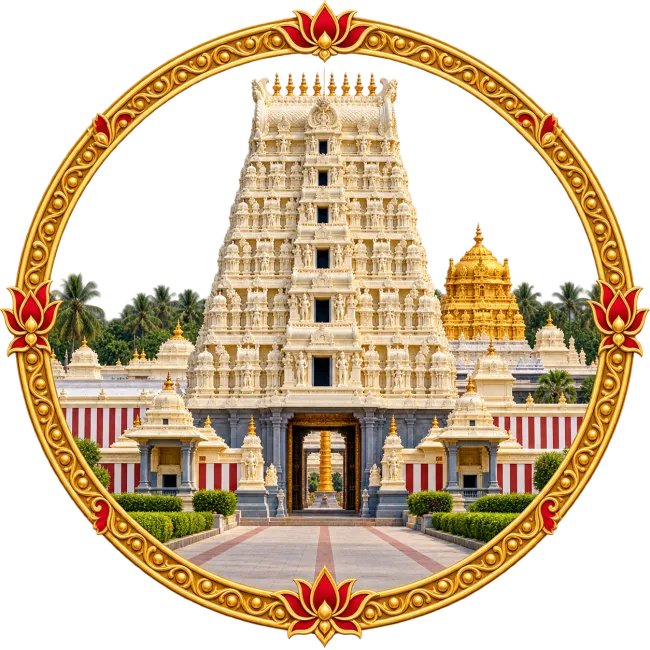
Sri Venkateswara Temple, Dwaraka Tirumala
Sri Venkateswara Temple at Dwaraka Tirumala is one of the most revered Vaishnavite temples in Andhra Pradesh. Dedicated to Lord Venkateswara, the temple is popularly known as “Chinna Tirupati,” meaning Little Tirupati. Devotees who are unable to visit Tirumala frequently come here to fulfil their vows and offer prayers to Lord Venkateswara.
The temple is situated on Seshachala-shaped hills in Dwaraka Tirumala, Eluru district. Its peaceful surroundings, impressive gopurams, traditional rituals and self-manifested deity attract pilgrims from across Andhra Pradesh, Telangana and other parts of India.
About Sri Venkateswara Temple, Dwaraka Tirumala
Sri Venkateswara Temple is dedicated to Lord Vishnu in the form of Sri Venkateswara Swamy. The sacred place is called Dwaraka Tirumala after the saint Dwaraka, who is believed to have discovered the self-manifested deity following intense penance.
The temple is also called Chinna Tirupati because its traditions, festivals and form of worship are closely associated with Tirumala Venkateswara Temple. Devotees believe that worshipping Lord Venkateswara at Dwaraka Tirumala brings blessings similar to those received at Tirumala.
A distinctive feature of the temple is the presence of two images of Lord Venkateswara in the same sanctum. The first is a self-manifested deity whose lower portion remains within the earth. A complete image of Lord Venkateswara was later installed behind it to facilitate complete ritual worship.
The temple follows Vaishnavite traditions and performs daily worship according to Pancharatra Agama practices.
When and Who Built Dwaraka Tirumala Temple?
The spiritual origin of Dwaraka Tirumala Temple is associated with the ancient sage Dwaraka, who discovered the self-manifested form of Lord Venkateswara. The original shrine developed around this sacred deity.
The temple received support from different regional rulers and local patrons over several centuries. Historical development of the present complex is especially associated with the zamindars of Mylavaram.
Dharma Appa Rao, who lived between 1762 and 1827, made important contributions to the temple’s development. Rani Chinnamma Rao, who lived between 1877 and 1902, also supported the renovation and expansion of the shrine.
Additional gopurams, mandapams, enclosures and facilities for pilgrims were constructed during later renovations. The temple has continued to grow under the administration of the Devasthanam while preserving its traditional Vaishnavite rituals.
Therefore, the temple was not created during a single construction period. Its sacred origin is ancient, while the present complex developed through the patronage of regional rulers, zamindars and devotees.
Legend of Sage Dwaraka
According to temple tradition, a sage named Dwaraka performed severe penance on the hill to obtain the divine vision of Lord Vishnu.
Pleased with his devotion, Lord Vishnu appeared before him in the form of Venkateswara. The saint discovered the self-manifested deity within an anthill. Because the image was found by Sage Dwaraka, the place became known as Dwaraka Tirumala.
The self-manifested image faces south. This is an unusual feature because many Vishnu temples have an east-facing deity. The south-facing form is associated with the direction in which the sage performed his penance.
The lower portion of the original deity remains inside the earth and cannot be seen. Only the upper part is visible to devotees.
Why Are There Two Venkateswara Idols?
Dwaraka Tirumala Temple has two images of Lord Venkateswara in the same sanctum. The front deity is the ancient self-manifested form discovered by Sage Dwaraka.
Because the feet of the original deity remain beneath the earth, complete ritual worship could not be performed in the conventional manner. According to tradition, Sri Ramanujacharya installed a second, complete image of Lord Venkateswara behind the self-manifested deity.
The front deity represents the natural divine manifestation, while the complete idol allows devotees to worship the Lord from head to feet.
Devotees receive darshan of both forms simultaneously. This arrangement is considered one of the most distinctive features of Dwaraka Tirumala Temple.
Why Is It Called Chinna Tirupati?
Dwaraka Tirumala is popularly called Chinna Tirupati because Lord Venkateswara is worshipped here with traditions similar to those followed at Tirumala.
Many devotees make vows to Lord Venkateswara for marriage, children, education, employment, health or business success. If they are unable to travel to Tirumala, they visit Dwaraka Tirumala to complete their prayers and offerings.
However, a vow specifically made to Tirumala Venkateswara is traditionally expected to be fulfilled at Tirumala itself. Dwaraka Tirumala is independently sacred and should not be treated merely as a replacement for another pilgrimage.
The name Chinna Tirupati reflects the temple’s popularity, Vaishnavite traditions and significance among devotees of Lord Venkateswara.
Religious Significance
Lord Venkateswara is worshipped as the protector of devotees in Kali Yuga. Devotees believe that sincere worship at Dwaraka Tirumala helps remove financial difficulties, delays and obstacles.
People visit the temple to pray for:
- Good health and long life
- Success in education and examinations
- Employment and professional growth
- Business prosperity
- Relief from financial difficulties
- A suitable marriage
- Marital happiness
- Blessings for children
- Peace and unity within the family
- Protection from negative influences
- Fulfilment of vows
- Spiritual wisdom and devotion
Saturdays, Ekadashi days and festival occasions are considered especially auspicious for worshipping Lord Venkateswara.
Main Deities and Shrines
Sri Venkateswara Swamy
The main sanctum contains the self-manifested deity and the complete image installed behind it. The Lord is decorated with silk garments, flowers, Tulasi garlands and traditional ornaments.
Goddess Padmavathi
Goddess Padmavathi is worshipped as the divine consort of Lord Venkateswara. Devotees seek her blessings for prosperity, marriage and family welfare.
Goddess Andal
Goddess Andal represents complete devotion to Lord Vishnu. Her shrine is especially important during the Tamil month of Margazhi and Andal-related festivals.
Other shrines and sacred figures within the temple complex include:
- Lord Ganesha
- Anjaneya Swamy
- Garuda
- Sri Ramanujacharya
- Alwar saints
- Sri Sudarshana
- Lord Rama with Sita and Lakshmana
- Other forms of Lord Vishnu and his divine attendants
Devotees generally visit the subsidiary shrines after receiving darshan of Lord Venkateswara.
Architecture of Dwaraka Tirumala Temple
The temple follows the traditional South Indian Dravidian architectural style. It contains majestic entrance towers, spacious mandapams, long corridors and numerous sculptures associated with Vaishnavite mythology.
Rajagopuram
The tall Rajagopuram serves as the principal entrance to the temple. It contains colourful sculptures of Lord Vishnu, divine guardians, celestial beings and scenes from sacred traditions.
Main Sanctum
The sanctum is the most sacred part of the complex. It contains both images of Lord Venkateswara. Traditional lamps, floral decorations, Tulasi garlands and gold ornaments enhance the spiritual atmosphere.
Vimana
The structure above the sanctum is designed according to South Indian temple architecture. It marks the location of the principal deity and is treated with deep reverence.
Mandapams
The temple has several pillared halls used for Kalyanotsavam, Arjitha Sevas, Vedic chanting and festival ceremonies. Sculptures on the pillars display deities, animals, floral patterns and mythological scenes.
Sacred Hill and Surroundings
Dwaraka Tirumala is situated on a hill traditionally associated with the form of Adisesha, the divine serpent of Lord Vishnu. The natural surroundings add to the temple’s calm and devotional atmosphere.
Sri Venkateswara Temple Timings
The regular temple and darshan schedule is:
Public darshan is generally available in three sessions: 6:00 AM to 1:00 PM, 3:00 PM to 5:30 PM and 7:00 PM to 9:00 PM. The schedule can be reorganised during Brahmotsavam, Vaikuntha Ekadashi and other major celebrations.
Morning Puja and Harathi
The temple opens at 4:00 AM with Suprabhata Seva. Traditional hymns are recited to awaken Lord Venkateswara.
Morning Aradhana and Alankaram are performed from 4:30 AM to 5:30 AM. The deities are ceremonially worshipped and decorated with silk garments, flowers, Tulasi leaves and ornaments.
Morning Harathi and Nivedana are conducted from 5:30 AM to 6:00 AM. Public darshan begins at 6:00 AM.
The best morning darshan period is from 6:30 AM to 9:00 AM. Weekday mornings usually offer a more peaceful experience than Saturdays, Sundays and festival days.
Nitya Arjitha Kalyanotsavam
Nitya Arjitha Kalyanotsavam is one of the most popular sevas at Dwaraka Tirumala. It celebrates the divine wedding of Lord Venkateswara with his consorts.
The seva is performed at 9:30 AM. Couples participate in the ceremony to seek blessings for marital harmony, family prosperity and mutual understanding.
Unmarried devotees may also pray for a suitable marriage. Participants must report before the scheduled time and follow the dress requirements prescribed for the seva.
Evening Puja and Harathi
Afternoon darshan is available from 3:00 PM to 5:30 PM. The sanctum then remains unavailable for general darshan while evening worship and Nivedana are performed.
Evening Harathi takes place at 7:00 PM. Devotees can join the final darshan session from 7:00 PM to 9:00 PM.
The best evening darshan period is from 7:00 PM to 8:30 PM. Ekanta Seva is performed at 9:00 PM, after which the temple closes.
Major Festivals
Tiru Kalyanotsavam
The divine wedding festival of Lord Venkateswara is celebrated with special rituals, decorated processional deities, Vedic chanting and cultural programmes.
Brahmotsavam
Brahmotsavam is one of the grandest festivals at Dwaraka Tirumala. The processional deities are taken around the temple on different vahanas. Thousands of devotees attend the celebrations.
The temple traditionally celebrates major Brahmotsavam festivities during important periods of the year according to its religious calendar.
Vaikuntha Ekadashi
Vaikuntha Ekadashi is celebrated with special darshan, prayers and Vishnu Sahasranama chanting. Devotees observe fasting and seek liberation and spiritual progress.
Ratha Saptami
During Ratha Saptami, the processional deity is carried on different vahanas. The celebration symbolises divine energy and the movement of the sun.
Ugadi
The Telugu New Year is observed with Panchanga Shravanam, special decoration and worship.
Janmashtami
Sri Krishna Janmashtami is celebrated with devotional singing, special pujas and cultural programmes.
Other important festivals include Deepavali, Dhanurmasam, Sri Rama Navami, Narasimha Jayanti and festivals associated with the Alwar saints.
Sevas and Offerings
Devotees can participate in several temple sevas, including:
- Suprabhata Seva
- Thomala Seva
- Sahasranama Archana
- Ashtottara Archana
- Nitya Arjitha Kalyanotsavam
- Special Darshan
- Vahana Puja
- Tulasi Archana
- Laksha Tulasi Puja
- Sudarshana Homam
- Annadanam donation
- Festival sponsorship
Tulasi leaves, flowers, coconuts, fruits and silk garments are commonly offered to Lord Venkateswara.
Devotees also offer hair as a symbol of surrender and freedom from ego. Tonsure facilities are available in designated areas.
Prasadam and Annadanam
Laddu is the most popular prasadam at Dwaraka Tirumala. Pulihora and other blessed food items may also be distributed according to the temple schedule.
The Devasthanam operates annadanam services for pilgrims. Devotees can support free food distribution by making donations at authorised counters.
Prasadam should be accepted respectfully and should not be wasted. Visitors should use designated waste bins and maintain cleanliness.
Dress Code and Temple Rules
Devotees should wear clean and modest clothing. Traditional Indian dress is recommended, especially for Kalyanotsavam and other Arjitha Sevas.
Men may wear a dhoti with an upper cloth, kurta-pyjama or full-length trousers with a shirt. Women may wear a saree, half-saree, salwar kameez or another modest Indian outfit.
Footwear must be removed before entering the temple. Mobile phones, cameras and large bags may be restricted within the inner complex. Photography and videography are prohibited near the sanctum.
Alcohol, tobacco, leather articles and non-vegetarian food must not be carried inside.
Entry Fee and Visit Duration
General Dharma Darshan is available without an entry fee. Separate tickets may be available for special darshan, Kalyanotsavam, Archana and other sevas.
A regular visit requires 1½ to 2 hours. Devotees attending Kalyanotsavam or another special seva should keep 2½ to 3 hours available.
Waiting times are longer on Saturdays, Sundays, Ekadashi, Brahmotsavam and public holidays.
Best Time to Visit
October to March is the most comfortable period for visiting Dwaraka Tirumala. The weather is suitable for darshan and nearby sightseeing.
For peaceful darshan, visit between 6:30 AM and 9:00 AM on a weekday. Evening visitors should arrive before 7:00 PM to attend Harathi.
Those interested in temple celebrations can visit during Brahmotsavam or Vaikuntha Ekadashi, but they should be prepared for heavy crowds.
How to Reach Dwaraka Tirumala Temple
By Air
Rajahmundry Airport and Vijayawada International Airport are the convenient airports for reaching Dwaraka Tirumala. Taxis and road transport are available from both airports.
By Train
Bhimgadole Railway Station is one of the closest local railway stations. Eluru Railway Station is the nearest major station and has connections with Vijayawada, Visakhapatnam, Hyderabad and other cities.
Buses, taxis and auto-rickshaws are available from Eluru and Bhimadole.
By Road
Dwaraka Tirumala is well connected with Eluru, Vijayawada, Rajahmundry, Bhimadole and nearby towns. Government and private buses operate regularly.
The temple is approximately 42 kilometres from Eluru. Taxis and private vehicles can reach the main temple area by road.
Nearby Places to Visit
Visitors may also explore:
- Sri Mallikarjuna Swamy Temple
- Sri Anjaneya Swamy Temple
- Santana Venugopala Swamy Temple
- Sri Subrahmanyeswara Swamy Temple
- Bhimadole
- Eluru Buddha Park
- Kolleru Lake
- Guntupalli Buddhist Caves
- Pattiseema
- Polavaram region
Visitor Guidelines
Check the three separate darshan sessions before planning the visit. General darshan remains unavailable during the afternoon and evening ritual breaks.
Arrive before the reporting time if you have booked Kalyanotsavam, Archana or another seva. Carry valid identification and preserve the ticket until the ritual is completed.
Deposit footwear, phones and large bags at authorised counters. Do not purchase seva tickets from unauthorised agents.
Families with children and senior citizens should visit during weekday mornings. Those travelling during Brahmotsavam should book accommodation and transport in advance.
Conclusion
Sri Venkateswara Temple at Dwaraka Tirumala is one of Andhra Pradesh’s most beloved Vaishnavite pilgrimage destinations. Its self-manifested deity, two forms of Lord Venkateswara within the sanctum and connection with Sage Dwaraka make it a distinctive sacred place.
Popularly known as Chinna Tirupati, the temple offers devotees an opportunity to seek protection, prosperity and relief from difficulties. Its peaceful hilltop setting, traditional sevas, impressive architecture and devotional atmosphere make Dwaraka Tirumala a deeply rewarding destination for every devotee of Lord Venkateswara.