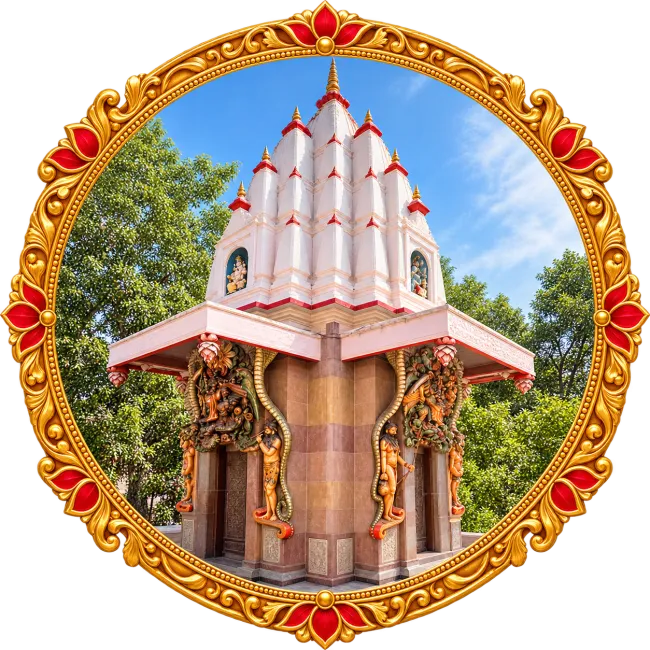
Shri Mankameshwar Temple, Lucknow
Visit Shri Mankameshwar Temple in Lucknow, one of the city’s oldest and most revered Shiva temples. Situated near Daliganj Bridge on the bank of the Gomti River, this sacred shrine is associated with the Ramayana period and the legend of Lakshmana. Devotees believe that sincere worship of Lord Mankameshwar fulfils righteous wishes and brings peace, strength and prosperity. The temple is especially crowded on Mondays, during Shravan and on Maha Shivaratri.
About Shri Mankameshwar Temple
Shri Mankameshwar Temple, also known as Mankameshwar Math Mandir, is an ancient Shiva temple situated in Daliganj, Lucknow. It stands near the Gomti River and Mankameshwar Ghat, close to Daliganj Bridge.
The temple is dedicated to Lord Shiva in the form of Mankameshwar Mahadev. The name combines two words—“Manokamna,” meaning wish or desire, and “Ishwar,” meaning God. Lord Shiva is therefore worshipped here as the deity who fulfils the sincere wishes of his devotees.
The principal attraction is the large Shivling installed inside the main sanctum. Devotees offer water, milk, bel leaves, flowers and other sacred materials while chanting “Om Namah Shivaya.”
The temple is associated with the Juna Akhara and follows a traditional guru-disciple system of administration. It welcomes devotees from all communities and social backgrounds during its prescribed darshan hours.
History of Shri Mankameshwar Temple
According to the temple’s religious tradition, the sacred site has existed since the Ramayana period. The historical structure developed through different phases and underwent reconstruction several times.
The temple’s traditional historical account states that an early structure was built by King Harnav Dhanu after he achieved victory over his enemies. The temple’s shikhara was reportedly decorated with 23 golden kalashas, representing its former magnificence.
During the twelfth century, the temple was attacked and its gold was looted. The structure was severely damaged. Nearly 500 years ago, Naga ascetics associated with the Juna Akhara reconstructed the temple and restored regular Shiva worship at the site.
The construction of the present temple structure is associated with Seth Puran Chand. After the reconstruction, the shrine became popularly known as “Sarafa Ka Shivala” because of its connection with the local jewellery and trading community.
The name Mankameshwar Math Mandir came into established use during 1933. The temple has since developed into one of Lucknow’s principal Shiva shrines.
Who Built Shri Mankameshwar Temple?
The history of the temple involves several phases of construction:
- The early temple is traditionally associated with King Harnav Dhanu.
- It was rebuilt nearly 500 years ago by Naga ascetics of the Juna Akhara.
- The construction of the present structure is associated with Seth Puran Chand.
- The shrine became known as Mankameshwar Math Mandir during 1933.
Therefore, King Harnav Dhanu is remembered in temple tradition as the builder of the early structure, while Seth Puran Chand is associated with the construction of the present temple.
Ramayana Connection of Mankameshwar Temple
The most important legend associated with the temple concerns Lakshmana, the younger brother of Lord Rama.
According to the Ramayana tradition, Lord Rama instructed Lakshmana to leave Goddess Sita in the forest. After carrying out this painful responsibility, Lakshmana began his return journey to Ayodhya.
Lakshmana was deeply distressed and mentally disturbed because of the separation of Sita from Lord Rama. During his journey, he stopped near the Gomti River and spent the night at this sacred place.
The following morning, Lakshmana worshipped Lord Shiva. After completing the puja, his restless mind became peaceful. The place therefore came to be associated with peace of mind and the fulfilment of sincere wishes.
The surrounding area became known as Lakshman Tila, while the settlement was traditionally called Lakshmanpuri. Over time, Lucknow developed as the modern name of the city.
The Shiva shrine later became famous as Mankameshwar because devotees believed that prayers offered here with faith were fulfilled by Lord Shiva.
Religious Significance of Mankameshwar Mahadev
Lord Mankameshwar is worshipped as a compassionate form of Shiva who listens to the prayers of devotees. Many visitors tie a sacred thread, perform Jalabhishek or undertake a Monday vow while praying for a particular wish.
Devotees worship Lord Mankameshwar for:
- Fulfilment of righteous wishes
- Mental peace and emotional strength
- Health and recovery
- Success in education and employment
- Happiness in marriage
- A suitable marriage partner
- Family harmony and prosperity
- Protection from negative influences
- Relief from difficulties and fear
- Spiritual progress and devotion
Mondays hold special importance at the temple. According to an established tradition, the Monday aarti is performed by the serving Mahant of Mankameshwar Math.
Architecture of Mankameshwar Temple
Shri Mankameshwar Temple follows the traditional architectural pattern of a North Indian Shiva shrine. Its principal sanctum contains the large Shivling of Lord Mankameshwar.
A prominent shikhara rises above the sanctum, while the interiors are decorated with religious motifs, bells, flowers and sacred images. Nandi, the divine vehicle of Lord Shiva, faces the principal Shivling.
The sanctum is comparatively compact, so devotees may experience queues during Mondays and major festivals. Barricades and separate lines are arranged when large gatherings are expected.
The temple complex also includes the Math, where the Mahant and other ascetics associated with its spiritual tradition reside. Mankameshwar Ghat is located nearby on the bank of the Gomti River.
Shri Mankameshwar Temple Timings
Regular Darshan Timings
Monday Darshan Timings
The Monday aarti is traditionally performed by the present Mahant of the temple. During Shravan Mondays and Maha Shivaratri, special schedules are followed and the temple may open before its regular time.
Maha Shivaratri Timings
On Maha Shivaratri, the temple remains open for extended hours to accommodate the large number of devotees.
Daily Puja and Rituals
Daily worship begins with the purification of the sanctum and ceremonial bathing of the Shivling. The deity is offered Gomti water, milk, curd, honey, ghee and other sacred materials.
The principal rituals include:
- Morning abhishek
- Mangala Aarti
- Jalabhishek
- Panchamrit Abhishek
- Rudrabhishek
- Shiva Sahasranama recitation
- Mahamrityunjaya Mantra Jaap
- Shiva Chalisa
- Shringar of the Shivling
- Bhog offering
- Evening aarti
- Shayan Puja
Devotees may arrange a personal Rudrabhishek or other special Shiva puja through the temple administration.
Offerings at Mankameshwar Temple
Devotees commonly offer:
- Gomti water or Gangajal
- Milk
- Panchamrit
- Bel leaves
- White flowers
- Datura
- Bhang
- Akshat
- Sandalwood paste
- Honey and sugar
- Seasonal fruits
- Sweets
- Incense sticks
- Ghee lamps
- Sacred thread
Devotees should place their offerings in designated areas and follow the instructions of the priests. Excessive milk, flowers and plastic materials should not be left near the sanctum or Gomti River.
Mahant Tradition of Mankameshwar Math
The administration of Mankameshwar Math Mandir follows a guru-disciple tradition connected with the Juna Akhara.
The temple’s recognised lineage includes:
- Mahant Ram Giri Ji Maharaj
- Baba Balak Giri Ji Maharaj
- Mahant Trigunanand Giri Ji Maharaj
- Mahant Bajrang Giri Ji Maharaj
- Mahant Keshav Giri Ji Maharaj
- Mahant Devya Giri Ji Maharaj
Mahant Ram Giri was popularly known as Fakkad Kaka. A traditional wooden staff associated with him is preserved within the Math.
Mahant Devya Giri assumed responsibility for the temple in September 2008 after Mahant Keshav Giri. She is widely recognised as the first female Mahant of the Juna Akhara tradition and has played an important role in managing religious, environmental and social activities associated with the shrine.
Major Festivals and Celebrations
Maha Shivaratri
Maha Shivaratri is the temple’s largest annual festival. The shrine is decorated with flowers, lights and religious banners. Special morning aarti, Jalabhishek, Rudrabhishek and evening aarti are organized.
Devotees may wait in queues for several hours. A bhandara is also arranged in which fasting-friendly dishes such as sabudana khichdi, makhana, fruits and kheer are distributed.
Shravan Month
The entire month of Shravan is dedicated to special Shiva worship. Devotees visit daily for Jalabhishek, but Mondays receive the largest crowds.
Bhandaras are organized on every Shravan Monday. Special shringar, aarti and devotional programmes are also conducted.
Shravan Somvar
Shravan Mondays are regarded as exceptionally auspicious. Devotees observe a fast and offer water, milk and bel leaves to Lord Mankameshwar.
Visitors should reach the temple early because queues may continue for several hours.
Pradosh Vrat
Pradosh Vrat is celebrated with evening Shiva Puja, Abhishek and aarti. Devotees pray for forgiveness, prosperity and family welfare.
Kartik Purnima and Dev Deepawali
Dev Deepawali is celebrated at Mankameshwar Ghat with a grand Gomti Aarti and the lighting of numerous earthen lamps. Religious and cultural programmes may also be organized.
Holi, Diwali and Navratri
Although the temple is primarily dedicated to Lord Shiva, other Hindu festivals are observed with special decoration, prayers and community programmes.
Gomti Aarti at Mankameshwar Ghat
Mankameshwar Math organizes aarti of Maa Gomti at the nearby riverbank. The aarti is performed regularly, while a larger Maha Aarti is organized on Purnima and important religious occasions.
During the ceremony, lamps are lit and offered to the river while priests and devotees chant sacred mantras. The event also spreads awareness about river conservation, cleanliness and environmental protection.
The Gomti Aarti is particularly grand during Dev Deepawali, when the ghat is illuminated with earthen lamps.
Social and Environmental Activities
Mankameshwar Math participates in several social and environmental initiatives, including:
- Gomti River conservation
- Water preservation campaigns
- Environmental awareness
- Protection and welfare of girls
- Community meals
- Religious education
- Promotion of social harmony
- Distribution of food and essential items
- Encouragement of clean and responsible worship
Flowers offered at the temple are also used for productive purposes instead of being discarded into the river.
Best Time to Visit
October to March is the most comfortable period for visiting because Lucknow experiences pleasant weather during these months.
For peaceful darshan, visit between 07:00 AM and 09:00 AM on Tuesday through Sunday. Monday is the busiest regular day. Shravan Mondays and Maha Shivaratri attract exceptionally large crowds.
Visitors wishing to attend the evening aarti should enter the temple before 08:00 PM. A regular visit usually takes 30–60 minutes, while Mondays and festival days may require several hours.
How to Reach Shri Mankameshwar Temple
By Metro
KD Singh Babu Stadium is the nearest major Lucknow Metro station. Autos, e-rickshaws and taxis are available from the station to Daliganj and Mankameshwar Temple.
By Train
Daliganj Railway Station is the nearest local railway station. Lucknow Junction and Charbagh Railway Station are the principal stations for long-distance travellers. The temple is approximately 5–7 kilometres from the Charbagh railway area.
Autos, e-rickshaws, taxis and city buses are available from the stations.
By Road
The temple is situated in Daliganj near Daliganj Bridge and the Gomti River. It can be reached from Hazratganj, Chowk, Kaiserbagh, Hasanganj and other parts of Lucknow through local buses, autos and taxis.
Traffic and parking may be restricted near the temple on Mondays and major festivals.
By Air
Chaudhary Charan Singh International Airport is the nearest airport. It is approximately 18–20 kilometres from the temple. Metro services, prepaid taxis and app-based cabs are available from the airport.
Nearby Places to Visit
- Mankameshwar Ghat
- Gomti Riverfront
- Daliganj Bridge
- Bara Imambara
- Chota Imambara
- Rumi Darwaza
- Hanuman Setu Temple
- Koneshwar Mahadev Temple
- Residency
- KD Singh Babu Stadium
- Hazratganj
Entry Fee and Visit Duration
There is no entry fee for general darshan at Shri Mankameshwar Temple.
A regular visit requires 30–60 minutes. On Mondays, Shravan Somvar and Maha Shivaratri, devotees should keep additional time for security checks and darshan queues.
Visitor Guidelines
- Wear clean and respectful clothes.
- Remove footwear before entering the temple.
- Follow the designated darshan queue.
- Offer water and milk only at the specified place.
- Do not use plastic near the Gomti River.
- Avoid pushing or stopping for extended periods inside the sanctum.
- Obtain permission before taking photographs.
- Keep children and elderly visitors close during crowded festivals.
- Reach early on Mondays and during Shravan.
- Park vehicles only in authorized areas.
- Do not hand donations to unauthorized people.
- Maintain cleanliness inside the temple and at Mankameshwar Ghat.
Conclusion
Shri Mankameshwar Temple is one of the oldest and most important Shiva temples in Lucknow. Situated on the sacred bank of the Gomti River, the temple is associated with the Ramayana legend of Lakshmana, who is believed to have worshipped Lord Shiva here to find peace after leaving Goddess Sita in the forest.
The temple’s historical development is associated with King Harnav Dhanu, Naga ascetics of the Juna Akhara and Seth Puran Chand. The shrine was also known as Sarafa Ka Shivala before becoming established as Mankameshwar Math Mandir during 1933.
Its large Shivling, traditional Monday aarti, Shravan celebrations, Maha Shivaratri rituals and Gomti Maha Aarti make it an important centre of faith and community life. Devotees believe that sincere worship of Mankameshwar Mahadev brings mental peace and helps fulfil their righteous wishes.