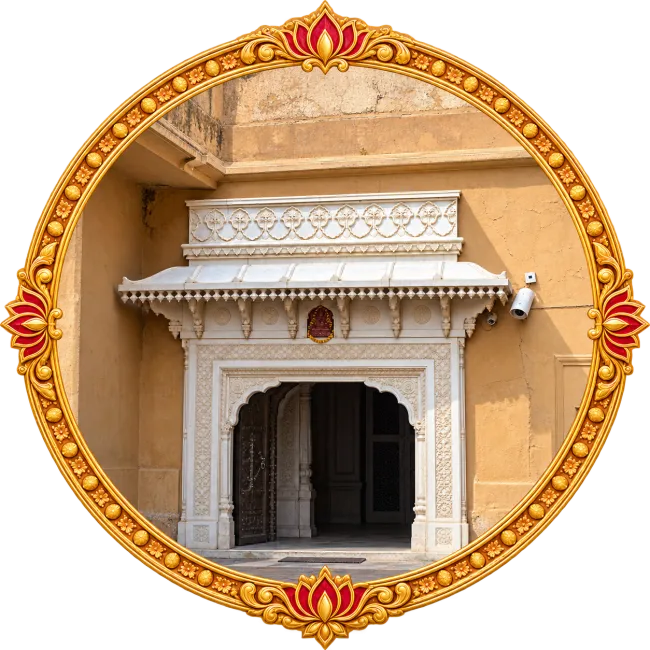
Shila Devi Temple, Rajasthan
Shila Devi Temple is a historic Shakti shrine situated inside Amber Fort near Jaipur, Rajasthan. Dedicated to Goddess Shila Devi, a form of Goddess Durga or Kali, the temple is closely connected with the Kachwaha royal family of Amber and Jaipur.
The shrine was established by Raja Man Singh I during the early 17th century. Its sacred stone image, silver doors, royal heritage and elaborate Navratri celebrations make it one of the most important temples in the Jaipur region.
About Shila Devi Temple
Shila Devi Temple is located near the principal entrance of Amber Fort, approximately 11 kilometres from central Jaipur. The Goddess is worshipped as the Kuldevi of the Kachwaha Rajputs.
The name “Shila Devi” comes from the word Shila, meaning stone slab. According to temple tradition, the sacred image was carved from a stone recovered from the sea after Raja Man Singh received divine instructions in a dream.
The deity is represented in the form of Mahishasuramardini, the manifestation of Durga who defeated the buffalo demon Mahishasura. She symbolises courage, protection and the victory of righteousness over evil.
Members of the former Jaipur royal family continue to participate in important temple ceremonies, particularly during Navratri.
When Was Shila Devi Temple Built and Who Built It?
Shila Devi Temple was constructed in 1604 CE by Raja Man Singh I of Amber, a prominent Kachwaha ruler and military commander in the Mughal court.
According to tradition, Raja Man Singh sought the blessings of the Divine Mother during a military campaign in Bengal. The Goddess appeared to him in a dream and instructed him to recover a sacred stone slab from the sea.
After finding the stone, Raja Man Singh brought it to Amber. An image of the Goddess was carved from the slab and installed in a temple within Amber Fort.
Subsequent Kachwaha rulers supported the shrine and added decorative features. The silver doors, marble work, ceremonial objects and temple courtyard developed under royal patronage.
Legend of the Sacred Stone
Several versions of the temple’s origin legend are followed. The best-known tradition connects the Goddess with Raja Man Singh’s military campaign in Bengal.
Raja Man Singh prayed for divine assistance before confronting a powerful regional ruler. Goddess Kali appeared to him and promised victory if he recovered her sacred form and established it at Amber.
Following her instructions, the king found a stone slab lying in or near the sea. The image of Mahishasuramardini was carved upon it and brought to Rajasthan.
Another tradition states that the slab had been connected with the royal family of Jessore in Bengal. After completing his campaign, Raja Man Singh carried the sacred image to Amber and constructed the temple.
The Goddess became the protective deity of the Kachwaha royal family and the former kingdom of Amber.
Religious Significance
Shila Devi is worshipped as a powerful form of Durga and Kali. Rajput rulers historically prayed before her before battles, coronations and major royal decisions.
Devotees visit the temple to seek:
- Protection from danger
- Courage and confidence
- Victory over obstacles
- Family welfare
- Good health
- Marriage and children
- Prosperity
- Success in work and education
- Relief from negative influences
- Fulfilment of wishes
Navratri is the most important period for worship, with thousands of devotees visiting from Jaipur and surrounding districts.
Architecture of Shila Devi Temple
The temple combines Rajput and Mughal decorative styles. It stands within the fortified complex of Amber, close to the Jaleb Chowk courtyard.
The entrance is distinguished by silver-plated doors containing embossed images of the Navadurga and the ten Mahavidyas. These doors are among the temple’s most important artistic features.
The Garbhagriha houses the dark stone image of Shila Devi. The Goddess is shown as Mahishasuramardini and is decorated with clothes, flowers, jewellery and a crown.
Architectural features include:
- White marble flooring
- Silver-plated doors
- Carved pillars and arches
- Royal courtyard
- Decorated sanctum
- Traditional lamps and bells
- Images of lions associated with Goddess Durga
- Spaces for offerings and ceremonial worship
The temple’s position inside Amber Fort makes it both a sacred destination and an important part of Jaipur’s royal heritage.
Shila Devi Temple Timings
The temple follows separate morning and evening darshan sessions. Timings may be extended or regulated during Navratri and special royal ceremonies.
During Navratri, darshan queues can begin before the temple opens. Visitors should follow the daily ritual board and crowd-control instructions displayed at Amber Fort.
Morning Puja and Aarti
The day begins with Mangal Puja and preparation of the sanctum. Priests decorate the Goddess with fresh clothes, ornaments, flowers and garlands.
The morning rituals include:
- Sanctum purification
- Offering of fresh clothes
- Shringar
- Application of kumkum and sandalwood
- Flower and garland offering
- Mantra chanting
- Incense and lamp offering
- Naivedya
- Morning Aarti
The main morning Aarti is performed at 8:00 AM. Darshan continues after completion of the ceremony.
Bhog Puja
Bhog is offered to Shila Devi before the morning session closes. The offering generally includes sweets, fruits, dry fruits and Satvik preparations.
Queue movement may be briefly regulated while Bhog is presented. The consecrated food is later distributed as prasad.
Evening Puja and Aarti
The temple reopens at 4:00 PM. Evening worship begins with flowers, incense, lamps and devotional recitations.
Evening Aarti is performed at 6:30 PM. The ceremony is followed by general darshan until the final Shayan Puja.
The atmosphere becomes especially impressive when the temple lamps illuminate the silver doors and marble interior.
Major Festivals
Chaitra Navratri
Chaitra Navratri is celebrated with special Shringar, Puja, Aarti, Havan and devotional recitations. Large numbers of devotees visit throughout the nine days.
Sharadiya Navratri
Sharadiya Navratri is the grandest annual celebration at Shila Devi Temple. Members of the former royal family participate in traditional ceremonies.
Durga Ashtami
Durga Ashtami is marked by elaborate worship and special offerings to the Goddess.
Vijayadashami
Vijayadashami celebrates the victory of divine power over evil. The festival has particular significance because of the temple’s association with Rajput military traditions.
Diwali
The temple is illuminated with lamps during Diwali. Devotees pray for prosperity and family welfare.
Royal and Historical Traditions
Shila Devi was the guardian deity of the Kachwaha rulers. Before military campaigns, royal ceremonies and coronations, the rulers offered prayers at the temple.
Animal sacrifice historically formed part of certain Shakta and royal traditions. Public animal sacrifice is no longer part of regular temple worship. Devotees now commonly present symbolic offerings such as coconut, sweets and flowers.
Traditional royal customs continue during major festivals, especially Sharadiya Navratri.
Puja and Religious Services
Depending on temple arrangements, devotees may participate in:
- General Puja
- Special Puja
- Navratri Puja
- Durga Saptashati Path
- Chandi Path
- Havan
- Family welfare prayers
- Marriage-related Puja
- Child-blessing ceremony
- Thanksgiving worship
- Chunri and Shringar offering
All Puja arrangements and donations should be made through authorised temple representatives.
Offerings and Prasad
Common offerings include:
- Red chunri
- Coconut
- Red flowers
- Garlands
- Kumkum
- Bangles
- Sweets
- Fruits
- Dry fruits
- Incense
- Clarified butter
- Monetary donations
Prasad generally consists of sweets, coconut, mishri and dry fruits. Offering plates are available near the entrance to Amber Fort and around the temple approach.
Dress Code and Entry Rules
There is no rigid dress code, but visitors should wear modest and clean clothing. Comfortable footwear is recommended for reaching Amber Fort, although shoes must be removed before entering the temple.
Important rules include:
- Follow the designated queue.
- Maintain silence near the sanctum.
- Do not touch the sacred image.
- Follow photography restrictions.
- Keep the fort and temple clean.
- Avoid alcohol, tobacco and non-vegetarian food.
- Deposit donations only at authorised counters.
- Respect ongoing royal or festival ceremonies.
- Follow directions issued by security personnel.
Entry Fee and Darshan Duration
General temple darshan is free. However, Amber Fort’s ticketed visitor areas may require a separate entry ticket. Visitors entering only for worship should follow the access system operating at the fort.
Regular darshan requires 20–45 minutes. During Navratri and public holidays, waiting time can extend to several hours.
Visitors should allow extra time for parking, security checks and the walk or vehicle journey up to the fort.
Best Time to Visit
October to March is the best time to visit because Jaipur’s weather remains pleasant. Sharadiya Navratri offers the most vibrant devotional atmosphere but also attracts the largest crowds.
For peaceful darshan, visitors should arrive between 8:00 AM and 10:00 AM on an ordinary weekday.
April to June can be extremely hot. Summer visitors should choose the morning session and carry sufficient water.
How to Reach Shila Devi Temple
By Air
Jaipur International Airport is approximately 25 kilometres from Amber Fort. Taxis and app-based cabs are available.
By Train
Jaipur Junction is the nearest major railway station, approximately 13 kilometres from Amber Fort.
By Road
Amber Fort is connected with central Jaipur by city buses, taxis, auto-rickshaws and private vehicles.
From the base of Amber Fort, visitors can reach the upper courtyard on foot or by authorised vehicle services.
Accommodation and Facilities
Jaipur offers hotels, guest houses, hostels and heritage properties in every budget category.
Facilities near Amber Fort include:
- Parking
- Drinking water
- Toilets
- Shoe-storage area
- Prasad and flower shops
- Food outlets
- Security assistance
- Local transport
- Tourist information
- Souvenir shops
Nearby Places to Visit
- Amber Fort: The historic fort complex containing the temple.
- Jaigarh Fort: A hilltop fort overlooking Amber.
- Jal Mahal: A palace situated in Man Sagar Lake.
- Nahargarh Fort: Known for panoramic views of Jaipur.
- Govind Dev Ji Temple: A major Krishna temple in City Palace.
- Moti Dungri Ganesh Temple: A popular temple dedicated to Lord Ganesha.
- City Palace: The historic residence of Jaipur’s royal family.
- Hawa Mahal: Jaipur’s iconic Palace of Winds.
- Galtaji Temple: An ancient pilgrimage complex with sacred water tanks.
Conclusion
Shila Devi Temple is a sacred Shakti shrine and an important part of the royal heritage of Jaipur. Built by Raja Man Singh I in 1604 CE, the temple preserves the history of the Kachwaha dynasty and its devotion to the Divine Mother.
The sacred stone image, silver doors, daily Aartis and elaborate Navratri celebrations create a powerful devotional environment. Visitors come to Shila Devi to seek courage, protection, victory over obstacles and the blessings of the Goddess.