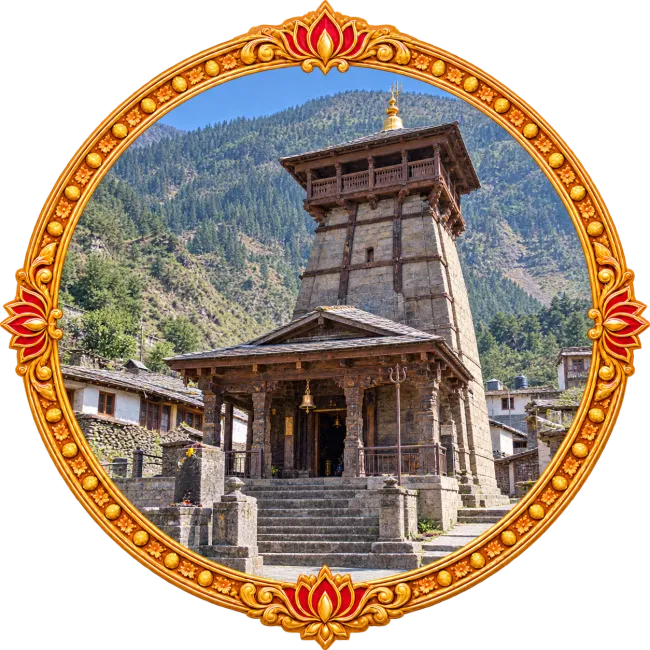
Shani Dev Temple, Kharsali
Shani Dev Temple in Kharsali is a historic Himalayan shrine dedicated to Lord Shani. Located near Janki Chatti in the Uttarkashi district of Uttarakhand, the temple is closely connected with the religious traditions of Yamunotri and the worship of Goddess Yamuna.
Its traditional stone-and-wood structure, elevated shrine and mountain setting make it a distinctive place of worship. For devotees travelling towards Yamunotri, Kharsali offers an opportunity to experience the local traditions that form an important part of the pilgrimage.
About Shani Dev Temple
Shani Dev Temple stands in Kharsali village, approximately one kilometre from Janki Chatti. Lord Shani is worshipped here as the brother of Goddess Yamuna.
The principal image is a bronze representation of Shani Maharaj, housed in the upper part of the historic temple. A narrow wooden staircase leads towards the shrine.
The temple’s setting connects religious worship with the traditional architecture and village life of the upper Yamuna valley.
History of Shani Dev Temple
The temple belongs to the old religious heritage of Kharsali. Local tradition connects its establishment with the Pandavas, who are believed to have travelled through this Himalayan region during their exile.
This association is part of the temple’s sacred legend. It should be understood separately from a dated historical record of construction.
Connection Between Lord Shani and Goddess Yamuna
In Hindu tradition, Lord Shani and Goddess Yamuna are children of Surya, the Sun God. Their relationship as brother and sister is central to the religious identity of Kharsali.
The village serves as the winter seat of Goddess Yamuna. After the seasonal closure of Yamunotri, her ceremonial image is brought to Kharsali, where worship continues during winter.
Shani Maharaj’s ceremonial palanquin participates in the traditions surrounding the goddess’s journey. On Bhai Dooj, the procession from Yamunotri to Kharsali expresses this sacred bond between brother and sister.
Religious Significance of Shani Dev Temple
Lord Shani is associated with justice, discipline, responsibility and the consequences of one’s actions. His worship encourages devotees to reflect on their conduct and practise patience, honesty and compassion.
Devotees pray to Shani Maharaj for:
Strength during difficult periods
Patience and clear judgement
Protection and family well-being
Courage to fulfil responsibilities
Freedom from fear and anxiety
Spiritual discipline and inner peace
Within Hindu belief, prayers to Shani are also associated with seeking relief during challenging astrological periods. Such worship is an expression of faith rather than a guarantee of a particular outcome.
Architecture of Shani Dev Temple
The temple is a tall, multi-storeyed structure built using stone and timber. Its appearance resembles a traditional Himalayan tower-house.
Wooden supports, a slate-covered roof and an internal staircase distinguish the building from the large courtyard temples commonly seen in the plains.
The upper shrine receives limited natural light. From the elevated structure, visitors can see the surrounding village and mountain landscape. These features make the temple an important example of the region’s traditional building practices.
Prayers and Worship
A visit to the temple centres on darshan of Shani Maharaj and respectful prayer. Devotees may recite Shani prayers or spend a few quiet moments reflecting on the qualities associated with the deity.
A commonly recited Shani mantra is:
Om Sham Shanaishcharaya Namah
Worship is traditionally approached with humility and sincerity. Charity, service and fair treatment of others are also associated with devotion to Lord Shani.
Inside the old wooden structure, visitors should keep passageways clear and allow sufficient space for other devotees.
Offerings at Shani Dev Temple
Simple devotional offerings may include flowers, fruit and sweets. Donations and acts of charity are also meaningful expressions of devotion to Shani Maharaj.
Visitors should use the designated offering areas. Oil, incense and lamps should not be placed directly on the temple’s wooden surfaces.
The spiritual emphasis of Shani worship lies in sincerity, self-discipline and responsible conduct rather than elaborate offerings.
Festivals and Important Religious Occasions
Baisakhi
Baisakhi is associated with the ceremonial opening of the ancient Shani temple. The occasion brings local devotees together for worship and marks an important event in Kharsali’s religious calendar.
Akshaya Tritiya
Akshaya Tritiya is connected with the reopening of Yamunotri and Goddess Yamuna’s return from her winter seat. Kharsali becomes an important centre of preparations and procession traditions.
Bhai Dooj
Bhai Dooj marks Goddess Yamuna’s return to Kharsali following the seasonal closure of Yamunotri. Shani Maharaj’s participation in the procession gives the occasion particular importance for the village.
Saturday Worship
Saturday is traditionally dedicated to Lord Shani. Devotees observe the day through prayers, charitable acts and reflection on their responsibilities.
How to Reach Shani Dev Temple
By Air
Jolly Grant Airport near Dehradun is a practical airport for beginning the road journey towards the Yamunotri region. The onward route passes through the hills towards Barkot and Janki Chatti.
By Train
Dehradun, Haridwar and Rishikesh serve as railway gateways for travellers heading into this part of Uttarakhand. The remaining journey continues by road.
By Road
Travellers can approach Kharsali through the Barkot–Hanuman Chatti–Janki Chatti route. Kharsali is close to Janki Chatti, and the final approach to the temple involves walking through the village.
Mountain travel requires more time than distances alone suggest. Daylight travel allows visitors to negotiate the final village approach more comfortably.
Nearby Places to Visit
Yamuna Temple, Kharsali
The village’s Yamuna temple is associated with the goddess’s winter worship. It helps visitors understand Kharsali’s importance beyond its role as a stop on the Yamunotri route.
Janki Chatti
Janki Chatti is the main starting point for the trek to Yamunotri. Many pilgrims stay in this area before beginning their ascent.
Yamunotri Temple
Dedicated to Goddess Yamuna, Yamunotri is one of Uttarakhand’s Char Dham shrines. Visiting it requires a separate mountain trek and sufficient time.
Kharsali Village
The village itself offers a closer view of local architecture, mountain life and pilgrimage traditions.
Important Visitor Guidelines
Wear modest clothing suitable for a place of worship.
Remove footwear where required.
Use the narrow staircase carefully.
Allow others to pass without crowding the steps.
Seek permission before photographing the deity or ceremonies.
Avoid touching old timber, carvings and structural supports.
Keep flames and oil away from wooden surfaces.
Carry warm clothing for changes in mountain weather.
Keep the temple and village pathways clean.
Respect seasonal restrictions on entry.
Conclusion
Shani Dev Temple in Kharsali brings together devotion to Shani Maharaj, traditional Himalayan architecture and the living traditions of Yamunotri.
Its connection with Goddess Yamuna gives the shrine a distinctive place in Uttarakhand’s religious heritage. A visit offers an opportunity to understand the importance of Kharsali as a sacred village and to experience a quieter aspect of pilgrimage in the upper Yamuna valley.