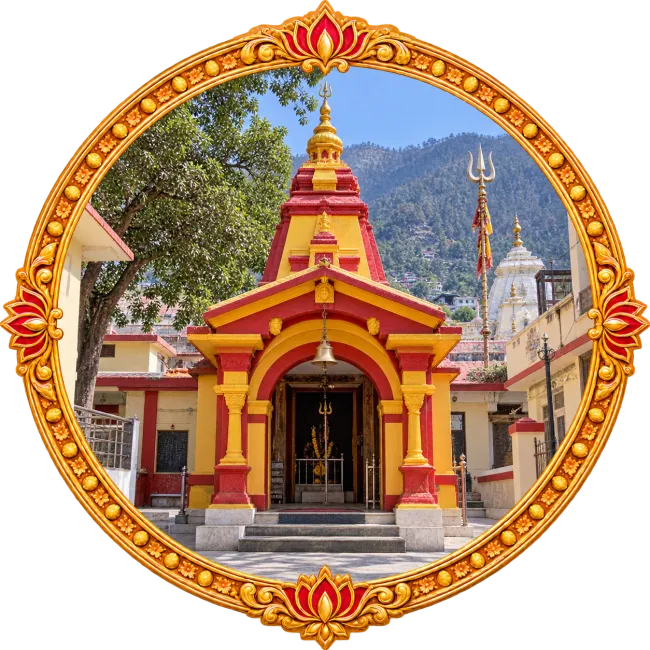
Shakti Temple, Uttarkashi
Visit Shakti Temple in Uttarkashi, a sacred shrine dedicated to Goddess Shakti, the divine feminine power. Situated opposite Kashi Vishwanath Temple, the shrine is best known for its monumental trident, worshipped as a symbol of the goddess’s strength and protection.
The temple brings together living religious traditions and an important piece of Uttarakhand’s historical heritage. Its location within the Vishwanath Temple courtyard makes it a natural part of a pilgrimage through Uttarkashi.
About Shakti Temple
Shakti Temple stands within the Kashi Vishwanath Temple complex in Uttarkashi, Uttarakhand. The shrine faces the principal Shiva temple, allowing devotees to worship Shiva and Shakti during the same visit.
The main sacred feature is a large metal trident, also called the Shakti Stambh. It represents the protective power of the goddess and forms the central focus of devotion at the shrine.
The temple belongs to the religious landscape of the Bhagirathi Valley, where river worship, Shiva devotion and the worship of the goddess are closely connected.
History of Shakti Temple
The history of Shakti Temple is closely connected with the inscription preserved on its sacred trident.
The inscription associates the construction of the neighbouring Vishwanath Temple with King Ganeshwar. His son, named Guh or Guhya in different renderings, is credited with erecting the trident.
The Shakti Stambh and its inscription provide evidence of the complex’s early history, associated with the sixth to seventh centuries CE. This dating concerns the historical monument and sacred complex rather than establishing a construction date for every part of the present shrine.
The trident therefore has two enduring roles: it is a sacred object of worship and a historical record of royal patronage in the Himalayan region.
Legend of Goddess Durga and the Trident
According to local religious tradition, the trident is associated with Goddess Durga’s victory over demons.
Devotees believe that the goddess used her divine weapon to defeat destructive forces and protect the world. The trident is consequently revered as a symbol of courage, protection and the triumph of righteousness.
This legend gives the shrine its devotional identity. Worshippers approach the Shakti Stambh with reverence for the goddess’s power and compassion.
Religious Significance of Shakti Temple
Shakti represents the active divine energy through which creation and life are sustained. In goddess worship, this power is understood as both nurturing and protective.
A visit to Shakti Temple offers devotees an opportunity to pray for:
Courage during difficult circumstances.
Peace and well-being within the family.
Spiritual strength and self-discipline.
Protection and guidance.
Gratitude for blessings received.
The shrine’s position opposite Vishwanath Temple also encourages reflection on the relationship between Shiva and Shakti. Within Hindu thought, they represent closely connected aspects of divine consciousness and energy.
For worshippers, visiting both shrines can be a meaningful expression of this relationship.
The Sacred Shakti Stambh
The towering trident is the most distinctive feature of Shakti Temple. Its shaft rises through the shrine’s roof, giving the structure an unusual appearance.
The monument draws attention through its size, religious importance and inscription. It remains the centre of the temple’s identity, rather than serving only as an architectural ornament.
Visitors should approach it as an object of worship and heritage. Avoid attempting to shake, push or test the trident, and respect any restrictions on touching it.
Architecture of Shakti Temple
The shrine is arranged around the large trident, which extends above the roof. This relationship between the sacred object and the surrounding structure distinguishes it from temples centred on a conventional sculpted image.
The shared courtyard also creates a direct connection with Kashi Vishwanath Temple. Visitors can move between the two places of worship without leaving the complex.
Important features include:
The monumental Shakti Stambh.
The inscription associated with its installation.
A shrine built around the sacred trident.
A shared courtyard with Vishwanath Temple.
Facing places of worship dedicated to Shiva and Shakti.
Allow time to appreciate the arrangement of the complex without blocking the paths used by devotees.
Darshan and Worship
Darshan at Shakti Temple centres on reverence for the goddess through the sacred trident.
A visit may include a brief prayer, quiet contemplation and worship at the neighbouring Vishwanath shrine. Keep the approach clear so that other devotees can receive darshan comfortably.
Morning or daytime visits are practical for travellers combining the temple with other stops in Uttarkashi. Visitors staying in town can also experience the devotional atmosphere of the complex during evening worship.
Evening Puja and Devotional Atmosphere
The Vishwanath–Shakti complex is known for the sound of bells and the chanting of mantras during evening worship.
The ceremonies provide an opportunity to observe the continuing religious life of Uttarkashi. Maintain silence near the worship area and give those participating in rituals sufficient space.
Aarti at an individual shrine and ceremonies held at the riverfront are separate experiences, so plan your visit according to the place of worship you wish to attend.
Festivals and Important Religious Occasions
Navratri
Navratri is an important period for worship of Goddess Durga and Shakti. Devotees visit the shrine to offer prayers and express their devotion to the divine mother.
The festival highlights the goddess’s role as a protector and the victory of righteousness over destructive forces.
Makar Sankranti
Makar Sankranti is an important religious occasion in the Vishwanath Temple complex. The festival connects worship at the shrine with the sacred river traditions of Uttarkashi.
The town’s religious gatherings during this period provide an opportunity to experience its community-based pilgrimage culture.
Offerings and Devotional Etiquette
Keep offerings simple and present them only in the designated places. Avoid placing flowers, food or packaging against the historic inscription or on the trident’s structural elements.
A sincere prayer does not require elaborate arrangements. Respectful behaviour, patience in the queue and care for the sacred surroundings are important parts of the visit.
Do not leave ritual materials in the courtyard or dispose of them in the Bhagirathi River.
How to Reach Shakti Temple
By Air
Jolly Grant Airport in Dehradun provides air access for travellers continuing towards Uttarkashi. From the airport, the journey continues by road.
By Train
Rishikesh is a railway access point for Uttarkashi. Travellers must continue by road to reach the town.
By Road
Travel towards Uttarkashi on the road network connecting it with Rishikesh and the Gangotri route.
Within the town, ask for Kashi Vishwanath Temple and Shakti Temple. The shrines occupy the same complex, close to the central bus-stand area.
Nearby Places to Visit
Kashi Vishwanath Temple
Standing directly opposite Shakti Temple, this is the closest and most closely connected religious stop.
Kuteti Devi Temple
Kuteti Devi Temple is another goddess shrine associated with Uttarkashi. It requires a separate local journey from the Vishwanath–Shakti complex.
Bhagirathi Riverfront
The riverfront forms an important part of Uttarkashi’s sacred setting. Remain on established paths and avoid approaching fast-flowing water.
Uttarkashi Town
The surrounding town offers an opportunity to explore the everyday setting of the pilgrimage centre, historically known as the Kashi of the North.
Important Visitor Guidelines
Wear clean, modest clothing.
Remove footwear before entering designated sacred areas.
Keep phones silent during worship.
Respect photography restrictions.
Do not push or shake the sacred trident.
Avoid touching or marking the inscription.
Keep shrine entrances and courtyard paths clear.
Supervise children near sacred structures.
Carry only essential belongings.
Dispose of packaging responsibly.
Respect devotees engaged in prayer.
Follow instructions from temple staff.
Conclusion
Shakti Temple is an important part of Uttarkashi’s religious and historical heritage. Its monumental trident expresses devotion to the goddess while preserving evidence of the region’s early royal patronage.
Together with the facing Kashi Vishwanath Temple, the shrine offers a distinctive experience of Shiva and Shakti worship. A visit provides time for prayer, reflection and appreciation of a sacred tradition that continues within the daily life of Uttarkashi.