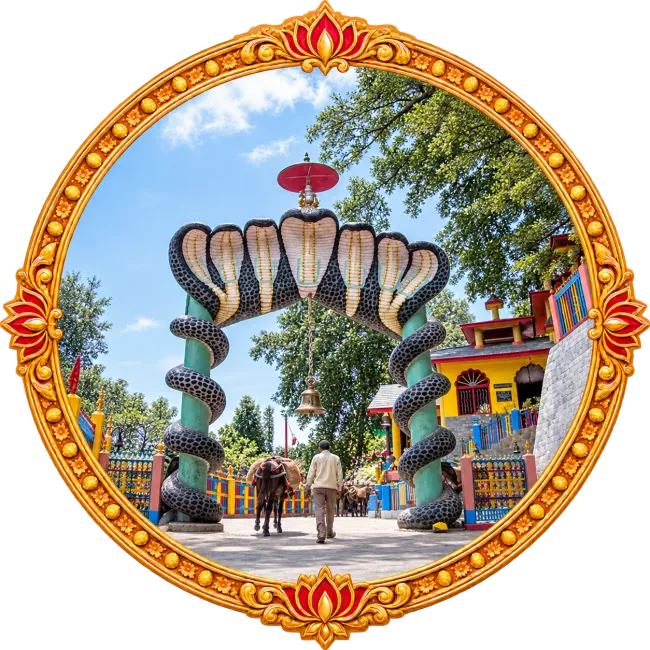
Sem Mukhem Temple, Tehri Garhwal
Visit Sem Mukhem Temple in Uttarakhand, a sacred Himalayan shrine dedicated to Lord Nagaraja. Situated in the mountains of Tehri Garhwal, the temple is closely associated with the worship of Lord Krishna in his Nagaraja form.
The forested approach, traditions surrounding Gangu Ramola and the important Sem Mukhem fair give this pilgrimage a distinctive place in Garhwali religious life. Devotees travel here to offer prayers, receive blessings and experience a place where local faith and the mountain landscape remain closely connected.
About Sem Mukhem Temple
Sem Mukhem Temple, also known as Sem Mukhem Nagaraja Temple or Sem Nagraja Mandir, is situated near Mukhem village in Tehri Garhwal district.
The principal deity is Nagaraja, the serpent king, identified with Lord Krishna in the local worship tradition. The shrine is an important Nag Tirth, a place of pilgrimage associated with serpent-deity worship.
The journey combines a mountain road approach with an uphill walk through forest. The final trek is approximately 2–2.5 kilometres, depending on the starting point.
Sem Mukhem attracts pilgrims interested in its sacred traditions as well as visitors drawn to the quieter mountain regions of Garhwal.
History of Sem Mukhem Temple
The temple’s origin is traditionally associated with Gangu Ramola, a powerful local figure remembered in the folklore of the Ramoli region.
In the temple’s founding tradition, Gangu Ramola built a shrine for Nagaraja after recognising the divine presence of Lord Krishna. The account connects the temple’s establishment with his transformation from pride to devotion.
Local storytelling also describes earlier attempts to establish the shrine before the deity indicated the sacred place where worship should be centred. This site is remembered as Prakata Sem.
The temple’s heritage continues through pilgrimage, ceremonial worship and the participation of nearby communities. Its history is closely linked with the oral traditions that preserve the story of Nagaraja and Gangu Ramola.
Legend of Lord Krishna and Gangu Ramola
According to local legend, Gangu Ramola possessed considerable wealth, land and livestock. His prosperity made him proud, and he initially failed to recognise Lord Krishna when the deity approached him in disguise.
Krishna sought a place to stay, but Gangu refused. The events that followed caused Gangu to recognise the limits of his worldly power.
Realising his mistake, he searched for the divine visitor and offered sincere prayers. Lord Krishna eventually revealed himself as Nagaraja, and Gangu became his devotee.
The story explains the enduring connection between the deity and Gangu Ramola. It also expresses a central devotional lesson: humility and sincere faith matter more than wealth or authority.
Religious Significance of Sem Mukhem Temple
Sem Mukhem brings together Krishna devotion and the serpent-deity traditions of the Himalayas.
Nagaraja is revered as a guardian, and devotees approach the shrine with prayers for protection, family well-being and prosperity. The pilgrimage also provides an opportunity to express gratitude and renew a family’s connection with its religious traditions.
The temple’s significance includes:
Worship of Lord Krishna as Nagaraja.
Remembrance of Gangu Ramola’s devotion.
Participation in Garhwali pilgrimage customs.
Reverence for the sacred mountain setting.
Community worship during the temple fair.
For many pilgrims, reaching the shrine on foot is a meaningful part of the visit. The climb creates time for prayer and reflection before darshan.
Main Deity of Sem Mukhem Temple
The principal deity is Sem Nagaraja. The sacred stone form inside the sanctum is revered as Swayambhu, or self-manifested.
This belief gives particular importance to the location of the shrine. Devotees regard the sacred presence as belonging to the place itself.
Worship should be conducted respectfully, with offerings presented only in the designated area. Visitors can receive darshan without touching the sacred stone or disturbing arrangements within the sanctum.
Architecture of Sem Mukhem Temple
Sem Mukhem Temple has a substantial mountain-temple form, with stone construction contributing to its appearance.
The entrance is a notable feature. Its religious imagery connects the serpent deity with Lord Krishna, reflecting the central theme of worship at the shrine.
Inside, attention is directed towards the sanctum and the sacred form of Nagaraja. Outside, the surrounding forest and mountain slopes shape the visitor’s experience.
Important features include:
Stone-built temple structure.
A decorated entrance.
Imagery associated with Nagaraja and Krishna.
A sanctum centred on the sacred stone form.
A forested hill setting reached on foot.
The temple rewards an unhurried visit. After darshan, take time to appreciate the exterior while leaving access clear for other worshippers.
Sem Mukhem Temple Timings
A morning pilgrimage allows sufficient time for the climb, darshan and return journey. The following is a suggested daytime visit plan, rather than a fixed temple-opening or Aarti schedule.
Adjust the walking allowance to your group’s pace. Families with children or elderly members should keep additional time for breaks.
Morning Worship and Darshan
Morning is a practical time to begin the Sem Mukhem pilgrimage. Starting early leaves a comfortable margin for walking and returning before darkness.
On reaching the temple, take a short rest before approaching the sanctum. Keep offerings ready and move patiently through the darshan area.
A simple visit may include prayer to Nagaraja, remembrance of Lord Krishna and a few moments of silent gratitude.
Avoid rushing the climb to meet an unnecessarily tight itinerary. The road journey and the walk both deserve sufficient time.
Evening Worship
For visitors staying in the surrounding region, evening can provide a quieter setting for prayer. However, a late visit requires careful planning because the final approach is a forest trek.
Day visitors should prioritise a daylight descent. Do not assume that arrangements made during a major fair apply to an ordinary evening.
If your itinerary includes worship later in the day, organise accommodation and transport before beginning the pilgrimage.
Trek to Sem Mukhem Temple
The commonly used approach passes through Mukhem towards Madbagisau, also written as Mad Bagi or Manbagi. From the roadhead, an uphill trail leads to the temple.
The walk passes through a wooded mountain landscape. Some sections require sustained climbing, so the short distance should not be mistaken for a level stroll.
For planning, allow three to four hours for the trek, darshan and return, with more time for a slower group.
Useful preparations include:
Walking shoes with a firm grip.
Drinking water.
A light snack.
A warm outer layer.
Protection from rain.
A small bag that leaves your hands free.
Stay on the established path and avoid shortcuts across slopes. Carry all packaging back with you.
Offerings at Sem Mukhem Temple
Keep offerings simple and convenient to carry during the climb. Flowers, fruits and sweets are suitable expressions of devotion when presented in the designated worship area.
Offerings should not be left beside trees, on rocks or in water sources along the route.
The mountain setting is an essential part of the pilgrimage. Protecting its cleanliness is a practical way to show respect for the sacred place.
Sem Mukhem Fair and Religious Traditions
Triennial Sem Mukhem Fair
The major Sem Mukhem fair is held every three years. It is an important gathering connected with the worship of Nagaraja and the religious identity of the surrounding communities.
The celebrations bring together pilgrimage, special worship and regional cultural traditions. Devotees returning for the fair help maintain connections between the shrine, village life and families living elsewhere.
Traditional Pilgrimage
The religious journey to Sem Mukhem is also remembered as a Jatra. Collective visits and devotional gatherings form part of its living heritage.
Traditional priests and local families play an important role in maintaining the ceremonies associated with the shrine.
Best Time to Visit
April to June and September to November are favourable periods for planning the pilgrimage. Choose a clear-weather day for the road journey and trek.
Carry warm clothing even when travelling from warmer towns. Conditions near the temple can feel considerably cooler, especially in shaded areas.
Rain can make the route slippery, while winter conditions may make the climb more demanding. Plan around the actual weather and the abilities of your group.
The major fair offers a different experience from an ordinary day, with more pilgrims and greater demand for local transport and accommodation.
How to Reach Sem Mukhem Temple
By Air
Jolly Grant Airport, Dehradun, provides air access for travellers continuing towards Tehri Garhwal.
The onward journey requires mountain-road travel followed by the final trek. Allow a separate travel day if arriving on a late flight.
By Train
Rishikesh and Yog Nagari Rishikesh provide useful rail connections for the onward road journey. Haridwar is another rail option when planning a longer itinerary.
By Road
A common approach runs through the Tehri–Lambgaon region towards Mukhem and the temple roadhead.
The final route can be planned as:
Lambgaon → Mukhem → Madbagisau roadhead → Sem Mukhem Temple.
Arrange transport for both directions. The vehicle journey ends before the shrine, and the last stretch is covered on foot.
Nearby Places and Wider Travel Options
Mukhem Village
Mukhem is closely connected with the temple’s pilgrimage traditions and serves as an important point on the approach.
Madbagisau
The roadhead area is part of the temple journey and a useful place to organise the climb and return transport.
Tehri Lake and New Tehri
These can be included in a wider Tehri Garhwal itinerary. They require a separate road journey and should not be treated as short walks from the temple.
Important Visitor Guidelines
Begin the pilgrimage early.
Wear clothing suitable for temple worship and mountain walking.
Carry water, warm layers and essential medicines.
Keep offerings light and neatly packed.
Walk at the pace of the slowest member of your group.
Respect restrictions on sanctum photography.
Avoid loud music along the forest trail.
Do not damage trees or disturb wildlife.
Keep springs and streams free of waste.
Arrange return transport in advance.
Allow additional time during the fair.
Complete the return walk before darkness.
Conclusion
Sem Mukhem Temple is an important expression of Nagaraja worship and Garhwali religious tradition. Its connection with Lord Krishna, the story of Gangu Ramola and the triennial fair give the shrine a distinctive identity.
The forest trek adds meaning to the pilgrimage, providing time to slow down before reaching the sanctum. A carefully planned visit offers space for worship, reflection and appreciation of the mountain surroundings.